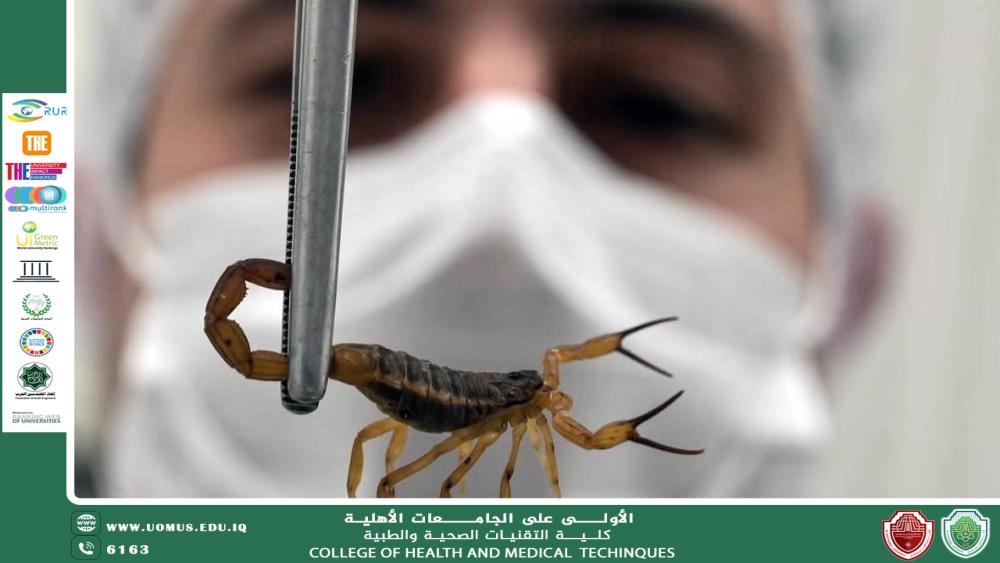
Scorpion Venom and Breast Cancer Treatment: A Poison That Could Save Lives
13/07/2025 Share :
Scorpions have long been associated with danger and death, but modern science has turned this perception on its head. Once known solely as a lethal weapon, scorpion venom is now being explored as a promising treatment for some of the most aggressive diseases chief among them, breast cancer.<br /><br />What is Scorpion Venom ?<br />Scorpion venom is a complex mixture of proteins, enzymes, and peptides (short chains of amino acids) that the scorpion uses for self-defense or to immobilize its prey. Despite its high toxicity, the venom contains biologically active compounds that hold medical potential most notably, a substance known as chlorotoxin.<br /><br />How Does Scorpion Venom Fight Breast Cancer?<br />Recent scientific studies have shown that certain components of scorpion venom possess potent anticancer properties. Their mechanisms of action include:<br /><br />*Selective targeting of cancer cells without harming healthy tissue.<br />*Inhibiting tumor metastasis by suppressing the movement of cancer cells.<br />*Reducing cancer cell proliferation by impairing cell division.<br /><br />Chlorotoxin, derived from the venom of the Leiurus quinquestriatus (commonly known as the deathstalker or yellow scorpion), has shown high specificity in binding to breast cancer cells while sparing normal tissues. This opens the door for its use in targeted therapy.<br /><br />Current Use in Research and Therapy<br />While scorpion venom has not yet been approved as an official drug for breast cancer, it is currently being used in:<br /><br />*Preclinical research on laboratory models and cell cultures.<br />*Experimental drug development, where venom components are purified and modified for increased safety and efficacy.<br />*Combination therapies with chemotherapy or radiotherapy to enhance cancer cell targeting and reduce side effects.<br /><br />Potential Benefits<br />*Reducing reliance on traditional chemotherapy and its harsh side effects.<br />*Offering novel treatment options for therapy-resistant breast cancer.<br />*Pioneering a new field of targeted toxin therapy in oncology.<br /><br />Scientific and Ethical Challenges<br />*Developing safe and effective venom-based therapies requires years of clinical trials.<br />*Logistical challenges exist in harvesting venom in sufficient and cost-effective quantities.<br />*Ensuring human safety and avoiding adverse toxic effects is essential.<br /><br />Although scorpions evoke fear for many, their venom may one day offer a ray of hope for thousands of women battling breast cancer. Science teaches us that what we fear may also hold the power to heal—just as a flower can bloom from within the harshest stone.<br /><br />🔬 Scientific References:<br /><br />PubMed Central (PMC) – National Institutes of Health (NIH)<br />Chlorotoxin from scorpion venom inhibits invasion and migration of breast cancer cells<br /><br />Journal of Cancer Research and Therapeutics<br />Scorpion venom and its components as potential cancer therapeutics: A review<br /><br />Frontiers in Oncology (2020)<br />The Anti-Cancer Potential of Scorpion Venoms: A Systematic Review<br />Al-Mustaqbal University<br />The First University in Iraq