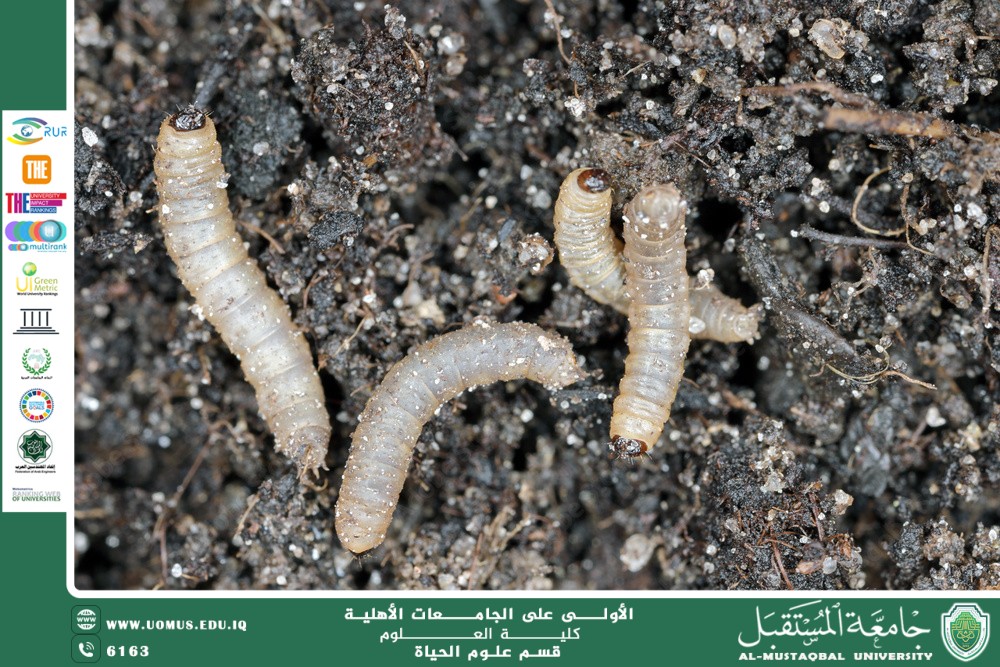
A scientific article by lecturer Msc. Zainab Nazim Aziz entitled "Biological control: a safe alternative to chemical pesticides"
20/07/2025 Share :
At a time when the world is witnessing increasing environmental awareness and concerns about the health and environmental effects of chemical pesticides, biological control has emerged as an effective natural alternative for combating agricultural pests. It is a method that relies on ecological balance and the use of living organisms to reduce the number of harmful pests, making it a sustainable and safe method in modern agriculture.<br /><br />Biological control is the use of beneficial organisms such as:<br /><br />Predatory insects<br /><br />Parasites<br /><br />Fungi and bacteria<br /><br />Viruses<br /><br />To attack agricultural pests or inhibit their growth without the need for chemical pesticides.<br /><br />Types of biological control<br /><br />1. Preliminary control (conventional):<br />Introducing a natural organism from another environment to attack a specific pest.<br />2. Multiplicative control (reproductive):<br />Growing beneficial organisms in laboratories and releasing them in large numbers into fields.<br />3. Conservative control (supportive):<br />Preserving existing beneficial organisms and providing a suitable environment for their reproduction.<br /><br />Examples of Biological Control Organisms<br /><br />Organism, Target Pest, Method of Action<br /><br />Ladybird beetle (Aphid) preys directly on insects.<br />Trichogramma fly lays its eggs inside pest eggs.<br />Beneficial nematodes: Insect larvae in the soil, enter the pest's body and kill it.<br />Beauveria fungi: Whiteflies and aphids penetrate the insect's body and kill it.<br /><br />Benefits of Biological Control<br /><br />Safe for humans and the environment. Does not leave toxic residues in food or soil.<br />Preserves beneficial organisms. Does not affect bees and pollinators, unlike pesticides.<br />Reduces reliance on pesticides, which reduces pest resistance and lowers costs.<br />A sustainable, long-term solution. The effect of biological organisms can last for many seasons.<br /><br />Challenges of Biological Control<br /><br />Requires precise knowledge of the agricultural environment.<br />Sometimes slower than pesticides.<br />May be affected by climatic factors.<br />Requires careful planning to select the appropriate organism at the right time.<br />Biological Control in Sustainable Agriculture<br />Biological control is an essential part of organic and sustainable agriculture, as it is integrated. With:<br />Clean Agriculture<br />Natural Composting<br />Crop Rotation<br />Selecting Pest-Resistant Varieties to Achieve a Balanced and Healthy Agricultural System<br /><br />Biological control is a smart and safe option for combating pests without harming the environment or human health. With the growing global demand for safe food, adopting this technology not only serves farmers but also contributes to achieving sustainable agricultural development and ensuring food and health security for future generations.<br /><br />Al-Mustaqbal University is the first university in Iraq.