A scientific article by the lecturer, Asst. Lecturer Marwan Hisham Mohammed (Challenges of Bifocal Glasses in Older Adults)
22/07/2025 Share :
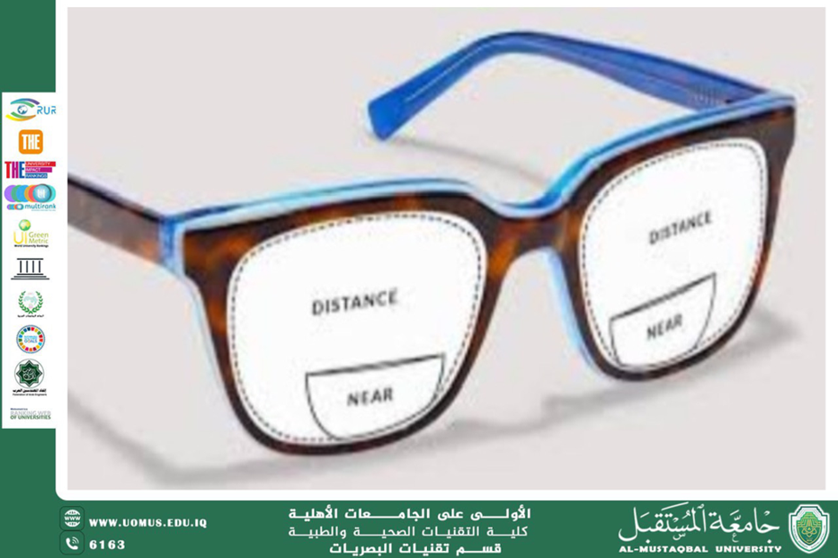
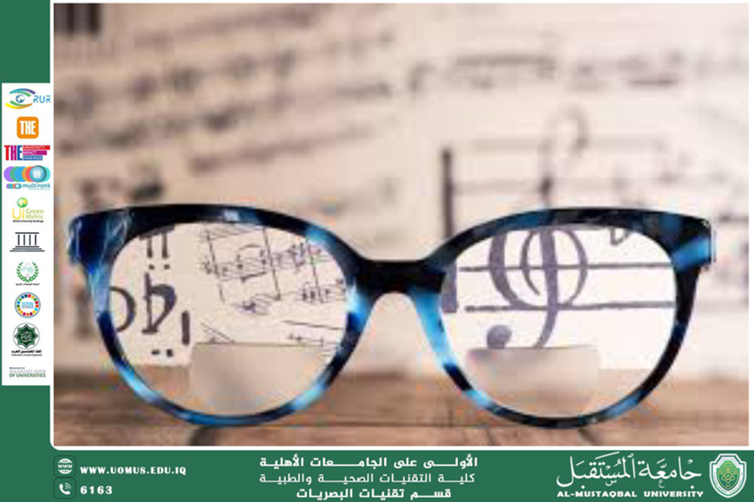
Introduction<br />Bifocal glasses have long been a common solution for correcting both near and distance vision issues. Despite their widespread use among the elderly today, bifocal lenses can pose several challenges that may affect the daily lives of their wearers.<br />Common Issues Associated with Bifocal Glasses<br />While bifocal lenses offer the convenience of addressing multiple visual needs—such as reading and distance viewing simultaneously—they are not without drawbacks. The most frequently reported issues include:<br />• Adaptation Period: It can take several weeks to adjust to bifocal glasses. Initially, wearers may struggle to look through the correct segment of the lens during different tasks—such as using the lower portion for reading a newspaper and the upper portion for driving.<br />• Bifocal Line Placement Issues: The dividing line of the bifocal segment should align with the lower eyelid to ensure clear near vision when looking downward. If the line is set too high, it may interfere with distance vision. In such cases, optometrists may need to adjust the lens placement or recommend progressive (no-line) lenses instead.<br />• Image Jump: Some users experience “image jump”—a sudden shift in the image when transitioning between lens zones—causing visual discomfort during the initial adaptation period and affecting spatial perception.<br />• Peripheral Vision Disruption: Bifocal wearers may become more aware of the frame edges in their peripheral vision, which can be distracting until they become accustomed to the glasses. This highlights the importance of optical design in medical eyewear.<br />• Computer Use Challenges: Traditional bifocal glasses are not ideal for prolonged computer work, potentially causing headaches and neck strain. Possible solutions include using specialized computer glasses or seamless bifocal designs, along with custom optical corrections for digital tasks.<br />• Reduced Edge Contrast Sensitivity and Depth Perception: Bifocal lenses can reduce edge contrast sensitivity and depth perception, increasing the risk of tripping and falling—particularly on stairs. This is especially concerning for older adults who are more prone to falls, underscoring the complex interaction between ophthalmology and visual assessment in managing refractive error symptoms.<br />• Night Vision Symptoms: Bifocal glasses may increase night vision-related issues and reduce overall visual clarity compared to single-vision lenses. This is particularly problematic for individuals with hyperopia or myopia who are already dealing with reduced night vision.<br />This article emphasizes the need for careful lens selection, fitting, and counseling for older adults, along with close coordination between optometrists and patients to minimize visual discomfort and improve overall safety and quality of life.