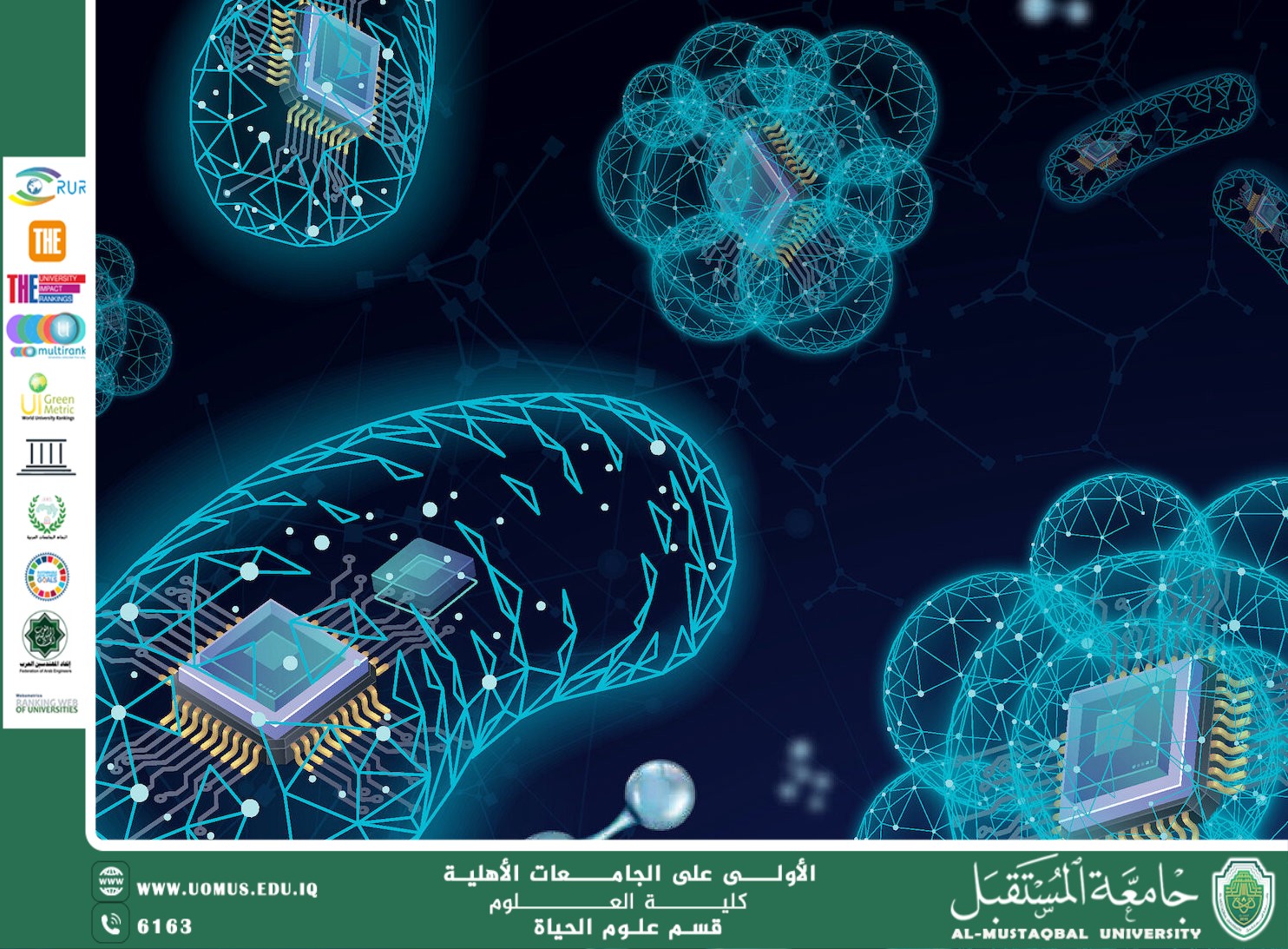
A scientific article by Ms. Noor El-Huda Azmi Hassan entitled " Synthetic biology"
22/07/2025 Share :
Synthetic biology is a scientific field that combines several disciplines, such as biology, genetic engineering, and computer science. It aims to modify living organisms or design entirely new biological systems by reprogramming genes and cells using modern technologies.<br /><br />Practical Applications:<br />First: In the medical field<br />Manufacturing vital medicines such as insulin and antibiotics faster and at lower cost.<br />Using gene therapy to repair genes that cause hereditary diseases.<br />Developing novel cancer treatments by programming immune cells (such as CAR-T technology).<br /><br />Second: In agriculture<br />Creating crops that can withstand harsh environmental conditions such as drought and pests.<br />Producing organic fertilizers using genetically engineered bacteria.<br />Creating meat in a laboratory without the need for animal husbandry.<br /><br />Third: In energy and the environment<br />Producing new types of biofuels using genetically engineered algae.<br />Cleaning polluted environments using organisms programmed to absorb metals or decompose plastics.<br />Developing enzymes capable of breaking down solid waste in environmentally friendly ways.<br /><br />Ethical and Scientific Challenges<br />Despite the significant benefits of this science, there are some questions that warrant consideration, such as:<br />The safety of releasing modified organisms into nature.<br /><br />Synthetic biology represents a qualitative leap in the life sciences, opening up vast horizons for effective solutions in the fields of health, agriculture, and energy. However, there remains a need to establish legal and ethical controls to keep pace with this development, to ensure that this technology serves the future of humanity and the environment.<br /><br /><br />Al-Mustaqbal University is the first university in Iraq.