A scientific article by the lecturer, Asst. Lecturer Nour Khamis (When Should You Measure Intraocular Pressure (IOP)?)
23/07/2025 Share :
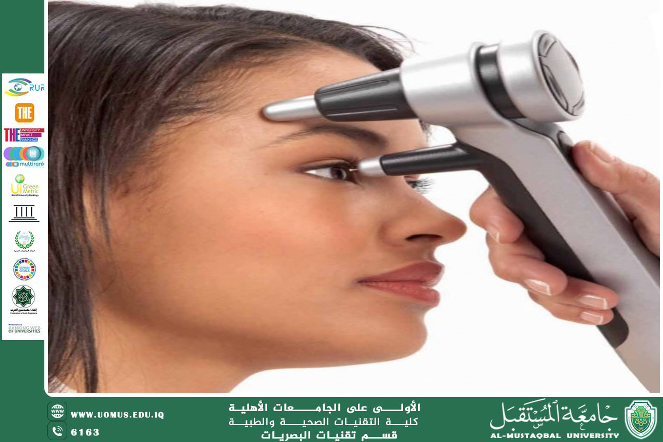
Measuring intraocular pressure (IOP) is essential for detecting conditions associated with elevated eye pressure that may lead to permanent damage to the optic nerve and potentially result in blindness. The most well-known condition linked to acute or chronic elevation of intraocular pressure is glaucoma.<br />When Should IOP Be Measured?<br />IOP testing should be performed in the following cases:<br />• When there is suspicion of elevated IOP, either acute or chronic—such as in the presence of eye pain, conjunctival inflammation, excessive tearing, or visual field defects.<br />• As part of routine screening beginning at age 40, to detect elevated IOP before it causes permanent optic nerve damage or visual symptoms.<br />• At age 30 for individuals with a family history of glaucoma, to facilitate early detection and intervention.<br />• Regular monitoring for diagnosed glaucoma patients, with follow-up measurements conducted every few weeks to assess the effectiveness of treatment.<br />Symptoms of Elevated Intraocular Pressure<br />In most cases, elevated IOP is asymptomatic and is discovered during routine eye examinations. However, if pressure rises significantly, the following symptoms may occur:<br />• Halos (glowing circles) around lights<br />• Dark spots in the visual field<br />• Blurred or hazy vision<br />• A sensation of pressure or heaviness around the eyes<br />• Eye pain (in or around the eye)<br />• Redness of the eye<br />• Eye irritation<br />• Headaches<br />Medications That Can Influence IOP Readings<br />Several medications may contribute to elevated IOP. It is important to inform your eye care provider of any medications you are taking, particularly:<br />• Antidepressants<br />• Anticoagulants (blood thinners)<br />• Anticholinergic medications<br /><br /><br />Interpreting IOP Results<br />• Normal intraocular pressure: 10–21 mmHg<br />• Elevated intraocular pressure: Greater than 21 mmHg<br />