A scientific article by the lecturer, Lect. Ali Hadi Al-Husseini (Toxoplasmosis and Its Ocular Impact (Dry Eye Disease)
23/07/2025 Share :
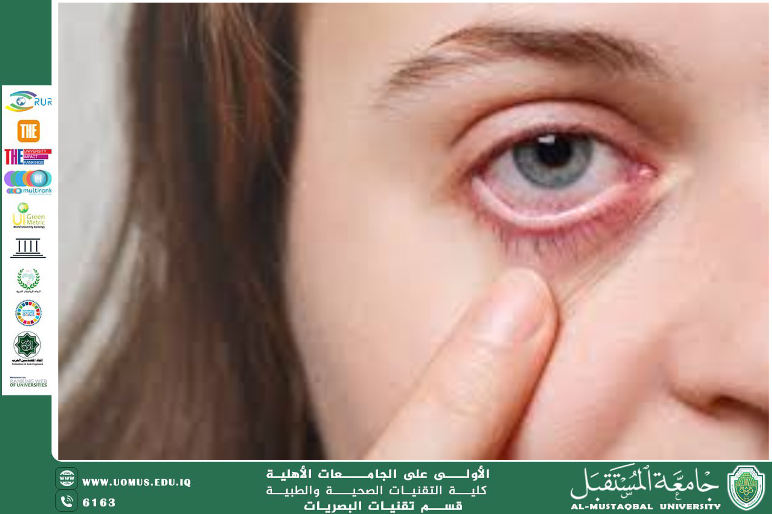
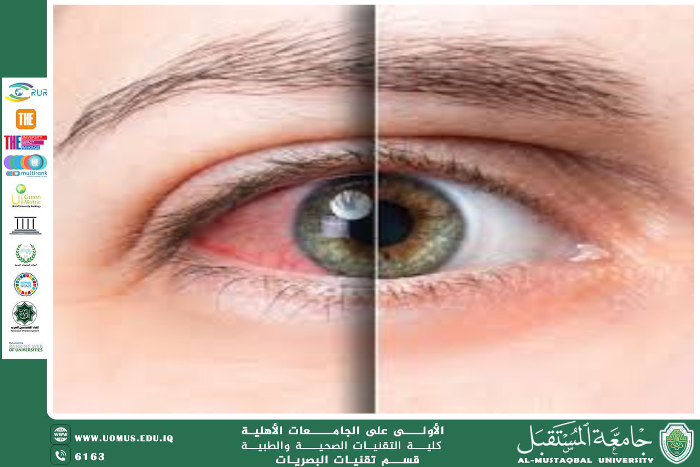
Introduction<br />Dry eye disease is a condition that causes significant discomfort. Patients often experience burning or itching in various situations such as in airports, air-conditioned rooms, or while using digital devices.<br />Key Symptoms of Dry Eye<br />• Burning sensation accompanied by pain and dryness<br />• Feeling of grit or sand in the eyes<br />• Mucus buildup around the eyes<br />• Eye sensitivity to smoke<br />• Redness of the eyes<br />• Difficulty keeping the eyes open<br />• Eye fatigue even after short periods of reading<br />• Light sensitivity<br />• Eyelids sticking together upon waking<br />Causes and Risk Factors of Dry Eye Disease<br />1. Causes of Dry Eye<br />a. Decreased Tear Production<br />Dry eye can result from insufficient aqueous tear production, a condition known as keratoconjunctivitis sicca. Major contributing factors include:<br />• Aging<br />• Medical conditions such as:<br />o Sjögren’s syndrome<br />o Allergic conjunctivitis<br />o Rheumatoid arthritis<br />o Thyroid disorders<br />o Vitamin A deficiency<br />• Medications, including:<br />o Antihistamines<br />o Decongestants<br />o Hormonal therapies<br />o Some antihypertensive drugs<br />• Corneal nerve desensitization from:<br />o Contact lens use<br />o Laser eye surgery<br />b. Increased Tear Evaporation<br />This occurs when the meibomian glands along the eyelid margins are blocked. Causes include:<br />• Posterior blepharitis (meibomian gland dysfunction)<br />• Reduced blinking, as seen in:<br />o Parkinson’s disease<br />o Extended periods of reading, driving, or screen use<br />• Eyelid abnormalities, such as:<br />o Ectropion (outward turning eyelid)<br />o Entropion (inward turning eyelid)<br />• Ocular allergies<br />• Vitamin A deficiency<br />2. Risk Factors<br />Several factors increase the likelihood of developing dry eye, including:<br />• Age: Individuals over 50 are at higher risk<br />• Gender: Women are more prone, particularly due to hormonal changes during pregnancy, contraceptive use, or menopause<br />• Poor diet: Especially one deficient in vitamin A and omega-3 fatty acids<br />• Contact lens use, which can exacerbate tear film instability<br />Conclusion<br />Dry eye is a multifactorial condition requiring awareness of both environmental and physiological contributors. Early identification and management of symptoms are essential for preventing complications and improving patient quality of life.<br />