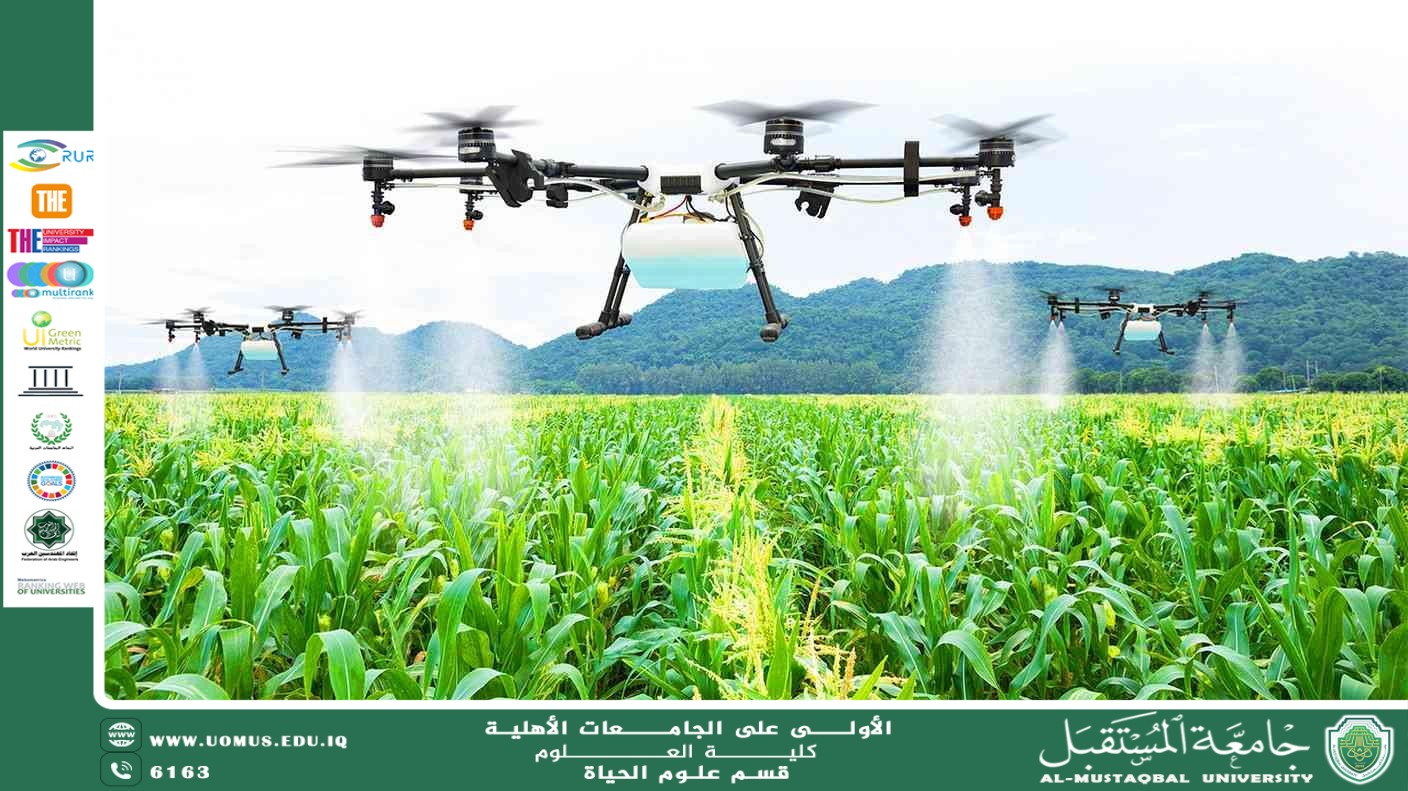
A scientific article by teaching assistant Banin Maan Karim entitled"The role of biology in developing smart agriculture"
31/07/2025 Share :
Modern agriculture faces a series of escalating challenges, such as climate change, declining natural resources, and rapid population growth. In light of these changes, smart agriculture has become a strategic necessity to ensure sustainable food production. In this context, life sciences play an active role in developing more efficient agricultural systems by leveraging biological knowledge and modern technologies to achieve sustainable and smart agricultural production.<br /><br />The Concept of Smart Agriculture<br />Smart agriculture refers to the integration of digital technology and scientific knowledge to intelligently manage agricultural operations. It aims to:<br /><br />Increase crop yields<br />Reduce waste of resources such as irrigation and fertilizers<br />Continuously monitor plant and soil health<br />Rapidly respond to changing environmental factors<br /><br />The Contribution of biology to Smart Agriculture<br />1. Improving the Genetic Traits of Crops<br />Using genetic modification techniques, plants can be developed that are more capable of:<br /><br />Resisting diseases and insects<br />Adapting to drought or salinity<br />Growing in harsh climates<br />Providing abundant and higher-quality yields<br /><br />Early Detection of Diseases<br />Life sciences provide accurate tools for diagnosing plant diseases before they spread, giving farmers the opportunity to intervene early and avoid losses.<br /><br />Data-Based Agriculture<br />By analyzing the biological needs of plants, resources are used efficiently, resulting in:<br /><br />Reduced environmental impact<br /><br />Improved production yields<br />Reduced operational costs<br /><br />Microorganism Employment<br />Beneficial microbes, such as soil bacteria, contribute to:<br />Enhancing nutrient uptake<br />Strengthening plant immunity<br />Reducing the need for chemicals<br /><br />Biological Analysis of Soil and Crops<br />Examining soil components at the biological and chemical levels contributes to making accurate agricultural decisions based on accurate scientific information rather than random estimates.<br /><br />Practical Applications of Integrating biology with Smart Agriculture<br />Using Beneficial Bacteria to Improve Soil Fertility<br />Developing Drought-Resistant Crops in Arid Regions<br />Adopting Genetic Marker-Based Sensors for Early Detection of Pests<br /><br />Integrating biology with Smart Agriculture represents a fundamental turning point toward a more conscious and sustainable agricultural future. By combining biological and digital innovation, it is possible to build agricultural systems that are resilient to changes and meet the growing global demand for food without depleting resources or harming the environment.<br /><br /><br />Al-Mustaqbal University is the first university in Iraq.