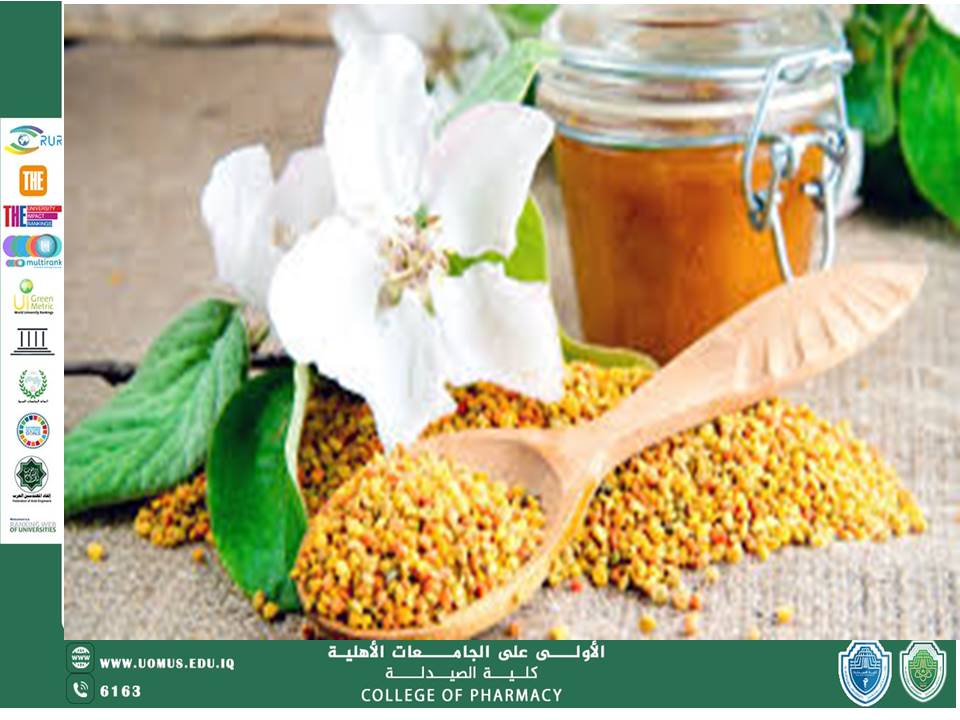
An Article on the Role and Impact of Bee Pollen with Honey on Human Health: A Scientific Study By Dr. Zaid Muhyiddin, Faculty Member at the College of Pharmacy, Al-Mustaqbal University
24/08/2025 Share :
Natural products have been among the most important elements used by humans throughout history to preserve and enhance health. Among these products, bee pollen and honey stand out as particularly valuable, with their health benefits being recognized for centuries due to their therapeutic properties. With the advancement of scientific research, clearer insights have emerged regarding the impact of these two natural products on human health, especially when used in combination.<br /><br />What is Bee Pollen?<br /><br />Bee pollen, also known as bee bread, is the substance collected by bees from flowers and stored in the hive as food for larvae and worker bees. Bee pollen contains a wide range of biologically active compounds, making it a complete food that enriches the body with proteins, vitamins, minerals, amino acids, enzymes, and antioxidants.<br /><br />Nutritional Value of Bee Pollen:<br /><br />Bee pollen contains more than 250 types of nutrients, including:<br /><br />Proteins and essential amino acids<br /><br />Vitamins, especially B, E, and C<br /><br />Minerals such as iron, calcium, magnesium, and potassium<br /><br />Antioxidants that help combat free radicals and reduce inflammation<br /><br />Health Benefits of Bee Pollen:<br /><br />Enhancing immunity<br /><br />Improving mental and physical performance<br /><br />Regulating blood pressure<br /><br />Reducing inflammation<br /><br />Supporting digestive health<br /><br />Health Benefits of Honey<br /><br />Honey is a natural sugary substance produced by bees from the nectar of flowers. It is distinguished by its unique properties, containing compounds with antioxidant and antibacterial activity.<br /><br />Nutritional Value of Honey:<br /><br />Natural sugars, such as fructose and glucose<br /><br />Antioxidants, including phenolic compounds and flavonoids<br /><br />Small amounts of vitamins and minerals<br /><br />Health Benefits of Honey:<br /><br />Boosting the immune system<br /><br />Treating respiratory and throat infections<br /><br />Improving digestion<br /><br />Wound healing and enhancing skin health<br /><br />Serving as a natural and rapid energy source<br /><br />Combining Bee Pollen with Honey: Shared Benefits<br /><br />When combined, these two natural products form a mixture with unique therapeutic properties due to their complementary interactions. This combination is believed to strengthen immunity, reduce inflammation, and improve both physical and mental performance.<br /><br />Indications and Benefits<br /><br />Immune Support: Consuming bee pollen with honey is said to enhance immune strength, especially during winter and times of disease outbreaks.<br /><br />Allergy Relief: Preliminary studies suggest that bee pollen with honey may reduce symptoms of allergies and asthma due to its anti-inflammatory properties.<br /><br />Digestive Health: Supports the balance of beneficial gut bacteria and helps treat intestinal inflammation.<br /><br />Anti-Aging: Thanks to its antioxidant content, it helps protect cells from damage and reduces signs of aging.<br /><br />Improved Physical and Mental Performance: Provides instant energy, improves focus, and enhances nervous system function.<br /><br />Recent Scientific Studies<br /><br />While many studies have focused on the benefits of bee pollen and honey individually, the limited research on their combined use has shown promising results, including:<br /><br />The ability of the bee pollen–honey mixture to reduce chronic inflammation<br /><br />Improvement of seasonal allergy symptoms<br /><br />Strengthening immune response against infectious diseases<br /><br />However, more well-designed clinical studies are needed to confirm these benefits, establish optimal dosages, and determine safe applications.<br /><br />Side Effects and Precautions<br /><br />Despite their numerous benefits, caution is advised in the following cases:<br /><br />Individuals with allergies to bee products or pollen<br /><br />Al-Mustaqbal University, the number one university in Iraq College of Pharmacy, the top among private colleges