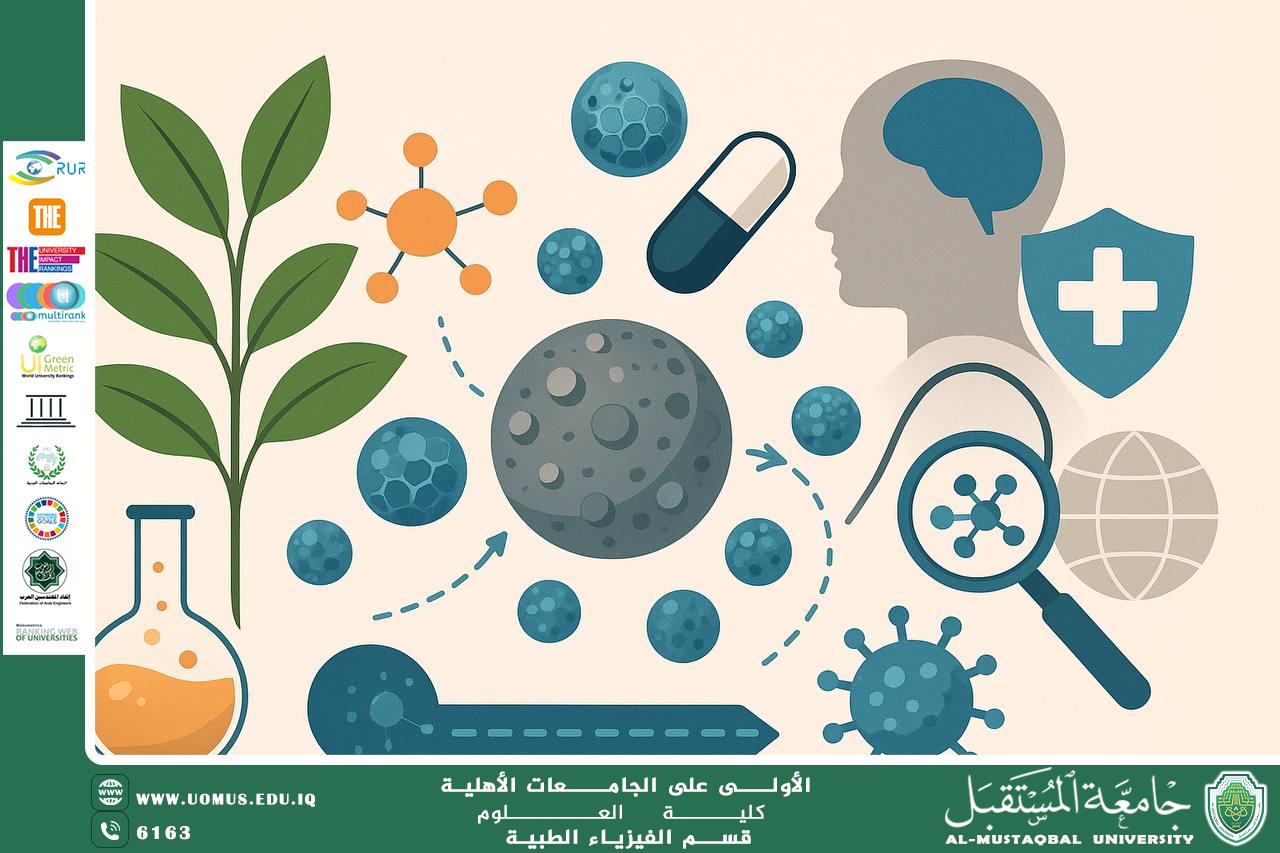
A scientific article by the lecturer (Assistant Lecturer Samaher Saad) entitled “Nanotechnology in Medicinal Plants: New Horizons in Treatment and Medicine”
26/08/2025 Share :
Introduction<br /><br />In recent decades, nanoscience has witnessed remarkable progress, becoming a promising tool in many fields, including medicine. With the growing interest in medicinal plants as natural therapeutic alternatives, nanotechnology has emerged as a powerful approach to enhance the extraction efficiency of plant bioactive compounds, increase their bioavailability, and develop safer and more precise drug delivery systems.<br /><br />Medicinal Plants as a Source of Medicine<br /><br />Medicinal plants contain active compounds such as alkaloids, flavonoids, terpenoids, and essential oils, which possess diverse therapeutic properties, including antioxidant, anti-inflammatory, and antimicrobial activities. However, the traditional use of these compounds faces challenges such as:<br /> • Poor water solubility.<br /> • Low biological stability.<br /> • Limited bioavailability within the body.<br /><br />Nanotechnology offers solutions to overcome these limitations.<br /><br />The Role of Nanotechnology in Enhancing the Therapeutic Potential of Medicinal Plants<br /> 1. Metal nanoparticles: Synthesized using plant extracts as natural reducing and stabilizing agents, such as silver and gold nanoparticles, which have demonstrated antimicrobial and anticancer effects.<br /> 2. Nano-capsules: Used to encapsulate bioactive plant compounds, protecting them from premature degradation in the gastrointestinal tract and improving targeted cellular delivery.<br /> 3. Smart delivery systems: Including nano-liposomes and nano-emulsions, which enable controlled and sustained release of plant compounds, minimizing side effects.<br /> 4. Theranostics: Combining plant-based nanoparticles with imaging techniques (e.g., MRI) to enhance diagnostic accuracy while simultaneously providing therapeutic benefits.<br /><br />Medical Applications<br /> • Anticancer agents: For instance, curcumin derived from turmeric has shown enhanced efficacy in inhibiting cancer cell growth when delivered in nanoparticle form.<br /> • Antimicrobial activity: Plant-mediated silver nanoparticles have exhibited strong potential against antibiotic-resistant bacteria.<br /> • Immune system modulation: Some plant-based nanoformulations enhance immune responses.<br /> • Pharmaceuticals and cosmetics: Nanotechnology improves the absorption of plant-derived antioxidants in skincare and cosmetic products.<br /><br />Challenges and Future Perspectives<br /><br />Despite the promising advantages, integrating nanotechnology with medicinal plants faces several challenges, such as:<br /> • The need for standardized protocols to evaluate safety and toxicity.<br /> • High costs of certain nanoparticle synthesis methods.<br /> • Limited clinical trials to confirm efficacy and safety.<br /><br />Nevertheless, the global shift toward natural medicine and sustainable technologies highlights the potential of nanotechnology in medicinal plants as a pathway to innovative, precise, and eco-friendly therapies.<br /><br />Conclusion<br /><br />The convergence of medicinal plants and nanotechnology represents a revolutionary step toward developing more effective medicines and supplements. This integration of nature and modern science not only reflects human advancement but also opens new horizons for advanced, sustainable therapies that balance traditional knowledge with cutting-edge technology.<br /><br /><br /><br /><br /><br />"AL_mustaqbal University is the first university in Iraq"<br/><br/><a href=https://uomus.edu.iq/Default.aspx target=_blank>al-mustaqbal University Website</a>