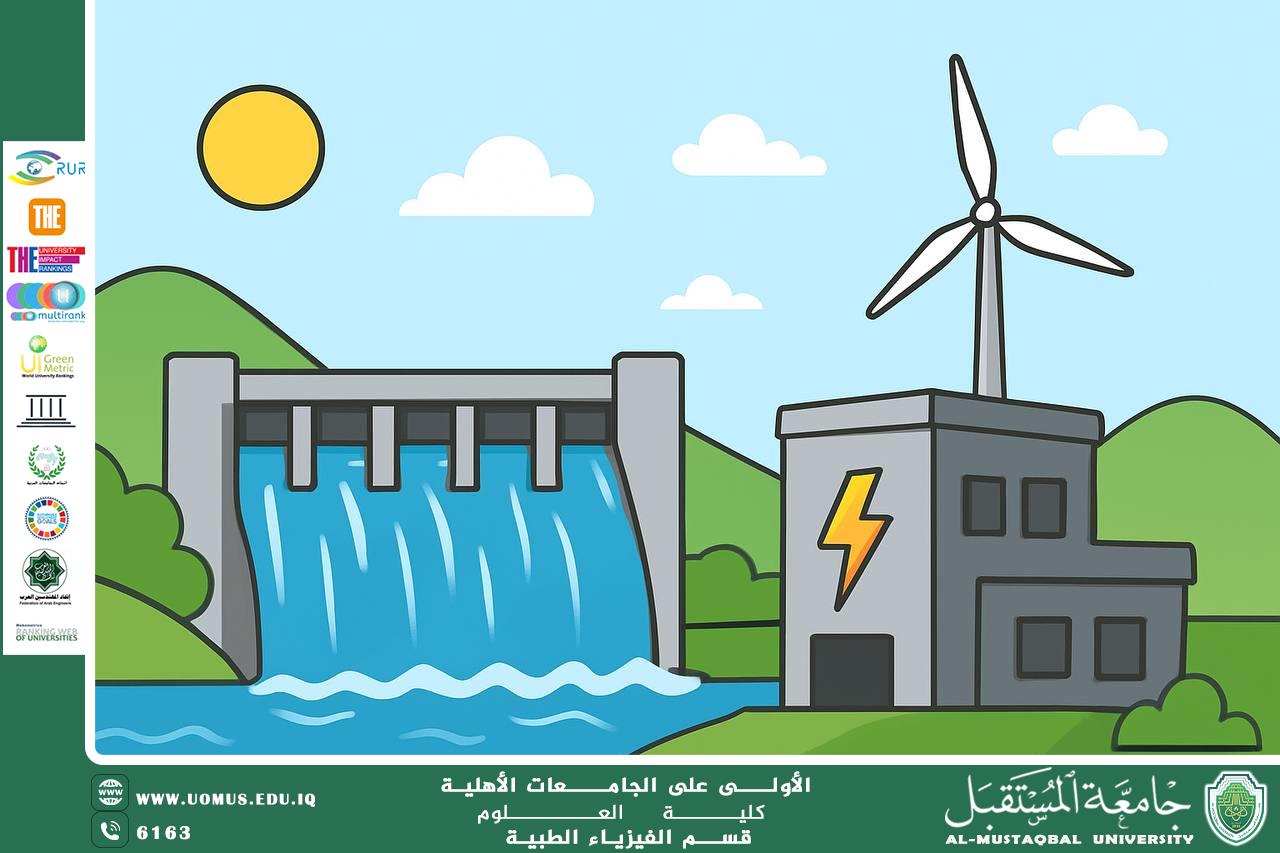
A scientific article by the Medical Physics Department rapporteur (Assistant Professor Israa Hussein Amwishi) entitled “The Importance of Hydropower in Sustainability”
07/09/2025 Share :
Hydropower is one of the oldest sources of energy used by humans, and today it stands as a key form of renewable energy that contributes to environmental and economic sustainability.<br /><br />Hydropower works by harnessing the movement of water (such as rivers or dams) to generate electricity. It is also known as hydroelectric power. One of its main advantages is that it is a clean energy source that does not produce harmful carbon emissions, which helps reduce the impact of climate change.<br /><br />Environmentally, hydropower helps reduce dependence on fossil fuels, offering a sustainable alternative for energy production in many countries. Economically, it creates jobs in construction, maintenance, and operations, and helps lower the costs of energy imports.<br /><br />Moreover, hydropower is considered a reliable and stable source of energy, unlike solar or wind power, which can be affected by weather conditions.<br /><br />In conclusion, hydropower plays a vital role in supporting the shift towards clean energy and achieving the Sustainable Development Goals (SDGs), especially in terms of protecting the environment and ensuring access to safe and reliable energy for all.<br /><br /><br /><br /><br />"AL_mustaqbal University is the first university in Iraq"<br/><br/><a href=https://uomus.edu.iq/Default.aspx target=_blank>al-mustaqbal University Website</a>