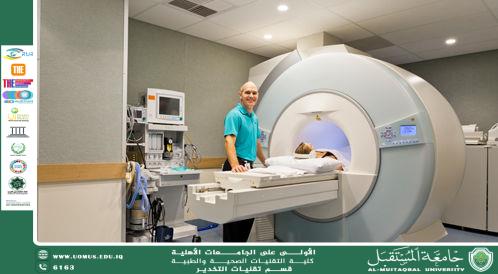
The Evolution of the CT Scanner in Cancer Diagnosis
21/09/2025 Share :
Introduction<br /><br />Cancer is considered one of the most common and dangerous diseases affecting human health, ranking as the second leading cause of death worldwide. With the advancement of medical sciences, radiological imaging has emerged as a vital tool for early detection of tumors and accurate staging. Among the most prominent imaging techniques is the Computed Tomography (CT) scan, which has undergone significant advancements since its invention in the 1970s, becoming a cornerstone in oncology diagnostics.<br /><br /><br /><br />Scientific Background<br /><br />The CT scanner operates by using X-rays combined with advanced computer algorithms to produce cross-sectional images of the body. By incorporating mathematical reconstruction techniques, the device can generate high-resolution images that reveal anatomical and pathological details not detectable through clinical examination alone.<br /><br /> Historical and Technical Development<br /><br />1. First Generation (1970s)<br /><br /> * Operated slowly using a single X-ray beam.<br /> * Primarily used for brain imaging and diagnosing central nervous system tumors.<br /><br />2. Second and Third Generations (1980s–1990s)<br /><br /> * Transitioned to fan-beam technology with multiple detectors.<br /> * Enabled faster and more accurate imaging of the chest, abdomen, and pelvis.<br /><br />3. Helical/Spiral CT<br /><br /> * Marked a breakthrough in diagnostic imaging through continuous scanning as the tube rotates around the body.<br /> * Reduced scan time and improved 3D image quality.<br /><br />4. Multidetector CT (MDCT)<br /><br /> * Capable of capturing dozens to hundreds of slices in seconds.<br /> * Enabled high-resolution imaging of delicate organs such as the lungs, liver, and pancreas.<br /><br />5. Integration with Artificial Intelligence (Since 2015)<br /><br /> * Use of AI and deep learning to enhance image quality and reduce noise.<br /> * Applied in early detection of small cancerous lesions that may be overlooked by the human eye.<br /><br /><br /><br /> Role of CT in Cancer Diagnosis<br /><br />* Early Detection: Facilitates the identification of small nodules in the lungs (e.g., lung cancer) or liver before clinical symptoms appear.<br />* Tumor Staging: Assesses the spread of cancer to lymph nodes or distant organs.<br />* Treatment Planning: Guides surgical or radiotherapy procedures with precision.<br />* Monitoring Treatment Response: Assists in evaluating the effectiveness of chemotherapy or radiation therapy by comparing serial scans.<br /><br />Comparison with Other Imaging Modalities<br /><br />* MRI (Magnetic Resonance Imaging): Superior for imaging soft tissues and the brain, while CT is faster and more effective for evaluating the chest and lungs.<br />* PET-CT (Positron Emission Tomography - CT): Combines CT with nuclear imaging to provide both anatomical and functional information about tumors.<br /><br /><br /> Challenges and Considerations<br /><br />* Radiation Dose: Despite technological advancements, radiation exposure remains a concern, especially in younger patients or those requiring long-term follow-up.<br />* Contrast Media: Use of contrast agents can be problematic for patients with kidney issues or allergies.<br />* Cost and Accessibility: Modern CT systems are expensive and may not be readily available in all medical centers.<br /> Conclusion<br /><br />The CT scanner has undergone tremendous evolution—from a primitive imaging tool to an advanced system powered by artificial intelligence—making it a central component in cancer diagnosis. This evolution has significantly contributed to early detection, accurate staging, and treatment monitoring, ultimately improving patient outcomes and quality of life. As research progresses, CT technology is expected to further integrate with functional imaging and AI to achieve faster, more accurate, and safer diagnoses.<br /><br />zahraa jawad <br /><br />Al-Mustaqbal University <br />The First University in Iraq.