The Binary Opposition in the Arabic Language: From Divergence of Meaning to Sustainability of Thought
14/10/2025 Share :
By: Asst. Lecturer Ahmed Mohammed Al-Dulaimi
In a world brimming with contradictions, the Arabic language remains a unique example of the human mind’s ability to transform opposition into harmony and difference into balance. It is a language that gathers together light and shadow, life and death, presence and absence—recasting such opposites within a linguistic structure that embraces meaning and grants it existential depth.
Binary opposition in Arabic is not merely a relation between two contrasting words; it is a philosophical vision expressing an awareness that truth can only be grasped through the presence of its opposite, and that meaning unfolds through the dialectic of contrast and difference.
1. The Dialectic of Opposition and the Construction of Meaning
Since the earliest Arab coined his words, he viewed language as more than a means of communication—it was a repository of consciousness and experience. When he uttered “night,” he simultaneously evoked “day”; when he said “life,” he glimpsed “death.” With this intuitive awareness, Arabic shaped its worldview upon a foundation of integration rather than division, where opposites coexist to complete meaning and difference intersects to generate significance.
The Qur’an offers wondrous examples of such balance:
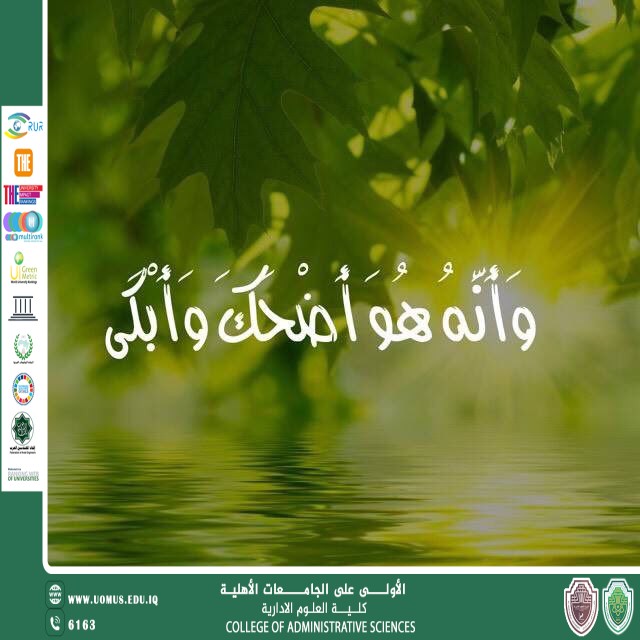
{ وَأَنَّهُ هُوَ أَضْحَكَ وَأَبْكَىٰ (٤٣) وَأَنَّهُ هُوَ أَمَاتَ وَأَحْيَا } (النجم:٤٣- ٤٤)
This opposition teaches us that harmony within difference is the secret of universal order.
2. Language as a System of Balance and Sustainability
If we contemplate the deep structure of binary opposition in Arabic, we find it akin to a linguistic ecosystem that maintains the balance and sustainability of human thought. Just as life needs both night and day to continue, language requires opposites to remain alive with movement and meaning.
This linguistic balance enables Arabic speakers to see the world with two eyes rather than one—to perceive beauty in ugliness, order in chaos, and certainty in questioning. From here emerges the sustainability of thought, which makes Arabic a language of contemplation rather than consumption, a language of ever-renewing thought rather than one confined to a single meaning.
3. From Opposition to Enlightenment
Binary opposition, then, is not a sign of conflict but an intellectual energy that nourishes the mind with inquiry and equilibrium, propelling thought toward maturity. It teaches the acceptance of diversity, respect for difference, and the realization that truth does not dwell in one side alone—it resides between opposites.
Here, linguistic awareness meets developmental awareness, for the philosophy of sustainability is—at its core—founded on balance between competing needs: progress and preservation, development and nature, the individual and the community.
Thus, the Arabic language, with its fertile dialectic of opposites, becomes an intellectual school that teaches us how to build a sustainable society based on diversity rather than exclusion, dialogue rather than rupture.
Conclusion: Language as a Bridge Between Opposites
Ultimately, binary opposition proves that Arabic is not merely a language of the past but of the future as well. It possesses the resilience to embrace contradiction without breaking and to unite differences without losing identity.
From the divergence of meaning arises the sustainability of thought, and from the struggle of words emerges a renewed awareness of existence—affirming that Arabic, like humanity itself, thrives only when it reconciles with its inner contradictions and transforms them into creative balance.
Al-Mustaqbal University is ranked first among private universities.