Two Training Workshops in Biomedical Engineering to Enhance Students’ Skills in Functional Anatomy and Engineering Applications
02/12/2025 Share :
Under the patronage of the Dean of the College of Engineering at Al-Mustaqbal University, the Department
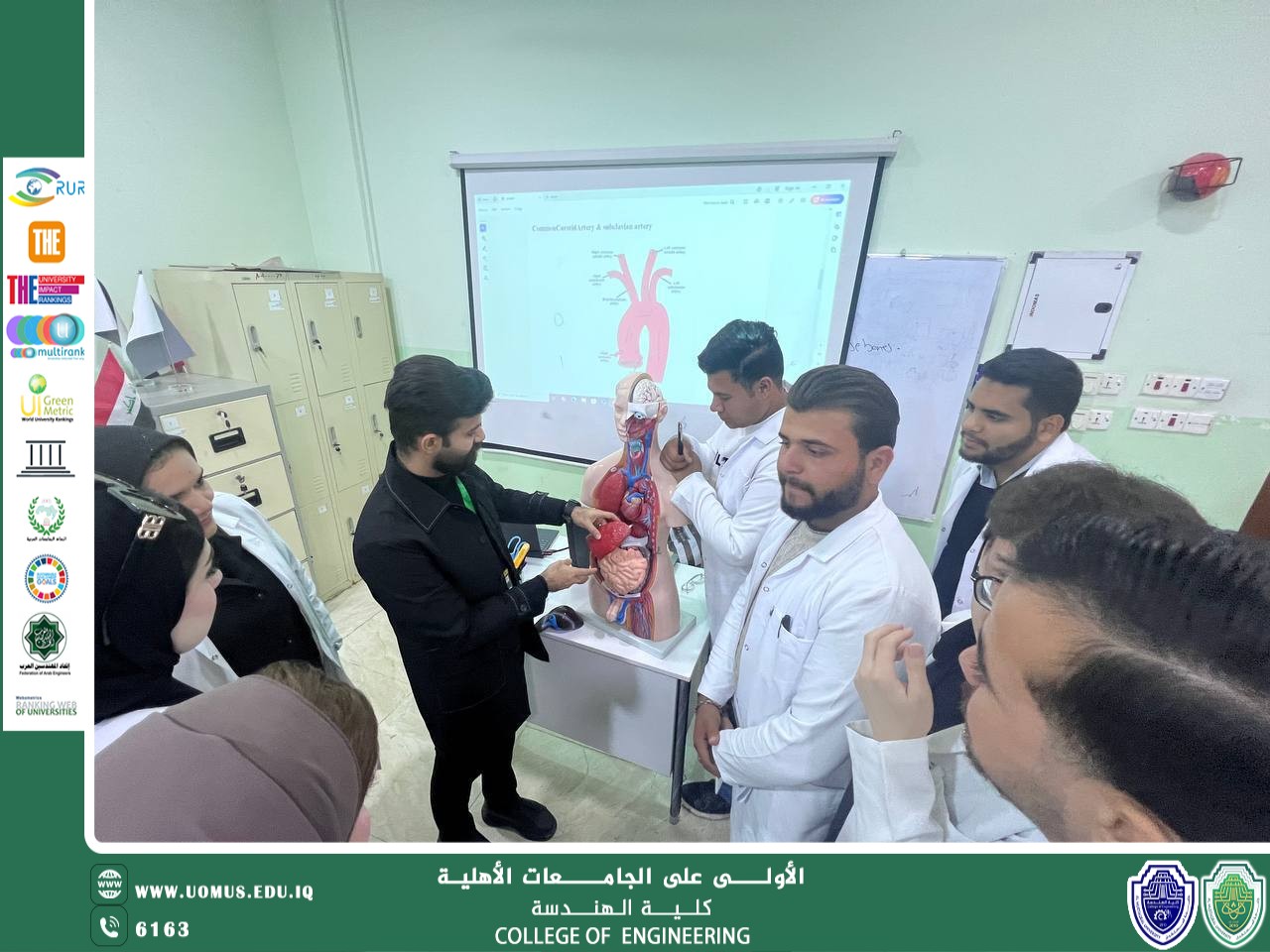
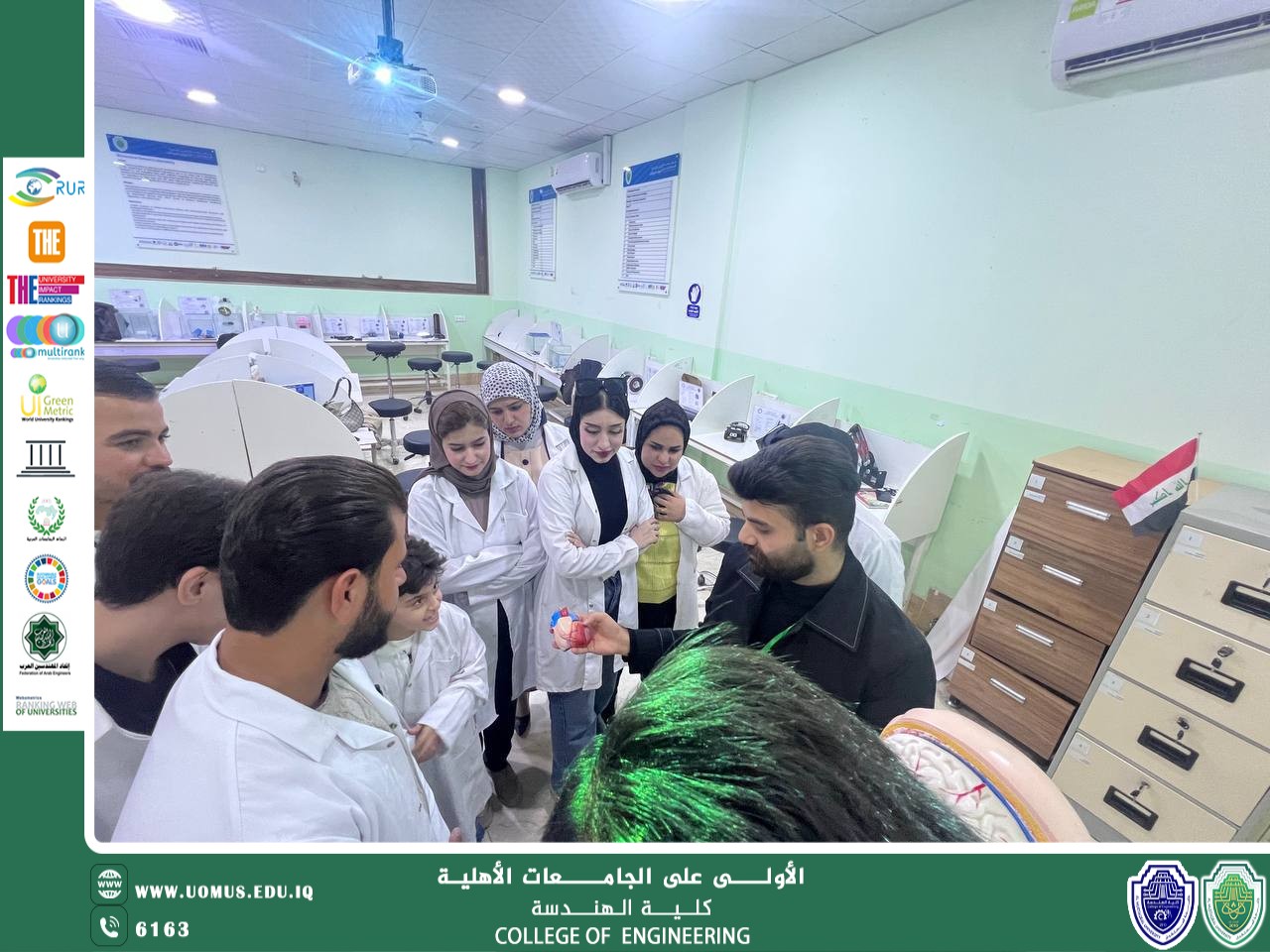
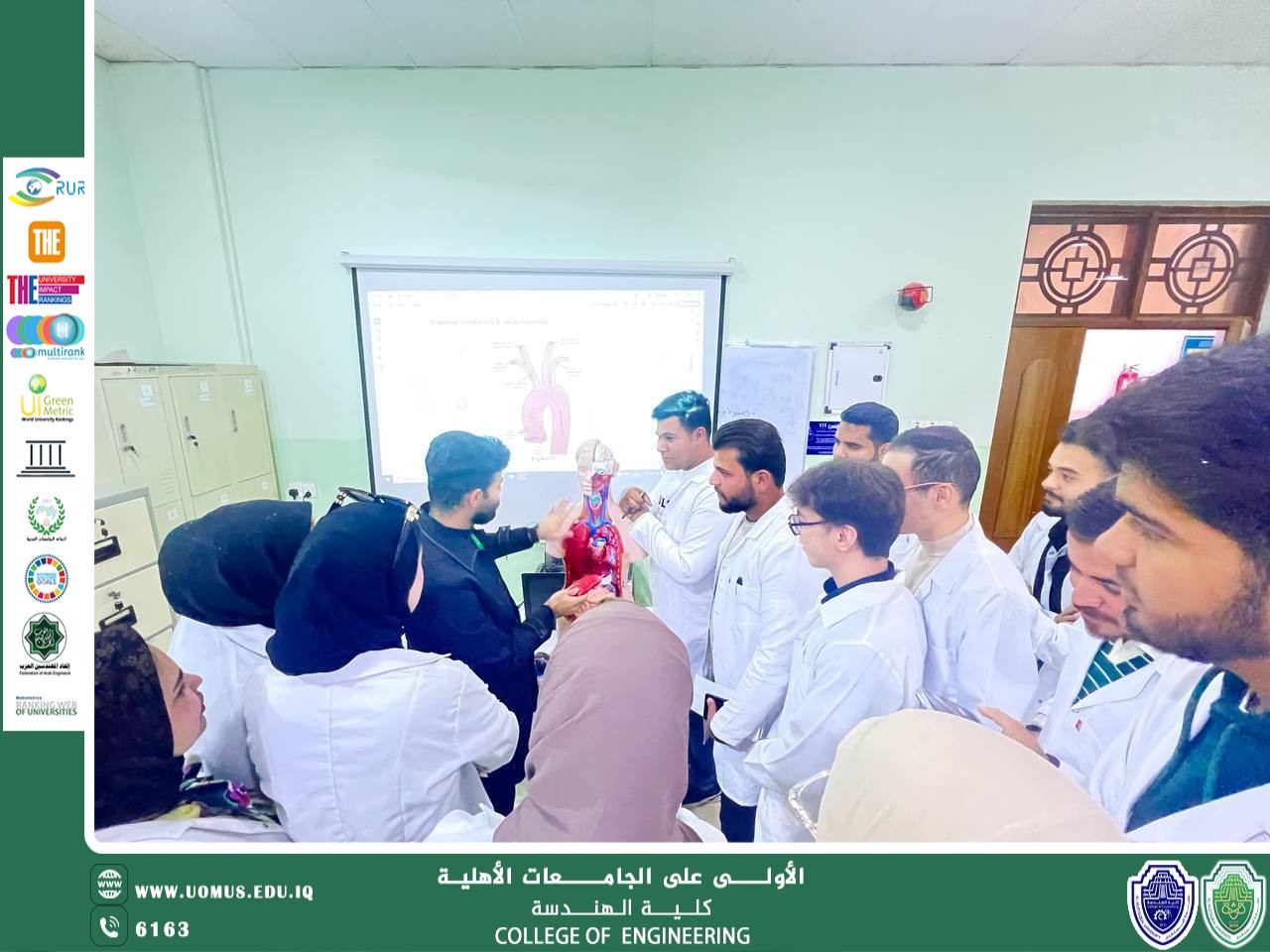
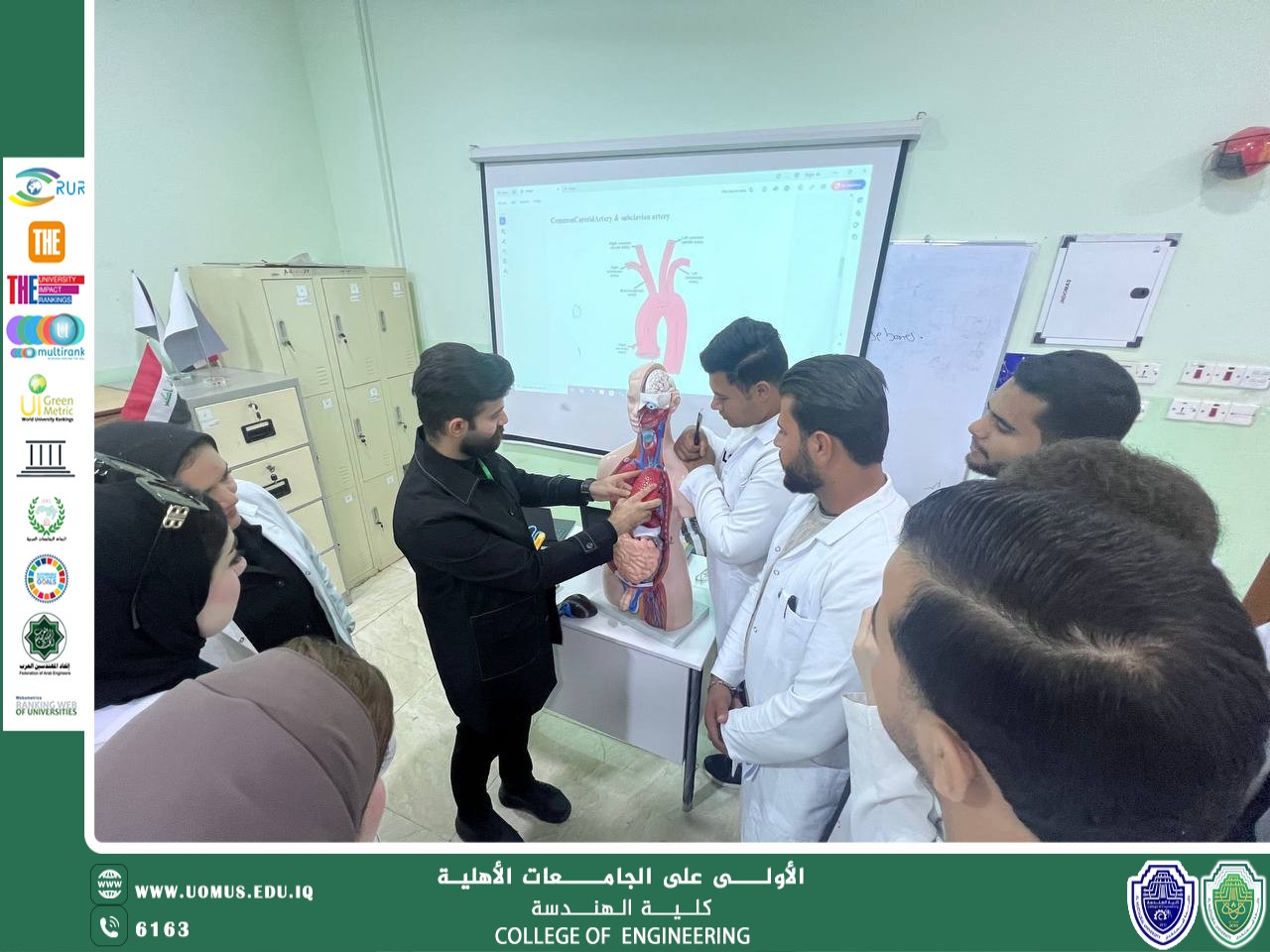
of Biomedical Engineering organized two training workshops delivered by Engineer Mohammed Abdul Kareem Razuqi. The workshops focused on providing students with practical skills in functional anatomy and linking them to the engineering design of medical devices.
The first workshop offered a hands-on explanation using an anatomical model of internal organs, which included clarifying the locations of the respiratory, circulatory, and digestive systems, the pathways of major blood vessels, and how each organ is connected to the body’s vital systems. The second workshop highlighted the skeletal structure and spinal column, in addition to joints and various types of bones—such as long, round, and flat bones—demonstrating how the shape of each bone reflects its functional and supportive role in movement.
Both workshops emphasized the importance of these foundational concepts for biomedical engineering students in understanding the design and operation of medical devices, prosthetics, and supportive systems, ensuring accurate engineering solutions that align with organ functions and patient safety.
These activities align with Sustainable Development Goal 3 (Good Health and Well-Being) by supporting applied education, enhancing students’ competencies in biomedical fields, and building an effective connection between academic learning and practical applications.
University of Al-Mustaqbal – the first university in Iraq