Acquired Ptosis in Children and Adults
10/12/2025 Share :
A scientific article by Assist. Prof. Dr. Munther Samin Shaker, Head of the Department of Optics Technologies, on the phenomenon of eyelid ptosis
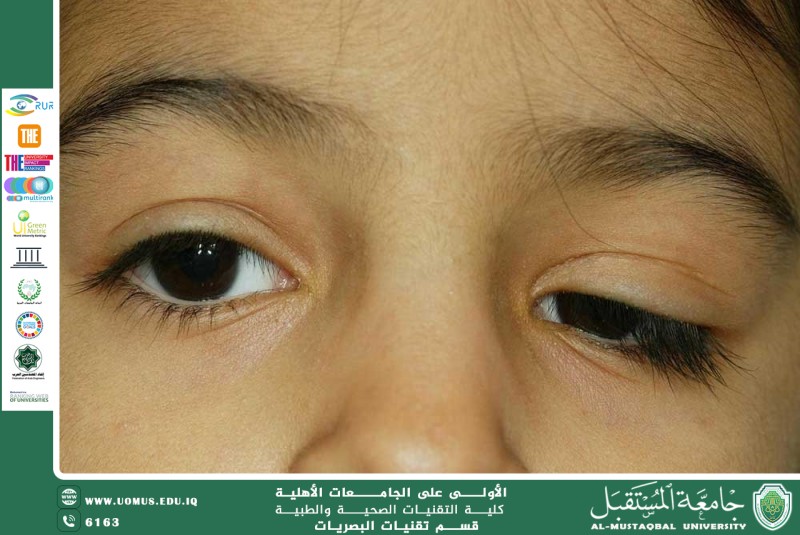
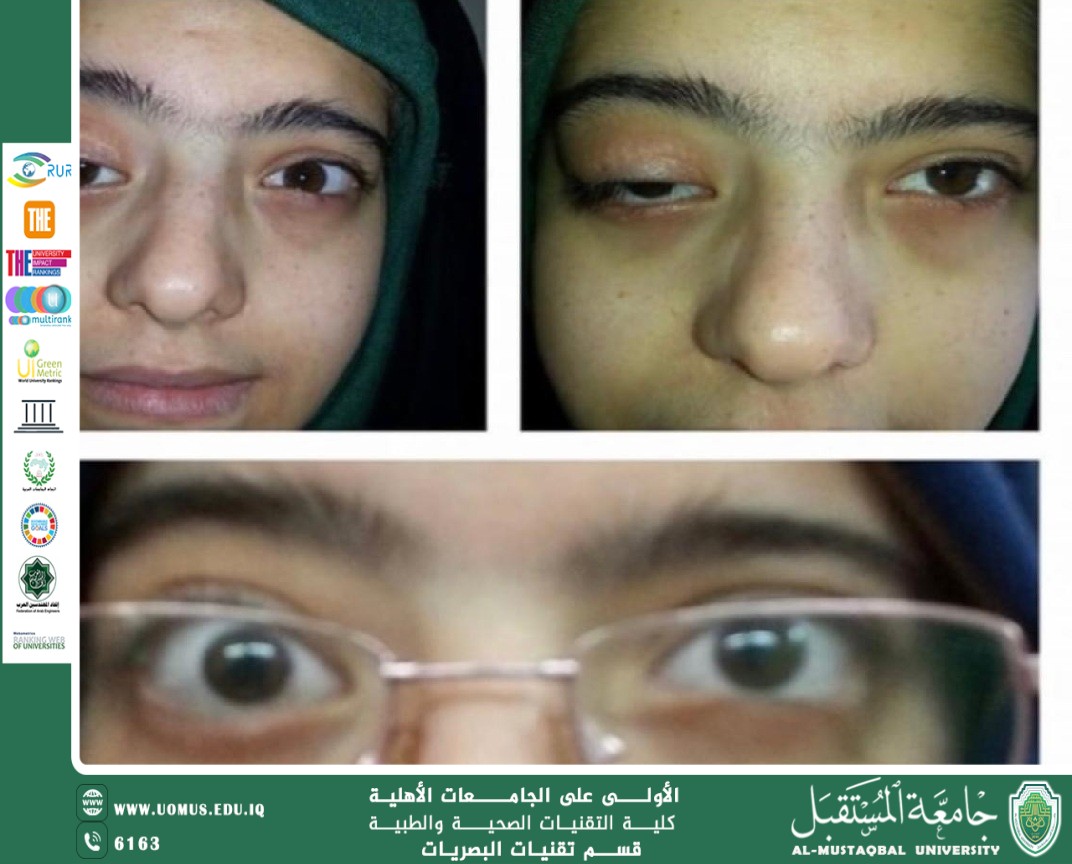
Eyelid ptosis is considered one of the most common congenital and acquired conditions among both adults and children, and its types vary depending on the underlying causes. Ptosis is defined as the dropping of the upper eyelid below its normal position, where the upper lid typically covers approximately 1–2 mm of the superior portion of the cornea. When the eyelid droops beyond this limit, it indicates eyelid laxity, which may lead to significant visual impairment.
Signs of Ptosis in Children
Ptosis in children can be identified through several observable symptoms, including:
Tilting the head backward while reading, writing, or using smart devices. This compensatory posture occurs due to the reduced visual field caused by the drooping upper eyelid.
Uncontrolled contraction of the muscles on the affected side, which may occasionally be mistaken for neurological tics.
Comprehensive Examination
A full diagnostic evaluation typically includes the following assessments:
Determining visual acuity
Measuring visual fields
Ophthalmoscopy with examination of the fundus
Corneal evaluation
It is essential during the evaluation that the patient remains relaxed and does not frown; otherwise, the results may be inaccurate due to temporary changes in eyelid position.