A scientific article by Lecturer Zainab Nazem Azeez titled “The Impact of Lifestyle on Cardiovascular Health.”
12/12/2025 Share :
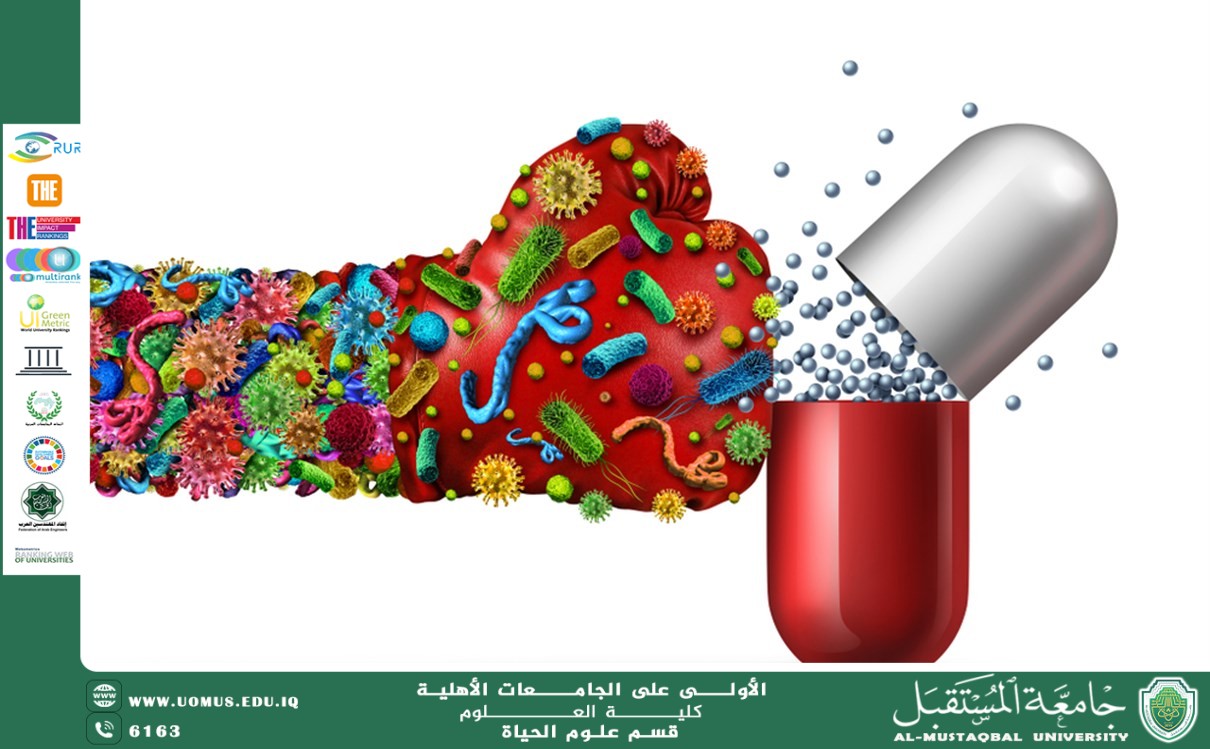
Antibiotic resistance is one of the most significant global health challenges today. It reduces the effectiveness of antibacterial medications, making the treatment of many infections more difficult and complex. Resistance occurs when bacteria develop mechanisms that allow them to survive despite exposure to antibiotics.
1. Causes of Antibiotic Resistance
Several factors contribute to the development of resistance, including:
Overuse and misuse of antibiotics.
Failure to complete prescribed antibiotic courses.
Using antibiotics without a medical prescription.
Poor infection control practices in healthcare settings.
2. Impact on Public Health
Antibiotic resistance poses a direct threat to public health because it:
Increases the incidence of long-lasting infections.
Raises mortality rates from diseases that were previously treatable.
Increases healthcare costs due to the need for more expensive alternative medications.
Compromises the success of surgeries and treatments that rely on effective antibiotics, such as chemotherapy.
3. Strategies to Reduce Antibiotic Resistance
Addressing this issue requires collaboration between individuals and health authorities through:
Using antibiotics only when necessary and with a prescription.
Completing prescribed doses without stopping treatment early.
Strengthening awareness programs about the risks of antibiotic misuse.
Improving hygiene and infection control practices in healthcare facilities.
Al-Mustaqbal University is the first university in Iraq.