Alternative Biomaterials and Their Multiple Uses in Human Applications
12/12/2025 Share :
Introduction
Alternative biomaterials are considered one of the most significant scientific innovations that have greatly influenced the fields of medicine and biomedical engineering. Extensive scientific research is conducted in this area due to the high human demand and their effective role in serving humanity. Biomaterials refer to natural or synthetic materials designed to interact with biological systems with the aim of improving or replacing biological functions in the human body. Their uses range from organ transplantation to the manufacturing of medical devices and tissue repair, making them a major focus for researchers and scientists.
The future of biomaterials is moving toward developing smarter materials capable of adapting to the biological environment of the human body. With continuous technological advancements such as artificial intelligence and bioprinting, new innovations are expected that enhance the effectiveness of these materials in improving human quality of life.
Definition and Classification of Biomaterials
Biomaterials are materials designed to be biocompatible and not cause harmful immune reactions when used inside the human body. They undergo numerous biophysical and biological tests before being approved for human application.
Biomaterials are classified into two main types:
1. Natural Biomaterials:
• Collagen: Used in tissue grafting.
• Chitosan: Used in wound healing.
2. Synthetic Biomaterials:
• Polymers: Such as biodegradable polymers (PGA & PLA) used in surgical sutures.
• Ceramics: Such as hydroxyapatite used in bone implantation.
• Metals: Such as titanium used in dental and joint implants.
Required Properties of Biomaterials
To be effective and safe, biomaterials must have the following characteristics:
• Biocompatibility: No immune reactions or inflammation.
• Chemical Stability: Resistance to corrosion inside the body.
• Good Mechanical Properties: To withstand loads in applications such as bone implants.
• Adaptability to Tissues: Ability to integrate without causing carcinogenic changes.
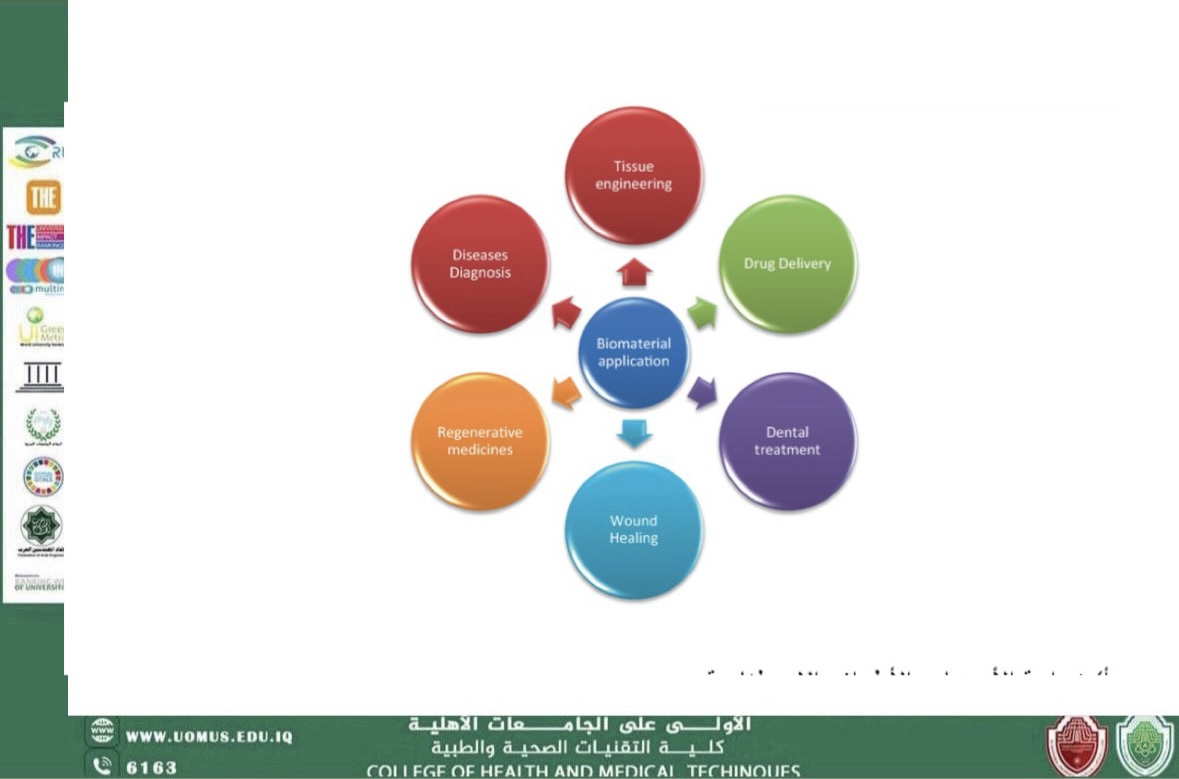
Major Human Applications of Biomaterials
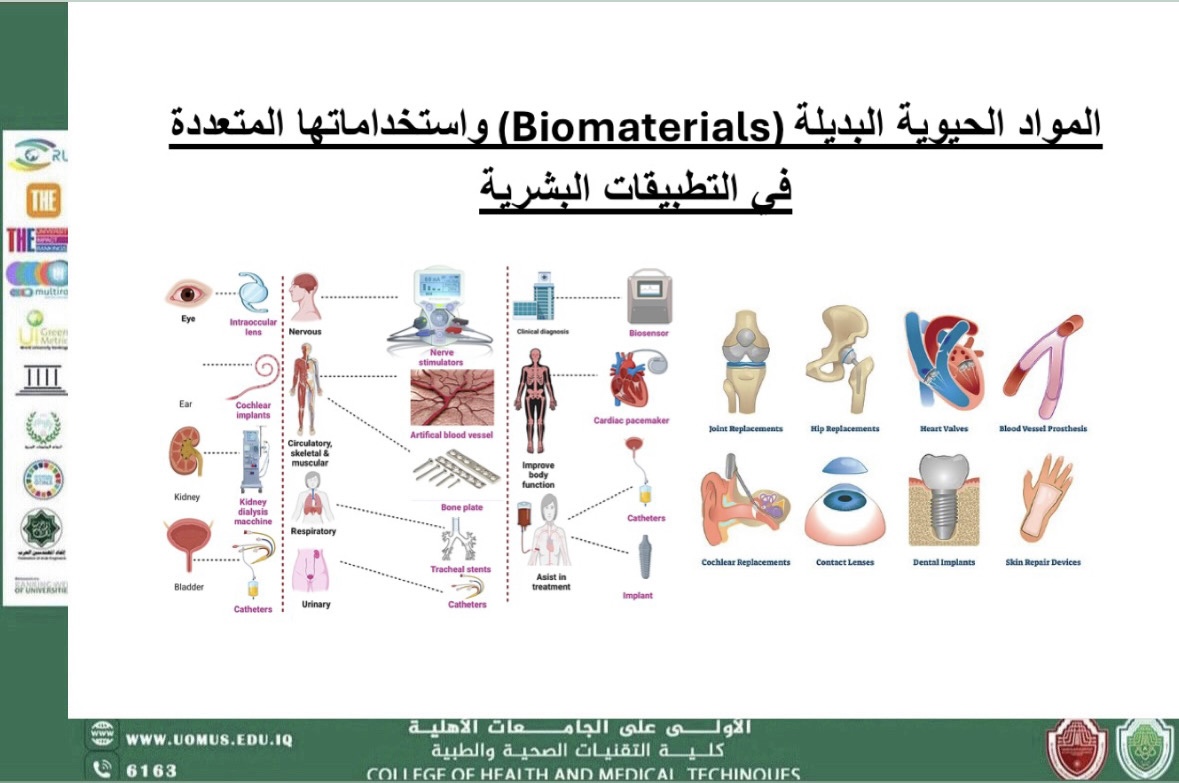
A) Organ Transplantation and Prosthetics
• Biomaterials such as titanium and polyethylene are used to manufacture artificial joints.
• Heart valves made of ceramics or advanced polymers are implanted to mimic natural valves.
B) Tissue and Bone Repair
• Hydrogels: Used in manufacturing artificial cartilage.
• Hydroxyapatite: Used to repair bone defects and guide bone growth.
C) Pharmaceutical Applications
• Biomaterials are used to create drug delivery systems, such as microcapsules that slowly release medication.
• Biodegradable polymers are used to produce drugs that release gradually for improved effectiveness.
D) Wound Healing and Tissue Regeneration
• Chitosan and collagen are used to close wounds and promote new tissue growth.
E) Implantable Medical Devices
• Pacemakers and artificial blood vessels are made from polymers and metallic alloys.
Modern Technologies in Biomaterial Development
A) 3D Bioprinting: Used to create structures from biomaterials that mimic natural tissues and organs.
B) Nanotechnology: Nanomaterials enhance biomaterial properties, such as improving biocompatibility.
C) Molecular Bioengineering: Used to develop smart biomaterials capable of therapeutic interactions.
Challenges and Areas for Improvement
Despite major advancements, researchers still face challenges such as:
• High cost of biomaterial production, especially nanomaterial-based compounds and testing processes.
• Long-term biocompatibility issues as some materials may degrade over time.
• Immune risks, including possible rejection in experimental animals, requiring further refinement.
Conclusion
Alternative biomaterials form an essential foundation in modern medicine due to their major role in enhancing human health through diverse applications. With ongoing scientific and technological progress, these materials are expected to contribute even more to treating chronic diseases and replacing damaged tissues, marking significant advancement in healthcare.
Al-Mustaqbal university is the top-ranked among Iraqi universities.