
The Role of Computers in X-ray Imaging (X-ray Imaging) الوصف بالعربي الوصف بالانكليزي تاريخ النشر الصنف اللغة الصورة الملفات المسموح بها: JPG, PNG | الحد الأعلى 500 كيلوبايت | يجب أن تكون الصورة مربعة أو أفقية الصور الإضافية (حتى 3) — مطلوب
16/12/2025 Share :
تاريخ النشر
الصنف
اللغة
الصورة
الملفات المسموح بها: JPG, PNG | الحد الأعلى 500 كيلوبايت | يجب أن تكون الصورة مربعة أو أفقية
الصور الإضافية (حتى 3) — مطلوبة صورة واحدة على الأقل
صورة 1
JPG/PNG ≤ 500KB
إزالة
صورة 2
JPG/PNG ≤ 500KB
إزالة
صورة 3
JPG/PNG ≤ 500KB
إزالة
إضافة مرفق
إضافةإلغاءThe field of medical imaging has witnessed significant development over recent decades, with computers playing a central role in this progress, particularly in X-ray imaging. Whereas X-ray imaging previously relied on traditional film, it now depends primarily on computer-supported digital systems. This transformation has contributed to improving image quality, increasing diagnostic accuracy, reducing medical errors, and accelerating medical procedures.
First: The Role of Computers in Converting X-rays into Digital Images
Computers are used in digital X-ray systems to convert signals resulting from the absorption of X-rays in the human body into digital images. Digital detectors transmit data to the computer, where it is processed and converted into an image that can be displayed instantly on a screen, without the need for film development as in traditional systems.
Second: Image Processing and Quality Enhancement
Computers play an important role in processing X-ray images through specialized software that allows for:
• Improving contrast and brightness
• Magnifying specific areas of the image
• Reducing noise
• Enhancing fine details such as small fractures or early tumors
These processes help physicians and radiologists obtain clearer and more accurate images, leading to better diagnosis.
Third: Electronic Storage and Archiving
Computers contribute to the storage of X-ray images within digital archiving systems known as:
PACS (Picture Archiving and Communication System).
These systems enable:
• Long-term storage of images
• Rapid retrieval of images
• Sharing images between medical departments or hospitals
• Reducing the need for paper-based storage
Fourth: The Role of Computers in Reducing Radiation Dose
Through precise control of X-ray equipment settings, computers help reduce the radiation dose received by the patient while maintaining image quality. This represents an important achievement in radiation safety and in protecting both patients and radiology staff.
Fifth: Diagnostic Support and Artificial Intelligence
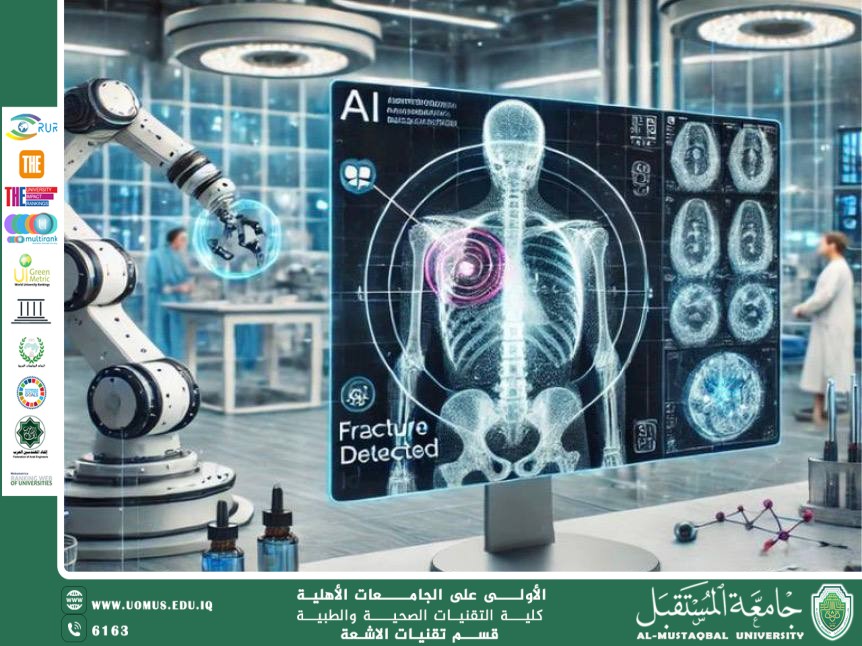
Today, computers have become an essential tool in supporting medical decision-making. Artificial intelligence and machine learning algorithms are used to analyze X-ray images and assist in detecting diseases such as:
• Fractures
• Pneumonia
• Tumors
• Bone diseases
These technologies do not replace physicians, but they contribute to increasing the accuracy and speed of diagnosis.
Sixth: The Role of Computers in Education and Training in Radiology
Computers play an effective role in training radiology students and specialists through digital simulation programs that mimic real X-ray equipment. These programs allow users to become familiar with device settings and understand the impact of various factors on image quality without exposing patients to radiation risks. Such technologies also help improve the efficiency of medical staff and enhance their diagnostic skills.
Challenges and Ethical Considerations
Despite the significant benefits of using computers and artificial intelligence in X-ray imaging, several challenges remain. These include the need for large and accurate medical datasets to train intelligent systems, as well as ensuring the protection of patient privacy and data confidentiality. Moreover, reliance on these technologies requires continuous human supervision to verify the accuracy of results and to prevent full dependence on automated systems without specialized medical evaluation.
Conclusion
It can be concluded that computers have brought about a qualitative shift in the field of X-ray imaging by improving image quality, accelerating medical procedures, reducing radiation doses, and supporting medical diagnosis. With ongoing advancements in computer technologies and artificial intelligence, the role of computers is expected to become even more significant in the future of medical imaging.
Haydar Abdulkareem Majeed
Al-Mustaqbal University – College of Health and Medical Technologies – Department of Radiologic Technologies