An Article entitled (Biomaterials Classifications)
23/02/2022 Share :
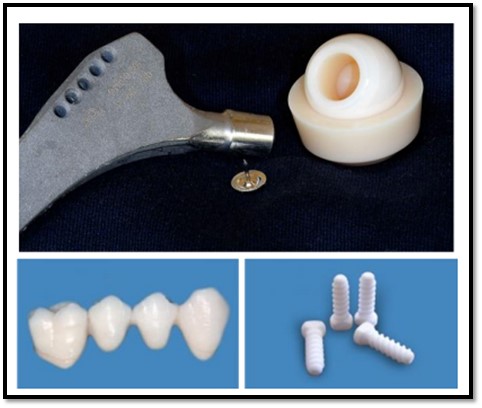
When a synthetic material is placed within the human body, tissue reacts towards the implant in a variety of ways depending on the material type. The mechanism of tissue interaction depends on the tissue response to the implant surface. In general, there are three terms in which a biomaterial may be classified into representing the tissues responses. These are bioinert, bioresorbable, and bioactive.<br />The term bioinert refers to any material that once placed in the human body has minimal interaction with its surrounding tissue, examples of these are stainless steel, titanium, alumina, partially stabilised zirconia, and ultra high molecular weight polyethylene. Generally a fibrous capsule might form around bioinert implants hence its biofunctionality relies on tissue integration through the implant <br />Bioactive refers to a material, which upon being placed within the human body interacts with the surrounding bone and in some cases, even soft tissue. This occurs through a time dependent kinetic modification of the surface. An ion exchange reaction between the bioactive implant and surrounding body fluids results in the formation of a biologically active carbonate apatite (CHAp) layer on the implant that is chemically and crystallographically equivalent to the mineral phase in bone. Prime example of these materials is bioglass.<br />Bioresorbable refers to a material that upon placement within the human body starts to dissolve (resorbed) and slowly replaced by advancing tissue (such as bone). Common examples of bioresorbable materials are tricalcium phosphate [Ca3(PO4)2] and polylactic–polyglycolic acid copolymers. Calcium oxide, calcium carbonate and gypsum are other common materials that have been utilised during the last three decades <br /><br />By: MSc. Fatima Safaa