
مقالة بعنوان "What is a prosthetic arm" للمهندس محمد عبد الكريم رزوقي
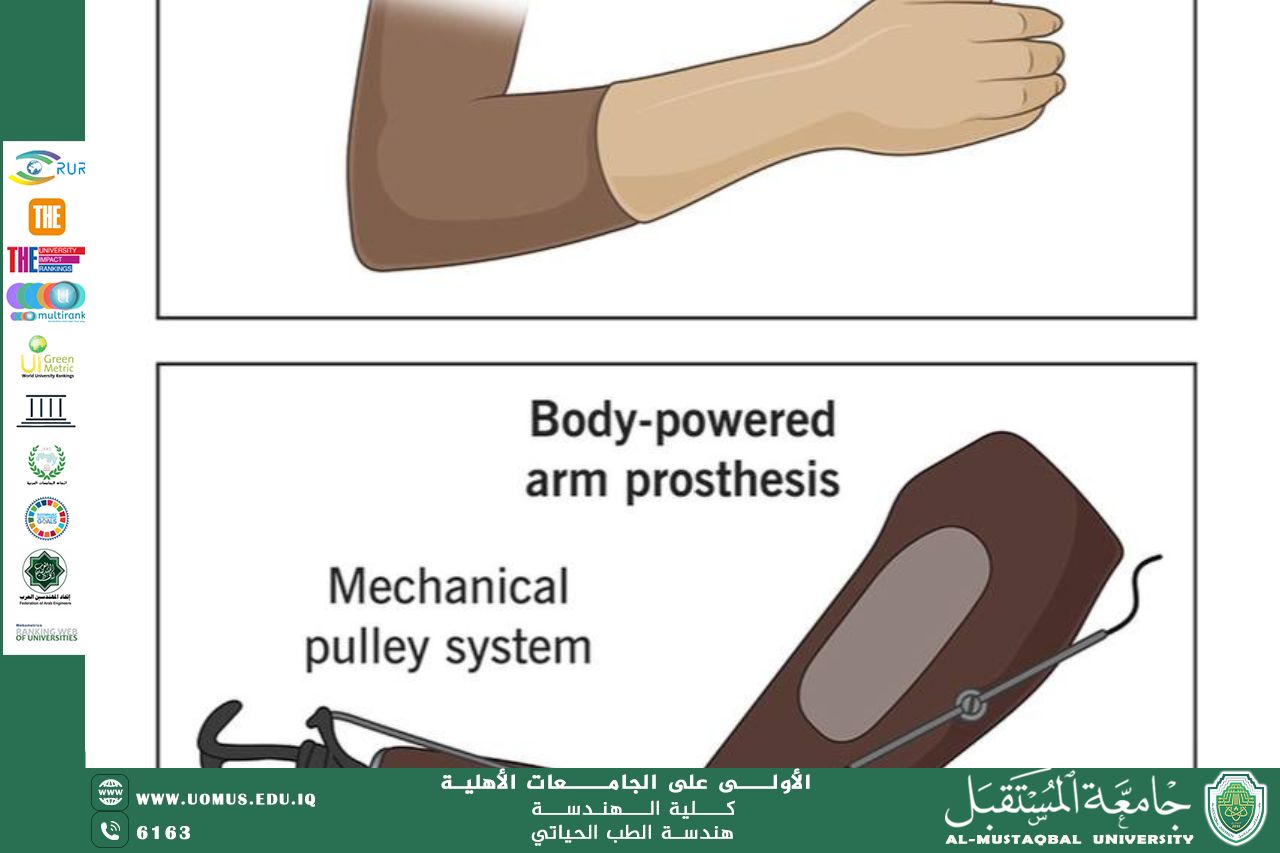
A prosthetic arm, or upper limb prosthesis, is an artificial replacement for your natural arm. It can replace part or all of your upper limb, from your hand, wrist and forearm to your elbow, upper arm and shoulder. Prosthetic arms can be passive, like a mannequin arm, or high-tech, like a robotic arm.
Who is a prosthetic arm for?
You might be interested in an upper limb prosthesis if you’ve had an arm amputation or you were born with a congenital limb difference that affects its appearance and/or functionality. Different types of prostheses are available for different types of upper limb amputations and limb differences, including:
Transradial amputation. Amputation through your forearm bones.
Elbow disarticulation. Amputation at your elbow joint.
Transhumeral amputation. Amputation above the elbow and through your humerus.
Shoulder disarticulation. Amputation at your glenohumeral (shoulder) joint.
Forequarter amputation. Removal of your whole arm, shoulder blade and collarbone.
Congenital limb deficiency. Underdeveloped arm bones, affecting the length and/or width of your arm.
Ulnar clubhand. Undeveloped or underdeveloped ulna bone, causing your arm to bend inward.
What is the purpose of a prosthetic arm?
Different types of prosthetic arms serve different purposes. Some are more cosmetic, while others are more functional. Some are designed for everyday tasks, and others are designed for specific activities. If you have an absent arm or arm asymmetry, you might have use for several types of prosthetic arms.