مقاله بعنوان "Medical Lasers in Biomedical Engineering" التدريسية م.م.هبه ضياء عبد الأمير
Medical lasers have become indispensable tools in modern medicine due to their precision, controllability, and minimal invasiveness. Biomedical engineering has played a key role in the development, optimization, and safe application of laser systems in clinical settings. This article discusses the principles of medical lasers, laser–tissue interactions, methodological approaches, and their applications across various medical specialties.
Introduction
Lasers are widely used in medicine for diagnosis, therapy, and surgery. Their unique properties—monochromaticity, coherence, and directionality—allow for precise energy delivery to targeted tissues. Biomedical engineers are responsible for designing laser systems, selecting appropriate wavelengths, and ensuring safe and effective clinical use.
Methods
Medical laser methods are based on controlled laser–tissue interactions, which depend on wavelength, power density, exposure time, and tissue properties. The primary interaction mechanisms include:
• Photothermal effects: Tissue heating and coagulation
• Photochemical effects: Light-induced chemical reactions (e.g., photodynamic therapy)
• Photomechanical effects: Mechanical disruption of tissue
• Photoablative effects: Precise tissue removal
Common medical lasers include CO₂ lasers, Nd:YAG lasers, diode lasers, and excimer lasers.
Applications
Medical lasers are applied in numerous fields:
• Surgery: Cutting, coagulation, and ablation with minimal bleeding
• Ophthalmology: Vision correction and retinal treatments
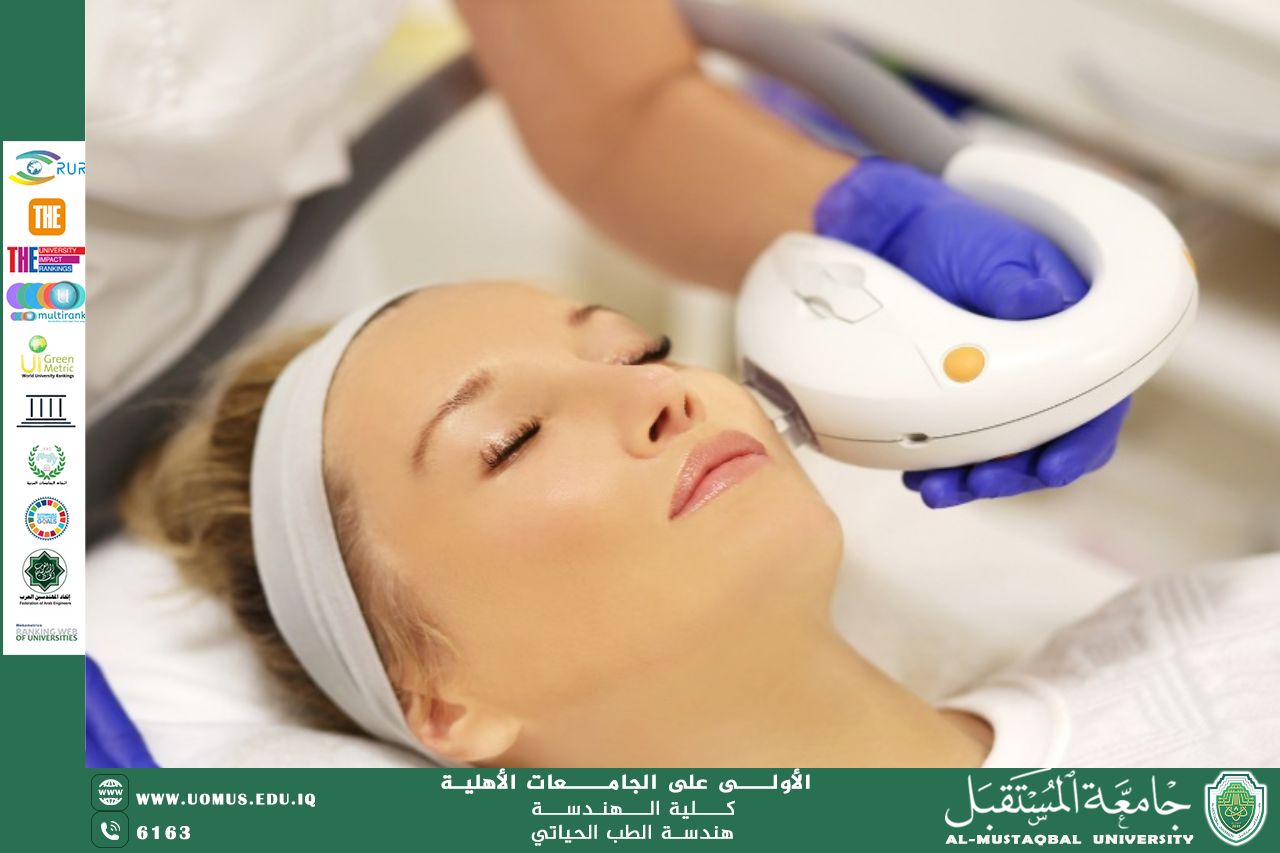
• Dermatology: Skin resurfacing, tattoo removal, and lesion treatment
• Oncology: Tumor destruction and photodynamic therapy
• Dentistry: Soft and hard tissue procedures
Their precision reduces damage to surrounding tissues and shortens recovery time.
Conclusion
Medical lasers represent a powerful intersection of physics, engineering, and medicine. Continuous advancements in laser technology and biomedical engineering are enhancing treatment accuracy, safety, and clinical outcomes. Future developments are expected to focus on smart laser systems, real-time feedback, and integration with imaging technologies.