تم نشر علمية للأستاذ الدكتور ( فاضل فرهود مكي) بعنوانThe mysterious of animle death
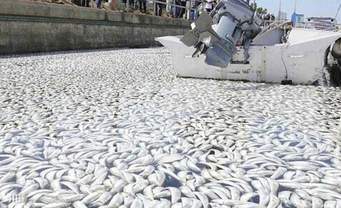
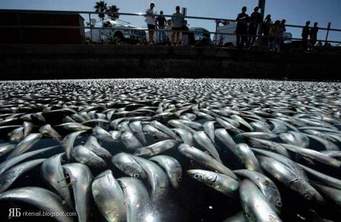
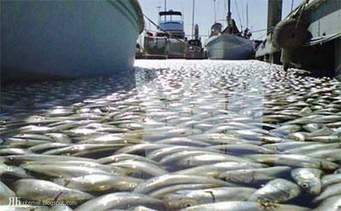
The mysterious mass fish deaths reported lately in November 2018 the central Euphrates region of Iraq is an example of a mass animal die-off ,which is occurring more often on a global basis.Reports emerge in the media on a regular basis of thousands of animals of a species suddenly dying.Recent examples like that which occurred in Iraq , are common murres (bird species) in the Northeast Pacific region of the United States.They have been dying for months, but estimates of the toll jumped sharply when biologists found close to 8,000 dead birds in early January 2018.Since then, scouting teams in Alaska in boats from Fish and Wildlife, the United States Geological Survey counted another 10,000 to 12,000 dead murres on beaches and in the open water of Prince William Sound, <br />As with most die-offs, theories are close at hand. Murres weigh about two pounds and live in large groups, diving to feed on fish like juvenile pollock. In winter, they usually gather near the continental shelf, and they need to eat a lot to keep going, up to half their body weight in a day. <br />A third example of this phenomenon is the death of thousands of reindeers that have starved to death in Siberia during the past decade and experts believe it's all due to climate change.Around 20,000 died in 2006 and another 61,000 died in 2013 because they couldn't eat through the snow and ice.That has been caused by sea ice melting in Siberia due to rising temperatures that in turn caused more rain which then froze on the ground.lt meant the reindeer couldn't break through the ice to reach their food. <br />As Arctic warming has significantly exceeded that of lower latitudes in recent decades ,indigenous peoples have reported symptoms of accelerating change, even while characterizing extreme weather events as 'normal' in the context of life lived on land and/or sea .In the Eurasian Arctic, the rapid retreat and thinning of seance in the Barents and Kara Seas (BKS) are critical components of feedbacks to Arctic and global climate change .Coincidentally, autumn and winter rain-on-snow events, resulting in ice-encrusted pastures and mass starvation of semi-domesticated reindeer (Rangifer tarandus), have -increased-in frequency and intensity across the northwest Russian Arctic .This region is home to the world's largest and most productive reindeer herds. Warmer/wetter winters have negatively affected the much smaller wild reindeer populations on High Arctic Svalbard .In the Low Arctic, there is an urgent need to understand whether and how regional sea ice loss is driving major ROS events over mainland Russia and, crucially, the implications of such events for the region's ancient and unique social-ecological systems . <br />At the circumpolar level, it has been proposed that increases in Arctic terrestrial primary productivity are linked to sea ice decline and thinning .However, evidence based on tundra shrub dendroclimatology from Nenets Autonomous Okrug and Yamal-Nenets Autonomous Okrug does not support such a linkage in the BKS region: in recent decades, the trend of increasing deciduous shrub growth appears closely tied to more frequent and intense summer high-pressure systems over West Siberia .While attention has focused on summer temperature coupled with contraction of summer reindeer pastures due to incremental hydrocarbon development autumn and winter warming have been severe, leading to large changes in regional biota . <br />In particular, a major rain on snow event during autumn/winter 2013-2014 led to the starvation of 61 000 reindeer out of a population of ca 275 000 animals on the Yamal Peninsula .Historically, 2013-2014 is the region's largest recorded mortality episode, and sits within a pattern of more frequent and intense autumn/winter rain on snow events .If sea ice loss ;s driving increasingly severe rain on snow events and high reindeer mortality, it will have serious imp nations for the future of tundra Nenets nomadism. <br /><br />The list of worldwide mass animal deaths for 2018, is outstanding .There are animals dying all over the world today in huge numbers, due to the polluted state of the sea and air. Millions of fish and massive numbers of various marine creatures are washing ashore dead. Birds are falling dead out of the sky, and millions of poultry and wildlife are dying from avian flu. The animals of the land are also dying in large numbers. <br />Why is this phenomenon happening in Iraq and worldwide? <br />Disease and human interference cause many of the biggest animal die-offs. <br />We're not talking about a few dead fish littering our local rivers in Iraq.Mass die-offsare individual events that kill at least a billion animals, wipe out over 90 percent of a population, or destroy 700 million tons—the equivalent weight of roughly 1,900 Empire State Buildings—worth of animals. <br />And according to new research, such die-offs are on the rise. <br />Researchers reviewed historical records of 727 mass die-offs from 1940 to 2012 and found that over that time, these events <br />•<br /><br />