تم نشر مقاله علميه حديثه بواسطة د.رواء ماجد محمد / مقرر قسم تقنيات التخدير بعنوانBacteriuria
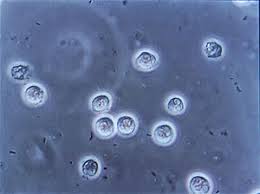
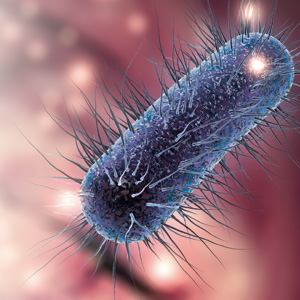
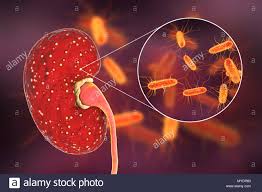
Bacteriuria<br />By Dr.Rawaa M.Mohammed<br />Bacteriuria is the presence of bacteria in urine.[1] Bacteriuria accompanied by symptoms is a urinary tract infection while that without is known as asymptomatic bacteriuria.[1][2] Diagnosis is by urinalysis or urine culture.[3] Escherichia coli is the most common bacterium found.[1] People without symptoms should generally not be tested for the condition.[3] Differential diagnosis include contamination.[1] <br />If symptoms are present treatment is generally with antibiotics.[3] Bacteriuria without symptoms generally does not require treatment.[4] Exceptions may include pregnant women, those who have had a recent kidney transplant, young children with significant vesicoureteral reflux, and those undergoing surgery of the urinary tract.[4][3] <br />Bacteriuria without symptoms is present in about 3% of otherwise healthy middle aged women.[5] In nursing homes rates are as high as 50% among women and 40% in men.[5] In those with a long term indwelling urinary catheter rates are 100%.[5] Up to 10% of women have a urinary tract infection in a given year and half of all women have at least one infection at some point in their lives.[6][7] <br />Asymptomatic bacteriuria is bacteriuria without accompanying symptoms of a urinary tract infection. It is more common in women, in the elderly, in residents of long-term care facilities, and in people with diabetes, bladder catheters and spinal cord injuries. People with a long-term Foley catheter always show bacteriuria. Chronic asymptomatic bacteriuria occurs in as many as 50% of the population in long-term care.[8] <br />There is an association between asymptomatic bacteriuria in pregnant women with low birth weight, preterm delivery, and infection of the newborn.[9][10] However, most of these studies were graded as poor quality.[9] Bacteriuria in pregnancy also increases the risk of preeclampsia.[10] <br />Symptomatic bacteriuria is bacteriuria with the accompanying symptoms of a urinary tract infection (such as frequent urination, painful urination, fever, back pain) and includes pyelonephritis or cystitis. The most common cause of urinary tract infections is Escherichia coli. <br />Asymptomatic bacteriuria generally does not require treatment.[4] Exceptions include those undergoing surgery of the urinary tract, children with vesicoureteral reflux or others with structural abnormalities of the urinary tract.[17][4] In many countries, regional guidelines recommend treatment of pregnant women.[9] <br />There is no indication to treat asymptomatic bacteriuria in diabetics, renal transplant recipients, and in those with spinal cord injuries.[18]<br />The overuse of antibiotics to treat asymptomatic bacteriuria has many adverse effects[19] such as an increased risk of diarrhea, the spread of antimicrobial resistance, and infection due to Clostridium difficile.<br />The decision to treat bacteriuria depends on the presence of accompany symptoms and comorbidities. <br /> References[edit]^ a b c d e f Das, K. V. Krishna; Das, KV Krishna (2017). Textbook of Medicine: Two Volume Set. JP Medical Ltd. p. 1250. ISBN 9789386056108. <br />^ a b Sendi, P; Borens, O; Wahl, P; Clauss, M; Uçkay, I (2017). "Management of Asymptomatic Bacteriuria, Urinary Catheters and Symptomatic Urinary Tract Infections in Patients Undergoing Surgery for Joint Replacement: A Position Paper of the Expert Group". Journal of bone and joint infection. 2 (3): 154–159. doi:10.7150/jbji.20425. PMC 5592375. PMID 28894690. <br />^ a b c d e f "Bacterial Urinary Tract Infections (UTIs)". Merck Manuals Professional Edition. May 2016. Retrieved 12 December 2017. <br />^ a b c d e Köves, B; Cai, T; Veeratterapillay, R; Pickard, R; Seisen, T; Lam, TB; Yuan, CY; Bruyere, F; Wagenlehner, F; Bartoletti, R; Geerlings, SE; Pilatz, A; Pradere, B; Hofmann, F; Bonkat, G; Wullt, B (25 July 2017). "Benefits and Harms of Treatment of Asymptomatic Bacteriuria: A Systematic Review and Meta-analysis by the European Association of Urology Urological Infection Guidelines Panel". European Urology. 72 (6): 865–868. doi:10.1016/j.eururo.2017.07.014. PMID 28754533. <br />^ a b c d e Colgan, R; Nicolle, LE; McGlone, A; Hooton, TM (15 September 2006). "Asymptomatic bacteriuria in adults". American Family Physician. 74 (6): 985–90. PMID 17002033. <br />^ a b Salvatore S, Salvatore S, Cattoni E, Siesto G, Serati M, Sorice P, Torella M (June 2011). "Urinary tract infections in women". European Journal of Obstetrics, Gynecology, and Reproductive Biology. 156 (2): 131–6. doi:10.1016/j.ejogrb.2011.01.028. PMID 21349630. <br />^ a b Nicolle LE (2008). "Uncomplicated urinary tract infection in adults including uncomplicated pyelonephritis". Urol Clin North Am. 35 (1): 1–12, v. doi:10.1016/j.ucl.2007.09.004. PMID 18061019. <br />^ AMDA – The Society for Post-Acute and Long-Term Care Medicine (February 2014), "Ten Things Physicians and Patients Should Question", Choosing Wisely: an initiative of the ABIM Foundation, AMDA – The Society for Post-Acute and Long-Term Care Medicine, retrieved 20 April 2015 <br />^ a b c Smaill, Fiona M.; Vazquez, Juan C. (7 August 2015). "Antibiotics for asymptomatic bacteriuria in pregnancy". The Cochrane Database of Systematic Reviews (8): CD000490. doi:10.1002/14651858.CD000490.pub3. ISSN 1469-493X. PMID 26252501. <br />^ a b Szweda, Hanna; Jóźwik, Marcin (2016). "Urinary tract infections during pregnancy - an updated overview". Developmental Period Medicine. 20 (4): 263–272. ISSN 1428-345X. PMID 28216479. <br />^ a b Detweiler K, Mayers D, Fletcher SG (November 2015). "Bacteruria and Urinary Tract Infections in the Elderly". The Urologic Clinics of North America (Review). 42 (4): 561–8. doi:10.1016/j.ucl.2015.07.002. PMID 26475952. <br />^ Hooton, Thomas M. (15 March 2012). "Uncomplicated Urinary Tract Infection". New England Journal of Medicine. 366 (11): 1028–1037. doi:10.1056/NEJMcp1104429. ISSN 0028-4793. PMID 22417256. <br />^ Sam, Amir H.; James T.H. Teo (2010). Rapid Medicine. Wiley-Blackwell. ISBN 978-1-4051-8323-9. <br />^ a b Schneeweiss J., Koch M., Umek W. (2016). "The human urinary microbiome and how it relates to urogynecology". Int Urogynecol J. 27 (9): 1307–12. doi:10.1007/s00192-016-2944-5. PMID 26811114.CS1 maint: uses authors parameter (link) <br />^ Moore, Ainsley; Doull, Marion; Grad, Roland; Groulx, Stéphane; Pottie, Kevin; Tonelli, Marcello; Courage, Susan; Garcia, Alejandra Jaramillo; Thombs, Brett D. (8 July 2018). "Recommendations on screening for asymptomatic bacteriuria in pregnancy". Canadian Medical Association Journal. 190 (27): E823–E830. doi:10.1503/cmaj.171325. PMC 6041243. PMID 29986858. <br />^ a b c Owens, Douglas K.; Davidson, Karina W.; Krist, Alex H.; Barry, Michael J.; Cabana, Michael; Caughey, Aaron B.; Doubeni, Chyke A.; Epling, John W.; Kubik, Martha; Landefeld, C. Seth; Mangione, Carol M.; Pbert, Lori; Silverstein, Michael; Simon, Melissa A.; Tseng, Chien-Wen; Wong, John B. (24 September 2019). "Screening for Asymptomatic Bacteriuria in Adults". JAMA. 322 (12): 1188. doi:10.1001/jama.2019.13069. <br />^ Ramos, Jorge A.; Salinas, Diego F.; Osorio, Johanna; Ruano-Ravina, Alberto (September 2016). "Antibiotic prophylaxis and its appropriate timing for urological surgical procedures in patients with asymptomatic bacteriuria: A systematic review". Arab Journal of Urology. 14 (3): 234–239. doi:10.1016/j.aju.2016.05.002. ISSN 2090-598X. PMC 4983160. PMID 27547467. <br />^ Nicolle, Lindsay E. (2014). "Urinary Tract Infections in Special Populations". Infectious Disease Clinics of North America.<br /><br />