معلومات للمستهلكين حول الاشعة السينية
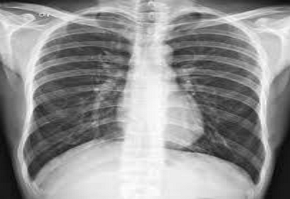
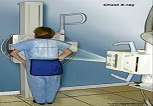
Information for Consumers – X-Ray (Chest) <br />Karar Haider Abd-Alhussain <br /> <br />This article tells you about a chest x-ray, the benefits and the risks, what happens before, during and after having a chest x-ray. <br />What is a chest x-ray? <br />Chest x-rays use a special type of radiation to take pictures of the chest, including the heart, lungs, airway, and blood vessels. You will be placed between the x-ray tube and a receiving plate which makes the picture. Chest x-rays are the most common x-rays performed and are usually used to look at: Reasons for chest pain, long term or bad cough and shortness of breath* Fractures of ribs * <br />Heart problems * <br />Lung problems * <br />Risks of chest x-rays <br />Your doctor knows the risks of having a chest x-ray. Your doctor will consider the risks before recommending you to have a chest x-ray. Possible risks are: <br />Not recommended for pregnant women* <br />Very small chance you could develop cancer in the long term from the radiation* <br />What happens during a chest x-ray? <br />X-ray staff will ask you to stand with your chest against the x-ray plate. If you cannot stand, you will be asked to lie on a table. Two pictures may be taken, one from the back and one from the side. Once you are ready, the x-ray staff will go behind a screen or into the next room to start the x-ray machine. They will ask you to be still, take a deep breath and hold your breath during the x-rays. When your x-ray is finished you will be asked to wait while the x-ray staff check the pictures, as you may need another xray. The x-ray usually takes about 15 minutes including time taken to get ready. <br />