
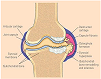
التهاب المفاصل
OSTEOARTHRITIS<br />Nabaa Salah Abdulsahib <br /> <br /> The osteoarthritis is a progressive degenerative multifactorial disease where both genetic and environmental factors play major roles in its etiology. Proinflammatory cytokines and mediators, produced by the synoviumand chondrocytes, and their interactions with mechanical stress play an important role in initiation and progression of osteoarthritis. It affects every tissue present in the synovial joint, slowly destroys the articular cartilage that lines the knee joints and the subchondral bone surfaces, and synoviumin weight bearing joints and frequently used upper extremity joints . <br /> Osteoarthritis can be divided into primary and secondary types. The primary osteoarthritis is considered to be a natural consequence of aging in which articular degeneration occurs in the absence of an obvious underlying abnormality , While the secondary osteoarthritis results from previous joint damage caused by a metabolic, anatomic, traumatic, or a disease process such as rheumatoid arthritis, endocrine diseases, bone dysplasia, and calcium crystal deposition diseases. Symptomatically, patients with osteoarthritis are characterized by joint pain, loss of motion, weakness, and joint instability and stiffness all leading to functional limitation and disability. Pain is the most prominent and disabling symptom of osteoarthritis, resulting in reduced participation in activities and negative effects on sleep, mood, and overall quality of life. <br /> Physiologically, osteoarthritis involves alterations in articular cartilage composition, structure and function. Various elements have been referred to as the pathophysiology of osteoarthritis. Both cartilage degeneration and accelerated bone rotation have been identified as causal elements, though the exact trigger of osteoarthritis is still not fully understood. <br /> The osteoarthritis can occur in any synovial joint, including the knees, hips, cervical and lumbosacral spine, feet and first metatarsal phalangeal joint (MTP). Other commonly affected joints include the distal and proximal inter phalangeal joints of the hands and base of the thumb are often affected, but knee osteoarthritis was the most common type of osteoarthritis. It causes the breakdown of the cartilage in joints with concomitant changes in the bone underneath the cartilage, including changes in trabecular bone structure, bone marrow lesions, development of marginal outgrowths, osteophytes and an abnormal increase in density and thickness of bone, soft-tissue structures and around the joint is also affected. These structures include synovium, which may show modest inflammatory infiltrates, ligaments and bridging muscle, which becomes weak, as a result, the bones rub together causing pain, swelling and stiffness. <br />