
تم نشر مقالة للتدريسي الآستاذ المساعد (محمد عبد الزهرة صعصاع الموسوي) والتدريسي الآستاذ المساعد (علي فاضل زيدان العمران) بعنوان ((Intensive Care Admission Rate Due To COVID-2109)0))
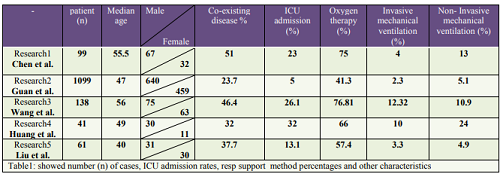
Intensive Care Admission Rate Due To COVID-2109, a<br />narrative Review<br />Mohammed Abdul Zahra Sasaa1<br />and Ali fadihl Al-emran2<br />Abstract:<br /><br />A number of research has been published in few months regarding to novel virus (COV-2019) that<br />infected a high numerous of people within different countries in short time, no antivirus drug has<br />been confirmed to be active against coronavirus. Patients contaminated with 2019-nCoV are in<br />danger for creating respiratory failure and expecting admission to intensive care units. The danger of<br />respiratory failure requiring ICU support in patients infected with 2019-nCoV is considerable, thus<br />intensivists and anesthesiologists must be ready for newcomer and sustained care of patients infected<br />with 2019-nCoV.<br />Method:<br />We performed a narrative review via searching in three databases Pubmed, Google Scholar and<br />Embase for all studies that mentioned all intensive care admission rates for who infected with<br />coronavirus 2019, manual searching also completed. All the selected reviews were limited to the<br />English language and date also.<br />Result:<br />5 researches referred to rate of ICU admission, male cases was more compare to female, median age<br />range were (40-56) years, co-existing disease associated cases range from 23.7%-51%, ICU<br />admission rate range from 5%-32% and median rate was 19.84%, a massive number of patients<br />received oxygen therapy between (41.3%-76.81%, an intermediate number of cases was under noninvasive ventilation range from (4.9%-24%) and low number of patients received invasive<br />ventilation range from 3.3%-12.32%.<br />Conclusion:<br />The contamination of 2019-nCoV was more likely in old male with underling condition such as<br />hypertension, diabetes and others, this can made lethal respiratory symptoms, may develop<br />respiratory failure. So a big number of patients might be take place in ICUs.<br />Keywords: Coronavirus-2019, COVID-2019, admission, intensive care, and ICU<br />1) Assistant teacher at Al- mustaqbal collage university, department of anesthesia and intensive care unit, MSc in<br />anesthesia and intensive care technology, TUMS. AL- Sadar teaching hospital, Najaf,Iraq. Corresponding author,<br />Mohammed Abdul Zahra Sasaa, email address: [email protected]. phone number: +9647718991533.<br />2) Assistant teacher at Al- mustaqbal collage university, department of anesthesia and intensive care unit, MSc in<br />anesthesia and intensive care technology, TUMS. AL- Hussein teaching hospital, Karbala, Iraq. <br />Background:<br />A new version of virus has been spread in the<br />seafood market in city of Wuhan in China is<br />called coronavirus that give rise coronavirus<br />disease 2019 (COVID-19), (1-6). Last couples<br />of months, this unprecedented generation of<br />virus is transmitted from infected area to noninfected area in thirty days and attack many<br />group of peoples with different age and<br />sex,(7).This kind of virus is infected<br />respiratory system from mild such as sore<br />throat, headache, dry cough, fever and others<br />to severe symptoms like dyspnea, increase<br />respiratory frequency, decrease blood oxygen<br />saturation and may develop acute respiratory<br />distress syndrome (ARDS), this reported with<br />highly number of cases in old men associated<br />with comorbidities and might be extent to<br />shock and death.(8,9). Distinguished case<br />patient with COVID-19 were directly<br />segregated in designated wards in existing<br />hospitals, and they could be observe for<br />beginning of symptoms. Patients with this type<br />of virus need optimal monitoring and support<br />especially in late stage of infection, respiratory<br />support starting from only oxygen therapy to<br />invasive mechanical ventilation, also 13% of<br />coronavirus2019 patients are reported with<br />severe respiratory symptoms(10). And about<br />25% requiring ICU admission and 10% need<br />mechanical ventilation (8, 11, 12, 13, and 14).<br />The objective of this study was to determine<br />the intensive care admission rate of<br />coronavirus2019 patients.<br />Method:<br />This narrative review study was started after<br />searching the current literature available on<br />PUBMED, EMBASE and GOOGLE<br />SCHOLAR. Furthermore, citation reviews and<br />hand search of new journals related to<br />intensive care admission due to coronavirus<br />infected disease were done. We searched the<br />published studies from December 2019 till<br />March 2020 using keywords: coronavirus<br />2109, intensive care unit, admission and their<br />synonyms and acronyms. The study included<br />20 researches which are 5 articles mentioned<br />the exact number of cases admitted to<br />intensive care units, other articles are review<br />articles. The exclusion criteria were all studies<br />in other languages except English, letters to<br />editors, expert reviews, comments, opinions,<br />correspondences, spotlight, research<br />highlights, pediatric age groups and case<br />report. The aim was to review studies about<br />intensive care admission rates for all old age<br />groups and gender who suffer from respiratory<br />infection with novel virus called coronavirus<br />2019, inclusion criteria were all studies that<br />mentioned the number of patient with<br />COVID-19 need ICU admission.<br />Result and discussion:<br />After obtained twenty researches from three<br />databases of recent novel coronavirus2019 and<br />read it completely (5) articles showed that the<br />accurate numbers of ICU admission due to<br />COV-n2019 infected disease, other articles are<br />review and case report. (table1) referred to 5<br />researches with number of patients, intensive<br />care admission rates, mean ages, gender and<br />coexisting diseases, other review and case<br />report researches are only supported<br />documents and references.<br />On table1, Chen et al (15), referred that the<br />number of patient were (99), 67male, 32<br />female and median ages was 55.5years. 51%<br />of them had chronic medical illness;<br />admission to intensive care unit was 23%,<br />76% received oxygen therapy either by<br />performance face mask or nasal cannula, 13%<br />received non-invasive mechanical ventilation <br />and 4% under invasive mechanical ventilation.<br />Two patients die after (9-11) days of<br />admission to ICU and both of them were over<br />60 years old and also they developed severe<br />ARDS and respiratory failure, this outcome<br />propose that the rate of ICU admission was<br />more probably in older male patients with coexisting disease with or without smoking in<br />COVID patients due to Weakened immune<br />system (16,17,18,19). Guan (20) and his<br />group mentioned that (1099) patients, median<br />ages of them was 47years, 640 males and 459<br />females. 23.7% had co-morbidities; only 5%<br />of them admitted to intensive care unit for<br />respiratory support, 41.3% received O2<br />therapy, 5.1% on non-invasive mechanical<br />ventilation and just 2.3% under invasive<br />mechanical ventilation. Admission to ICU was<br />(19.1%) in those with higher severity of<br />disease who median ages of them were<br />55years and most of them were smoker<br />(77.9%) and male 100 in number.<br />Wang et al (21) write about (138) patients,<br />median ages of them was 56 years, 75 males<br />and 63 females, 46.4% suffered from morbid<br />disease and 26.1 admitted to ICU due to organ<br />malfunction. Patients who required ICU care<br />were significantly older (median age, 66<br />years) and were more likely to have<br />underlying comorbidities, including<br />hypertension, diabetes, cardiovascular disease<br />and cerebrovascular disease. 76.81% received<br />oxygen therapy, 10.9% non-invasive<br />ventilation and 12.32% with invasive<br />mechanical ventilation. The rate of die patients<br />who admitted to ICU was high about 16.7%<br />and approximately half of them were under<br />mechanical ventilation. The most common<br />complication of COVID-19 ICU patients were<br />shock ARDS, arrhythmia and acute cardiac<br />injury. Liu et al (22), described that (61)<br />patients with coronavirus disease, median ages<br />of them 40 years, and 31 of them were males,<br />30 were males. 37.7% of them with coexisting disease and 13.1% were admitted to<br />intensive care unit, 57.4% treated with oxygen<br />therapy, 4.9% received non- invasive<br />ventilation and 3.3% were under control<br />invasive ventilation. Patients with age ≥ 50 are<br />most likely to transfer to intensive care unit<br />for supporting ventilation (22, 23).<br />Huang et al (24), noted that (41) patients<br />confirmed with COV-19, median ages of them<br />49 years. Most of them were males 30<br />compare with females 11, 32% with comorbidities and 32% were admitted to<br />intensive care unit, because they developed<br />hypoxemia. In this paper the death rate after<br />admitted to ICU was very high (38%) and it<br />was associated with 85% of men and 38% of<br />these patients had co-existing disease. This<br />study demonstrated that 2019-nCoV infection<br />is more effective in old age male patients with<br />co-morbidities with a little higher in smoker<br />group, 4 articles mentioned that the median<br />time from onset of symptoms to ICU<br />admission was 8-10.5 days. A massive number<br />of infected patients admitted to the ICU, by<br />simple mathematical calculation (arithmetic<br />mean), we can sum all outcome of ICU<br />admission (23+5+26.1+32+13.1) divide by<br />number of articles that mentioned rate of ICU<br />admission and it is 5. We can get rate<br />(19.84%) this number refer to ICU admission<br />rate due to coronavirus infected disease, and<br />it's close to rate (18%) that mentioned in Ming<br />et al research(25).<br />Conclusion:<br />A greater number of 19-COVID cases<br />admitted to intensive care unit, most of cases<br />are old age male with different co-existing<br />disease, a large number of ICU admission<br />patients has been died. ICUs are created in<br />order to look for patients that need ventilators,<br />blood pressure support and medication, cutting <br />edge treatments and close monitoring by<br />doctors and other health care staff,<br />unfortunately the care is different with<br />WAHAN virus, this lay all facilities and team<br />under tension and trouble situation.<br />Consequently a many papers and guidelines<br />has been published in few months to<br />recommend all of anesthesiologist,<br />intensivists and other intensive health care<br />provider due to this extremely number of 19-<br />COVIED patients that admitted to ICU or may<br />be in emergency department.<br />These papers are described more details<br />related airway assessment, airway<br />management, difficult airway, equipment<br />preparation, experienced anesthesiologist, and<br />the serious matter is Infection control<br />precautions.<br />Limitation:<br />There were some limitations in the study.<br />First, Lack of studies that referred to number<br />of ICU admission due to 2019-COVID<br />because short period of time, second, there is<br />shortage of information on length of stay in<br />ICU that will support our review article and<br />human error searching might be one of the<br />most cause of missing articles.<br />References:<br />1. Li Q, Guan X,Wu P, et al. Early transmission<br />dynamics inWuhan, China, of novel coronavirusinfected pneumonia. N Engl J Med. Published online<br />January 29, 2020. doi:10.1056/NEJMoa2001316<br />2. Paules CI, Marston HD, Fauci AS. Coronavirus<br />infections—more than just the common cold. JAMA.<br />Published online January 23, 2020. doi:10.1001/jama.<br />2020.0757<br />3. Novel Coronavirus Pneumonia Emergency Response<br />Epidemiology Team. Vital surveillances: the<br />epidemiological characteristics of an outbreak of 2019<br />novel coronavirus diseases (COVID-19)—China, 2020.<br />China CDCWeekly. Accessed February 20, 2020.<br />http://weekly. chinacdc.cn/en/article/id/e53946e2-c6c4-<br />41e9- 9a9b-fea8db1a8f51<br />4. Lu H, Stratton CW, Tang YW. Outbreak of<br />pneumonia of unknown etiology inWuhan China:<br />themystery and the miracle [published January 16,<br />2020]. J Med Virol. 2020. doi:10.1002/jmv.25678<br />5 .Wuhan Municipal Health Commission. Report of<br />clustering pneumonia of unknown etiology in Wuhan<br />City. Published December 31, 2019. Accessed January<br />31, 2020. http://wjw.wuhan.gov.<br />cn/front/web/showDetail/2019123108989<br />6. Wuhan Municipal Health Commission. Report of<br />novel coronavirus-infected pneumonia in China.<br />Published January 20, 2020. Accessed January 31,<br />2020.<br />http://wjw.wuhan.gov.cn/front/web/showDetail/202001<br />2009077<br />7. World Health Organization. Novel coronavirus(2019-<br />nCoV): situation report—15. Accessed February 5,<br />2020. https://www.who.int/ docs/default<br />- patient<br />(n)<br />Median<br />age<br />Male<br />Female<br />Co-existing<br />disease %<br />ICU<br />admission<br />(%)<br />Oxygen<br />therapy<br />(%)<br />Invasive<br />mechanical<br />ventilation<br />(%)<br />Non- Invasive<br />mechanical<br />ventilation (%)<br />Research1<br />Chen et al.<br />99 55.5 67<br />32<br />51 23 75 4 13<br />Research2<br />Guan et al.<br />1099 47 640<br />459<br />23.7 5 41.3 2.3 5.1<br />Research3<br />Wang et al.<br />138 56 75<br />63<br />46.4 26.1 76.81 12.32 10.9<br />Research4<br />Huang et al.<br />41 49 30<br />11<br />32 32 66 10 24<br />Research5<br />Liu et al.<br />61 40 31<br />30<br />37.7 13.1 57.4 3.3 4.9<br />Table1: showed number (n) of cases, ICU admission rates, resp support method percentages and other characteristics<br />source/coronaviruse/situationreports/ 20200204-sitrep15-ncov.pdf<br />8. Wu Z,McGoogan JM. Characteristics of and<br />important lessons from the coronavirus disease 2019<br />(COVID-19) outbreak in China: summary of a report of<br />72 314 cases from the Chinese Center for Disease<br />Control and Prevention. JAMA. Published February 24,<br />2020. doi:10.1001/jama.2020.2648<br />9.Huang C,Wang Y, Li X, et al. Clinical features of<br />patients infected with 2019 novel coronavirus in<br />Wuhan, China [published January 24, 2020]. Lancet.<br />doi:10.1016/S0140-6736(20)30183-5<br />10,National Health Commission of the People’s<br />Republic of China. Update on epidemic situation of<br />novel coronavirus-infected pneumonia by 24:00 on Feb<br />4, 2020. Feb 4, 2020.<br />http://www.nhc.gov.cn/xcs/yqfkdt/202002/<br />17a03704a99646ffad6807bc806f37a4.shtml (accessed<br />Feb 5, 2020).<br />11. Del Rio C, Malani P. Novel coronavirus—<br />important information for clinicians. JAMA. Published<br />February 5, 2020. doi:10.1001/jama.2020.1490<br />12. Bai Y, Yao L,Wei T, et al. Presumed asymptomatic<br />carrier transmission ofCOVID-19. JAMA. Published<br />online February 21, 2020. doi:10.1001/jama.2020.2565<br />13 ZhangW, Du RH, Li B, et al. Molecular and<br />serological investigation of 2019-nCoV infected<br />patients: implication of multiple shedding routes.<br />Emerg Microbes Infect. 2020;9(1):386-389.<br />14. WangD,HuB,HuC,etal.Clinicalcharacteristicsof138<br />hospitalized patients with 2019 novel<br />coronavirusinfected<br />pneumonia inWuhan, China. JAMA. Published<br />online February 7, 2020. doi:10.1001/jama.2020.1585<br />15.Epidemiological and clinical characteristics of 99<br />cases of<br />2019 novel coronavirus pneumonia in Wuhan, China: a<br />descriptive study<br />16 Badawi A, Ryoo SG. Prevalence of comorbidities in<br />the Middle East respiratory syndrome coronavirus<br />(MERS-CoV): a systematic review and meta-analysis.<br />Int J Infect Dis 2016; 49: 129–33.<br />17 Channappanavar R, Fett C, Mack M, Ten Eyck PP,<br />Meyerholz DK, Perlman S. Sex-based differences in<br />susceptibility to severe acute respiratory syndrome<br />coronavirus infection. J Immunol 2017;<br />198: 4046–53.<br />18 Jaillon S, Berthenet K, Garlanda C. Sexual<br />dimorphism in innate immunity. Clin Rev Allergy<br />Immunol 2019; 56: 308–21.<br />19 Dryden M, Baguneid M, Eckmann C, et al.<br />Pathophysiology and burden of infection in patients<br />with diabetes mellitus and peripheral vascular disease:<br />focus on skin and soft-tissue infections. Clin Microbiol<br />Infect 2015; 21 (suppl 2): S27–32.<br />20 Clinical Characteristics of Coronavirus<br />Disease 2019 in China<br />21. Clinical Characteristics of 138 Hospitalized Patients<br />With 2019 Novel Coronavirus–Infected Pneumonia<br />inWuhan, China<br />22. Neutrophil-to-Lymphocyte Ratio Predicts Severe<br />Illness Patients with 2019 Novel Coronavirus in the<br />Early Stage.<br />23. Wang D, Hu B, Hu C, et al. Clinical Characteristics<br />of 138 Hospitalized Patients With 2019 Novel<br />Coronavirus-Infected Pneumonia in Wuhan, China.<br />Jama 2020.<br />24. Chen N, Zhou M, Dong X, et al. Epidemiological<br />and clinical characteristics of 99 cases of 2019 novel<br />coronavirus pneumonia in Wuhan, China: a descriptive<br />study. Lancet (London, England) 2020.<br />25. Breaking down of healthcare system: Mathematical<br />modelling for controlling the novel coronavirus (2019-<br />nCoV) outbreak in Wuhan, Chi<br />