تم نشر مقالة علمية للتدريسة في قسم تقنيات التخدير (م.م نور حيدر عبيد حسون) بعنوان Nanomaterials
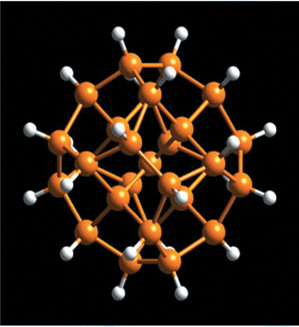
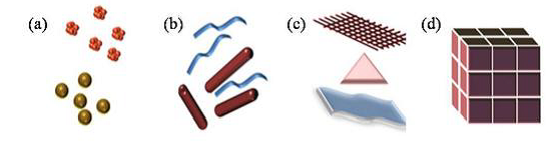
Nanomaterials<br />Nanomaterials are materials with dimensions below 100 nm and they have at least one unique property that is different from the bulk material, or the science is concerned with studying the treatment of the material on the atomic and molecular scale. Nanotechnology is concerned with the invention of new techniques and instruments whose dimensions are measured in nanometers, which is a fraction of a thousandth of a micrometer, a fraction of a millionth of a millimeter. Nanotechnology usually deals with measurements from 0.1 to 100 nm, which deals with atomic clusters ranging from five to one thousand atoms [1].<br /> <br />Fig (1).: nanoparticle<br />The term "nano" is used as a prefix that denotes the ten base that is extended to the force of the -9. The nanometer (denoted by nm) is the most accurate unit used to measure length, which is equal to 10-9 meters [2]. Nanotechnology is applied to various physical, chemical, biological, engineering, biomedical, medical and pharmaceutical sciences; it is used to design and manufacture tools and equipment in a scale not exceeding 100 nanometers by assembling the basic constituents of atoms. In particular, the substitution of an atom of a seed element of <br />another element produces different other substances. Sometimes, these substances surprise us with new characteristics that we did not know before; which opens up new areas for use and harnesses for the benefit of man [3]. Nanomaterials take several forms, each of which has a structure, characteristics, a measure of its diameter and length, and some of them also have distinct uses, and nanomaterials can be classified according to the form Fullerene, Nano balls, Nanoparticles, Nanotubes, Nanofibers, Nanocomposites and Nanowires. Nanomaterials are categorized according to their dimensions into four classes [4], Zero-dimension confinement (quantum dot).<br />1- One-dimension confinement (quantum wire).<br />2- Two-dimensions confinement (quantum well).<br />3- Three-dimensions confinement (bulk) <br /> <br />Fig(2): Classification of Nanomaterials (a) 0D spheres and clusters, (b) 1D<br />nanofibers, wires, and rods, (c) 2D films, plates, and networks, and (d) 3D nanomaterials [4].<br /><br />References<br />[1] J. Furer, "Growth of Single-Wall Carbon Nanotubes by Chemical Vapor Deposition for Electrical Devices", Ph. D Thesis, Basel University, (2006).<br />[2] N. Habashi, ''What is nanotechnology - a brief introduction in the form of simplified lessons'', King Fahad National Library, Riyadh, Saudi Arabia, Vol. 1, (2009).<br />[3] SK. Sahoo, S. Parveen, ''The present and future of nanotechnology in human health care Nanomedicine'', Vol. 3, pp. 20-31, (2007).<br />[4] S. Sze and K. Kwok, "Physics of semiconductor devices", 3rd ed, John<br />Wiley and Sons, New York, (2006).<br /><br /><br />By: Asst. Lec. Noor Haider Obaid<br />Email: Noor. haider.obaid@mustaqbal-college-edu-iq<br /><br /><br />