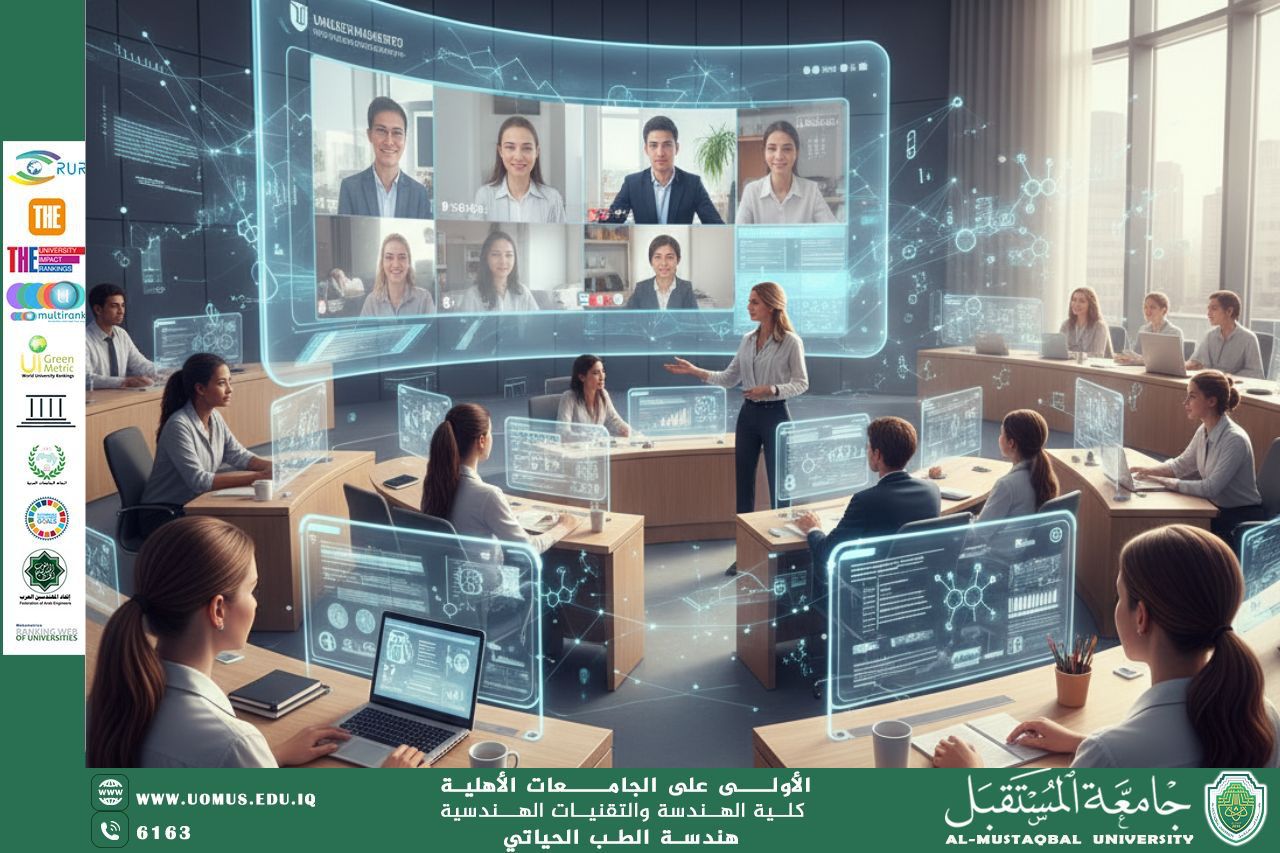
مقالة بعنوان ( The Future of Hybrid Learning: A Bridge Connecting the Classroom to the Digital World)للمهندسة زهراء محمد كاظم
With the rapid advancement of technology and the lessons learned from recent global challenges, education is no longer confined to four walls. A new educational model has emerged that promises to offer the best of both worlds: hybrid learning. This model is not just a temporary solution; it represents a fundamental shift in educational philosophy, combining the power of face-to-face interaction in traditional classrooms with the flexibility and efficiency of digital tools and online platforms.<br />What is hybrid learning?<br />Hybrid learning is an educational approach that blends face-to-face classroom instruction with online learning. It can take many forms: Students may attend some lectures on campus and complete assignments or watch recorded lessons online, or a single class may include a combination of in-person interactive activities and digital resources accessed remotely.<br />Countless Benefits for University Students<br />Hybrid learning offers numerous advantages that enrich the educational experience of university students:<br />1. Flexibility and Access: It allows students to better manage their time, especially for those with other commitments (work, family) or those who live far from campus. They can access educational content anytime, anywhere.<br />2. Self-paced learning and personalized learning: This enhances self-learning skills and enables students to review difficult lectures at their own pace or delve deeper into topics of greater interest through additional digital resources.<br />3. Digital skills development: This naturally prepares students for the modern job market, which requires proficiency in using digital tools and collaborative platforms.<br />4. Deeper interaction and enriched discussions: Classroom time can be used for in-depth discussions, problem-solving, and practical activities, while theoretical content is dedicated to self-study online, enhancing the quality of in-person interaction.<br />5. Diverse and rich resources: This opens the door to the use of a wide range of educational resources: videos, interactive simulations, discussion forums, and vast digital libraries, making learning more engaging and comprehensive.