Cell death د. اثمار محمد رضا
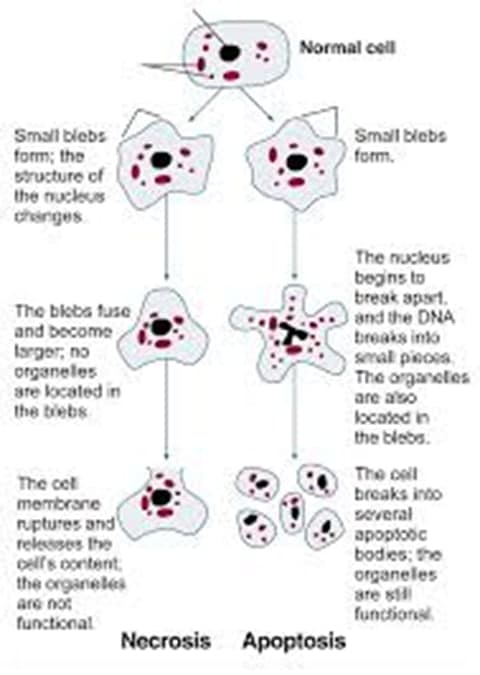
cell death was once believed to be the result of one of two distinct processes, apoptosis (also known as programmed cell death) or necrosis (uncontrolled cell death);<br /> Apoptosis eliminates cells that are genetically altered or injured<br /> And characterized by a number of characteristic morphological changes in the structure of the cell, together with a number of enzyme-dependent biochemical processes. The result being the clearance of cells from the body, with minimal damage to surrounding tissues. Failure of apoptosis and the resultant accumulation of damaged cells in the body can result in various forms of cancer. An understanding of the pathways is therefore important in developing efficient chemotherapeutics.<br /><br />Necrosis is cell death where a cell has been badly damaged through external forces such as trauma or infection and occurs in several different forms. In necrosis, a cell undergoes swelling, followed by uncontrolled rupture of the cell membrane with cell contents being expelled. These cell contents often then go on to cause inflammation in nearby cells. A form of programmed necrosis, called necroptosis, has been recognized as an alternative form of programmed cell death. It is hypothesized that necroptosis can serve as a cell-death backup to apoptosis when the apoptosis signaling is blocked by endogenous or exogenous factors such as viruses or mutations. Necroptotic pathways are associated with death receptors such as the tumor necrosis factor receptor