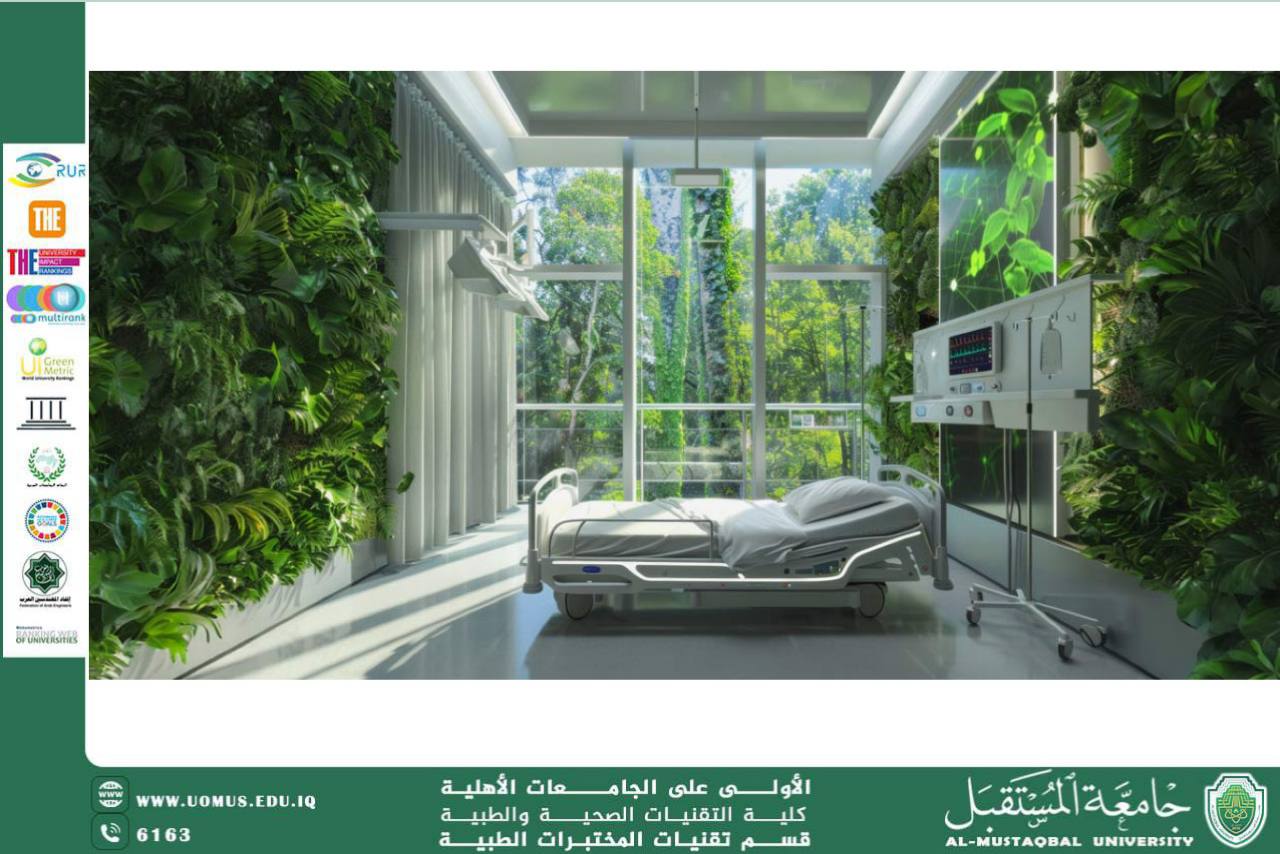

مقالة علمية للتدريسية ميس الريم اياد شاكر بعنوان Green Hospitals: Advancing Sustainability for Healthier Communities
Healthcare systems worldwide are among the largest consumers of energy, water, and resources, generating considerable waste and contributing to greenhouse gas emissions. Hospitals, in particular, operate 24/7, relying heavily on energy-intensive equipment, heating, cooling, and sterilization processes. Recognizing these challenges, the concept of green hospitals has emerged, aiming to reduce the environmental footprint of healthcare facilities while promoting patient health, staff well-being, and operational efficiency (World Health Organization [WHO], 2020).
Key Principles of Green Hospitals
1. Energy Efficiency and Renewable Energy
Green hospitals prioritize the use of energy-efficient technologies and renewable energy sources such as solar panels, wind turbines, and geothermal heating. Energy-efficient lighting systems, motion sensors, and advanced HVAC systems not only reduce electricity consumption but also create more comfortable environments for patients and staff. For example, studies indicate that energy-efficient hospital buildings can reduce total energy consumption by 20–30% (Eckelman & Sherman, 2016).
2. Water Conservation
Water scarcity is a growing global concern. Green hospitals adopt water-saving technologies, including low-flow faucets, water-efficient laundry systems, and rainwater harvesting. By minimizing water use, hospitals reduce both environmental impact and operational costs.
3. Waste Reduction and Management
Medical facilities generate large volumes of waste, including hazardous, infectious, and chemical materials. Green hospitals implement waste segregation, recycling, and safe disposal practices. Programs that convert medical waste into energy or safely recycle materials can significantly reduce landfill contributions and environmental pollution.
4. Sustainable Building Design
The design of hospital infrastructure plays a crucial role in sustainability. Incorporating natural lighting, green spaces, non-toxic construction materials, and effective insulation enhances patient recovery and staff productivity while reducing environmental impact. Hospitals that integrate these design features often observe shorter patient stays and higher staff satisfaction.
Health and Community Benefits
The benefits of green hospitals extend beyond environmental sustainability. Improved indoor air quality, reduced exposure to chemicals, and access to natural light and green spaces positively impact patient recovery and mental health. Moreover, by reducing pollution and emissions, hospitals contribute to healthier surrounding communities. Studies from Europe and North America have shown that patients in sustainably designed hospitals report higher levels of comfort and lower stress, directly influencing recovery outcomes (AIA, 2019).
Economic and Operational Advantages
Although the initial investment in sustainable infrastructure and technology may be significant, green hospitals often achieve long-term financial savings. Lower energy and water bills, reduced waste management costs, and enhanced operational efficiency offset initial expenditures. Additionally, hospitals adopting sustainable practices may improve their reputation, attracting patients, skilled staff, and potential funding opportunities.
Challenges in Implementation
Transitioning to a green hospital model presents several challenges, including high upfront costs, lack of awareness, and resistance to operational changes. Training hospital staff, engaging stakeholders, and implementing comprehensive policies are critical to overcoming these barriers. Successful examples exist globally:* Copenhagen University Hospital, Denmark integrates renewable energy, waste reduction, and green spaces, achieving a 25% reduction in energy consumption.
* Khoo Teck Puat Hospital, Singapore incorporates water recycling systems and extensive natural ventilation, improving patient satisfaction while reducing environmental impact.
* King Abdulaziz Medical City, Saudi Arabia has initiated energy-efficient retrofitting and solar panel installation to lower carbon emissions in line with national sustainability goals.
Conclusion
Green hospitals exemplify the integration of sustainability within healthcare, balancing environmental responsibility with improved health outcomes and operational efficiency. By embracing energy efficiency, water conservation, sustainable waste management, and eco-friendly design, hospitals can reduce their ecological footprint, enhance patient care, and positively influence community health. Collaborative efforts among policymakers, hospital administrators, medical staff, and the broader community are essential to expand the adoption of green hospital practices worldwide. Investing in green healthcare is not only an environmental imperative but also a strategic approach to fostering resilient, healthy communities for the future .
جامعة المستقبل الجامعة الاولى في العراق
قسم تقنيات المختبرات الطبية الاول في التصنيف الوطني العراقي