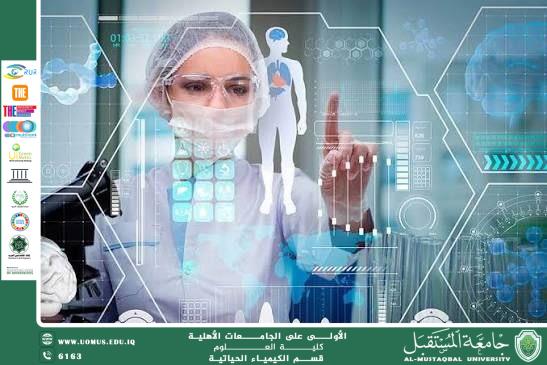

A Scientific Article: Medical Diagnosis and Its Role in Early Disease Detection By Ms. Hawraa Ali Tayyar
Introduction
Medical diagnosis serves as the cornerstone of modern clinical practice. It is the first step in determining the nature of a disease, its severity, and an appropriate treatment plan. Diagnosis relies on a combination of clinical signs, medical history, and laboratory and radiological examinations. With the rapid advancement of biotechnologies, diagnosis has become more accurate and effective, leading to improved patient outcomes and reduced mortality rates.
First: Types of Medical Diagnosis
1. Clinical Diagnosis
Relies on evaluating the patient's symptoms, vital signs, and physical examination.
It includes:
· Measuring blood pressure and pulse.
· Visual and tactile examination of organs.
· Assessment of the nervous and muscular systems.
2. Laboratory Diagnosis
The most commonly used method, which includes:
· Blood tests: CBC, kidney and liver function tests, thyroid function tests, hormone levels.
· Urinalysis: to detect infections, diabetes, and proteins.
· Immunological assays like ELISA for identifying hormones and antibodies.
· Molecular tests like PCR for detecting mutations and viruses.
3. Imaging Diagnosis
Includes:
· X-ray.
· Ultrasound.
· MRI.
· CT scan.
Used to detect fractures, tumors, infections, and organ abnormalities.
4. Functional Diagnosis
Focuses on assessing the function of body organs, such as:
· ECG for heart function.
· EEG for brain activity.
· Pulmonary function tests.
Second: The Role of Biochemistry in Diagnosis
Biochemistry plays a pivotal role by revealing molecular changes in the body, which often appear before symptoms manifest.
Important examples include:
· Measuring hormones such as LH, FSH, and insulin to detect reproductive and endocrine disorders.
· Inflammatory markers like CRP and IL-6 for infections and inflammatory conditions.
· Cardiac biomarkers like Troponin for diagnosing heart attacks.
· Assessment of trace elements (zinc, copper, magnesium) to detect metabolic disorders.
Third: The Importance of Early Diagnosis
Early diagnosis contributes to:
· Increasing the chances of recovery before the disease progresses.
· Reducing the side effects of chronic diseases.
· Improving quality of life.
· Lowering treatment costs.
Examples:
· Early detection of breast cancer increases the survival rate to over 90%.
· Diagnosing diabetes in the prediabetes stage helps prevent complications such as neuropathy.
Fourth: Technological Advancements in Diagnosis
1. Artificial Intelligence
Assists in interpreting radiological images, analyzing laboratory data, and predicting diseases.
2. Portable Devices
Such as glucose and blood pressure monitors, which help in accurate condition monitoring.
3. Genetic Diagnosis
Such as genome sequencing, which reveals genetic predispositions to diseases.
4. Modern Immunological Techniques
Such as chemiluminescence and high-sensitivity ELISA.
Conclusion
Medical diagnosis today is more accurate than ever, thanks to significant advancements in biotechnologies, laboratory techniques, and imaging. The integration of biochemistry, technology, and artificial intelligence represents a true revolution that has made early diagnosis possible, thereby improving quality of life and reducing health complications.
---
University of Al-Mustaqbal Ranks First Among Iraqi Private Universities