The Role of Nanotechnology in Enhancing Medical Biochemistry Applications in Diagnosis and Targeted Therapy Prof. Dr. Nasser Abdul-Hassan Nasser Head of the Department of Biochemistry Al-Mustaqbal Universit
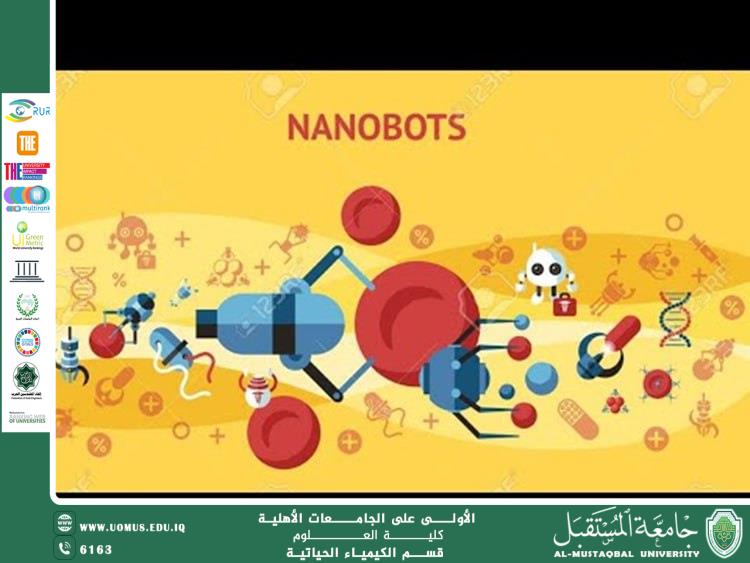
Medical biochemistry has witnessed significant advancement with the progress of modern technologies, particularly nanotechnology, which has introduced a transformative shift in both diagnostic and therapeutic fields. The integration of nanotechnology with medical biochemistry has enabled precise investigation of molecular interactions, enhanced the sensitivity of biochemical analyses, and facilitated the development of targeted therapeutic systems based on a deep understanding of disease-related biochemical mechanisms.
Concept of Nanotechnology and Its Relation to Medical Biochemistry
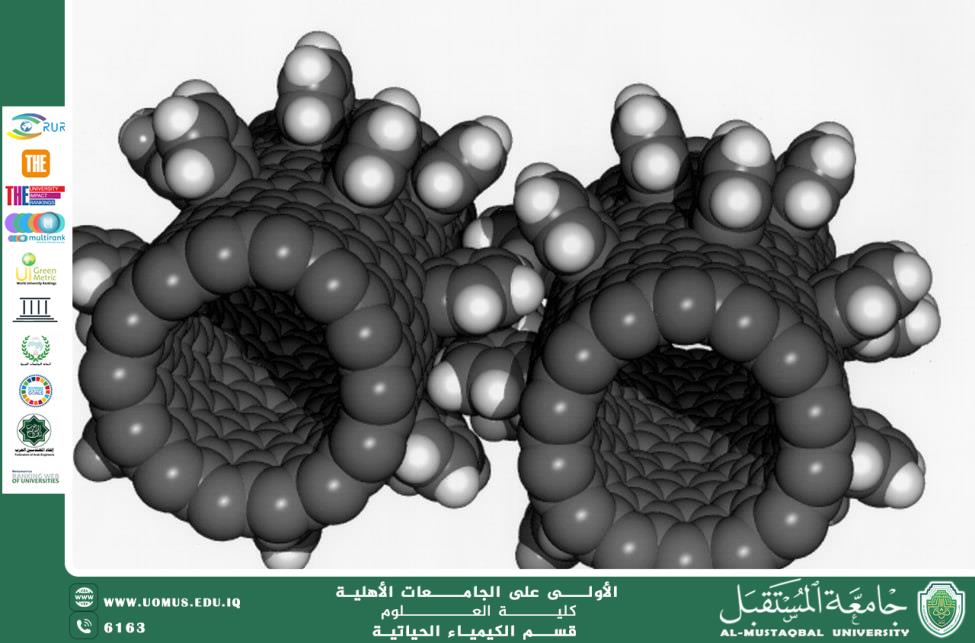
Nanotechnology focuses on the study and design of materials ranging in size from 1 to 100 nanometers, dimensions comparable to biological molecules such as proteins and nucleic acids. This size compatibility allows direct and efficient interaction between nanomaterials and cellular components, making them ideal tools for medical biochemistry applications in both diagnostic analysis and therapeutic intervention.
Role of Nanotechnology in Medical Diagnosis
1. Enhancement of Biochemical Assay Sensitivity
Nanoparticles such as gold nanoparticles and quantum dots are employed to significantly enhance the sensitivity of detecting disease-related biomarkers, particularly in chronic and cancer diseases, even at extremely low concentrations.
2. Development of Early Molecular Diagnostic Systems
Nanomaterials have contributed to the development of advanced diagnostic techniques based on:
Detection of abnormal protein expression
Analysis of DNA and RNA alterations
Differentiation between healthy and diseased cells
These innovations improve the accuracy and reliability of early disease diagnosis.
3. Integration with Microfluidic Technologies
The integration of nanotechnology with microfluidic systems has led to the development of lab-on-a-chip platforms, enabling complex medical biochemical analyses to be performed using minimal sample volumes within a short time frame.
Role of Nanotechnology in Targeted Therapy
1. Nano-Drug Delivery Systems
Nanoparticles are utilized as intelligent drug carriers that:
Protect therapeutic agents from degradation
Improve bioavailability
Deliver drugs precisely to targeted cells
This approach reduces required dosages and minimizes adverse side effects.
2. Molecular Targeting of Diseased Cells
Nanomaterials can be surface-modified with biological molecules such as antibodies or peptides, allowing them to recognize specific receptors on cancer cells, thereby achieving highly efficient targeted therapy.
3. Integration with Medical Biochemistry
The design of nanotherapeutic systems relies heavily on an understanding of metabolic pathways and cellular signaling mechanisms, making medical biochemistry a fundamental component in the success of these applications.
Current Applications
Nanotechnology is currently applied in:
Cancer therapy
Drug delivery for neurological diseases
Enhancement of immunotherapy efficacy
Development of nanoparticle-based vaccines
Recent studies have demonstrated the effectiveness of combining nanotechnology with advanced medical biochemical analyses.
Challenges and Future Perspectives
Despite its considerable benefits, nanotechnology faces challenges related to:
Biocompatibility and nanotoxicity
Immune responses to nanomaterials
Large-scale manufacturing limitations
Nevertheless, continuous advancements in materials science and medical biochemistry are expected to expand the clinical use of nanotechnology in future medical applications.
Conclusion
Nanotechnology represents a revolutionary tool in enhancing medical biochemistry applications in both precise diagnosis and targeted therapy. The integration of nanotechnology with medical biochemistry is expected to bring about a paradigm shift in healthcare by enabling more accurate, safer, and more effective therapeutic strategies.
Al-Mustaqbal University
Ranked First among Iraqi Private Universities