DNA Cloning: Principles and Biological Applications By: Asst. Lecturer Abbas Hamza Khudair Department of Biochemistry College of Science – Al-Mustaqbal University
DNA cloning is considered one of the most fundamental techniques in molecular biology, as it enables the replication of specific DNA molecules to produce large quantities for research, medical, and biotechnological applications. This field has represented a major turning point in genetics and genetic engineering, contributing significantly to the understanding of gene expression mechanisms and the production of recombinant proteins.
Basic Concept of DNA Cloning
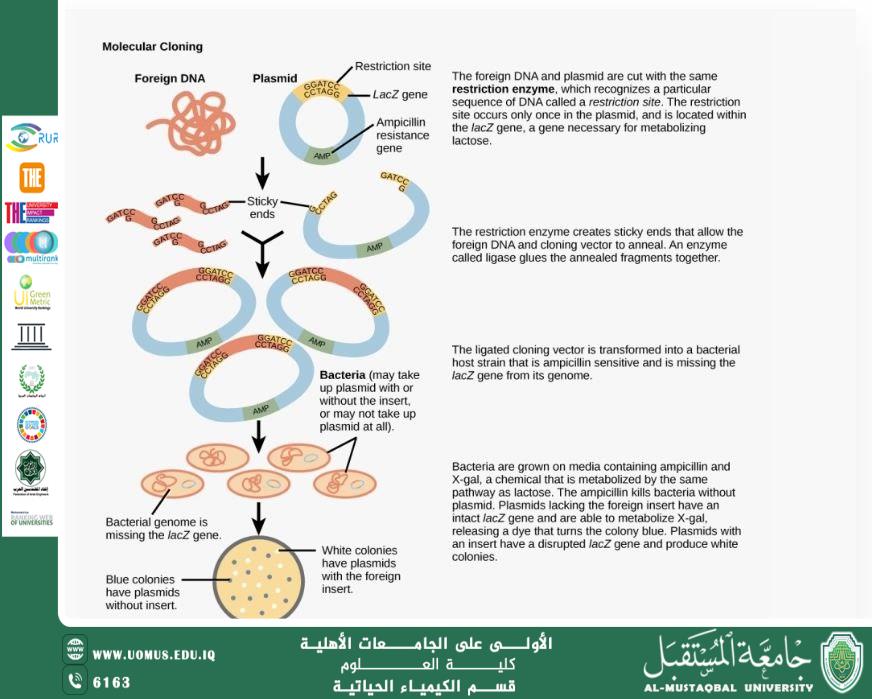
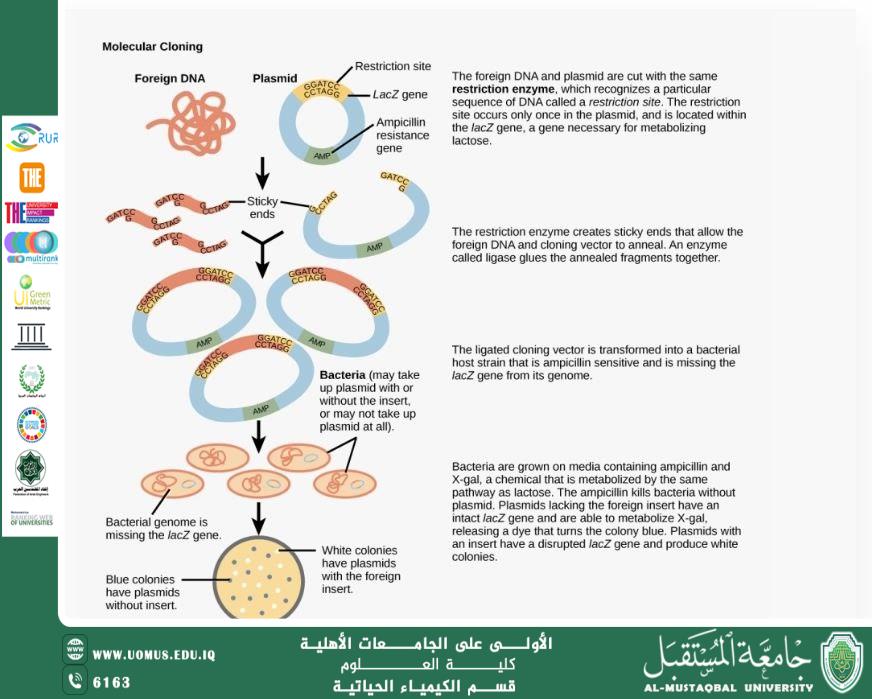
DNA cloning refers to the process of isolating a specific DNA fragment and inserting it into a vector, such as a plasmid, which is then replicated inside a host cell, commonly Escherichia coli (E. coli). The host cell subsequently functions as a biological factory, producing multiple copies of the desired gene or its encoded protein.
Steps of DNA Cloning
1. Isolation of the Target Gene
DNA is extracted from cells, and a specific restriction enzyme is used to cut and isolate the desired gene fragment from the genome.
2. Selection of the Vector
A suitable vector, such as a plasmid, is selected. Plasmids are circular DNA molecules capable of autonomous replication within bacterial cells.
3. Ligation of the Gene into the Vector
DNA ligase enzymes are used to insert the gene fragment into the plasmid, forming recombinant DNA.
4. Transfer of the Plasmid into the Host Cell
The recombinant plasmid is introduced into living bacterial cells through a process known as bacterial transformation.
5. Selection of Recombinant Colonies
Bacterial cultures are grown on media containing antibiotics, allowing only cells harboring the recombinant plasmid to survive and proliferate.
6. Analysis and Confirmation
Polymerase Chain Reaction (PCR), molecular hybridization techniques, or DNA sequencing are employed to confirm the successful insertion and cloning of the target gene.
Biological Applications of DNA Cloning
DNA cloning technology is widely applied in various fields, including:
Production of therapeutic proteins such as insulin and growth hormone
Gene analysis and functional studies
Development of recombinant vaccines, such as the hepatitis B vaccine
Improvement of agricultural crops through the introduction of disease-resistant genes
Gene therapy aimed at correcting genetic mutations
Ethical Considerations
Despite the significant benefits of gene cloning technologies, ethical concerns have been raised regarding the use of genetically modified organisms. These concerns highlight the importance of implementing regulations and guidelines to ensure the safety of humans and the environment.
Conclusion
DNA cloning represents a cornerstone of modern biotechnology, enabling scientists to precisely study genes and their functions. It has contributed substantially to advances in molecular medicine and agricultural biotechnology. Understanding the biochemical principles underlying this technique opens new horizons for research and application in therapy, genetics, and bioengineering.
Al-Mustaqbal University
Ranked First among Iraqi Private Universities