
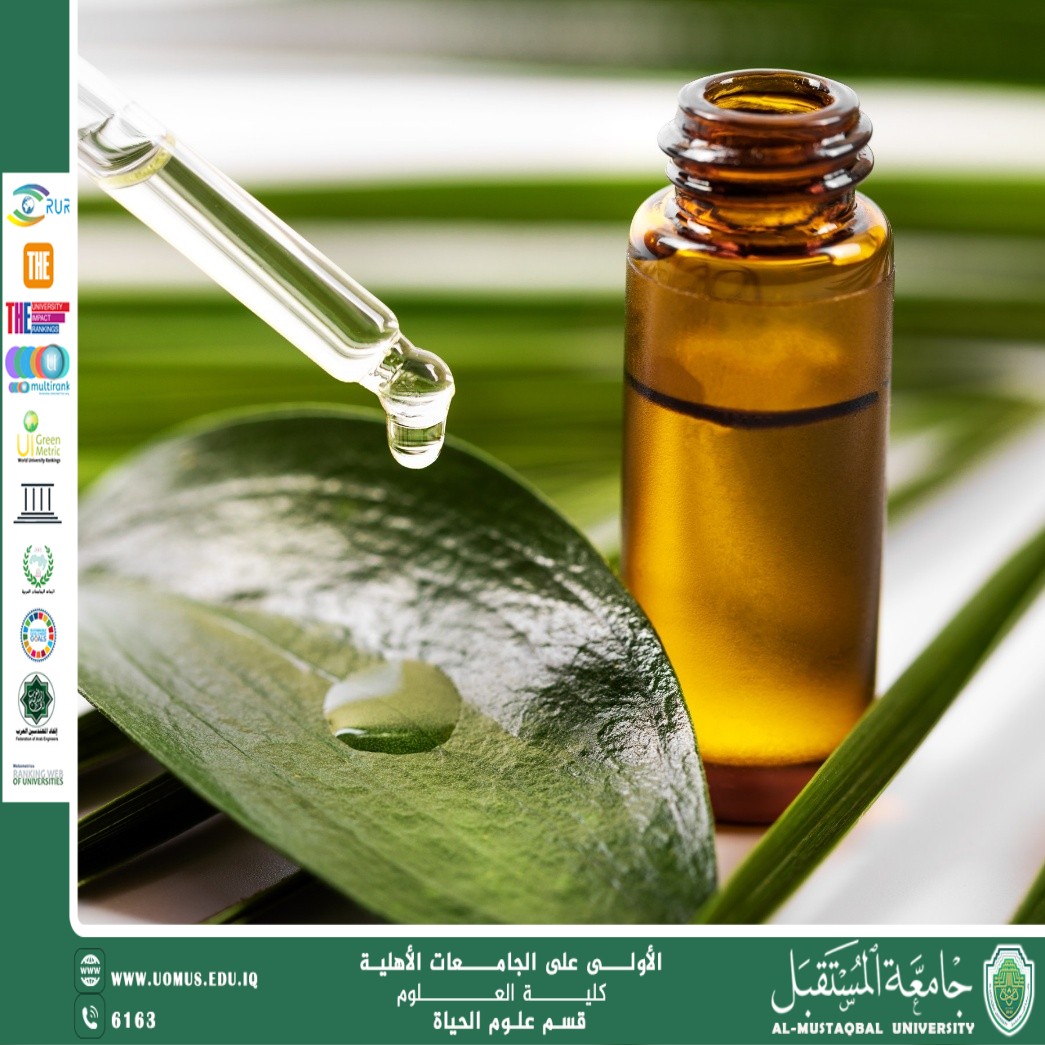
A scientific article by Lecturer M.M. Zainab Nazim Aziz entitled "Tea Tree Oil"
Tea tree oil is one of the important natural essential oils. It is extracted from the leaves of the tea tree (Melaleuca alternifolia), which is native to Australia. The oil is well known for its multiple therapeutic properties, particularly its ability to combat bacteria and fungi, and it is widely used in traditional medicine and skincare.
Scientific Name and Classification
Common name: Tea Tree Oil
Scientific name: Melaleuca alternifolia
Family: Myrtaceae
Botanical Description
The tea tree is a small evergreen tree that grows to about 7 meters in height. Its leaves are narrow and aromatic, and the oil is extracted from them through steam distillation. The oil is clear yellow to greenish in color and has a strong, distinctive aroma.
Active Components
Tea tree oil contains:
Terpinen-4-ol, the main compound responsible for its antimicrobial activity
Antibacterial and antifungal compounds
Natural antioxidants
Health Benefits
Fights bacteria and fungi on the skin
Treats acne and skin inflammations
Soothes itching and skin irritation
Treats dandruff and improves scalp health
Used as an antiseptic for minor wounds
Uses
Skincare and hair care
Preparation of cosmetics and natural soaps
Added to essential oils for aromatherapy
Used as a natural household disinfectant
Precautions
The oil should not be applied directly to the skin without dilution in a carrier oil
It may cause allergic reactions in some individuals; a patch test is recommended before use
It should not be taken internally except under medical supervision
Conclusion
Tea tree oil is a valuable natural oil due to its antimicrobial and antifungal properties. It is widely used in traditional medicine and personal care, provided that it is used safely and in moderation.
Al-Mustaqbal University is the first university in Iraq.