
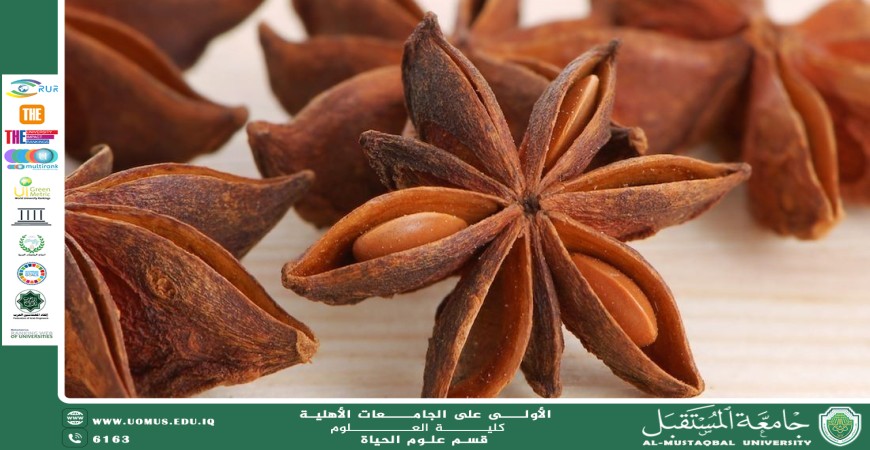
A scientific article by Lecturer M.M. Zainab Nazim Aziz entitled "Star Anise"
Star anise is an important aromatic plant that has been used for centuries in traditional medicine and cooking due to its therapeutic properties and distinctive flavor. It is an evergreen plant, and its dried, star-shaped fruits are used in various health and nutritional applications.
Botanical Description
Star anise is a star-shaped fruit, typically composed of 6–8 arms, each containing a single seed. It is characterized by its strong aromatic scent and a flavor similar to common anise, but more concentrated. It is primarily cultivated in Southeast Asia, especially in China and Vietnam.
Chemical Constituents
Star anise contains several active compounds, the most important of which are:
Anethole: responsible for the taste and aroma.
Volatile oils.
Antioxidants.
Vitamins and minerals in small amounts.
Health Benefits
Star anise has numerous benefits, most notably:
Improving digestion and reducing bloating.
Relieving intestinal colic, especially in children (in safe doses).
Soothes coughs and expels phlegm.
Boosts the immune system.
Possesses antibacterial and antifungal properties.
Uses
Star anise is used in:
Preparing herbal drinks.
Making traditional medicines.
Cooking, especially in Asian cuisine.
Making some anti-influenza medications.
Precautions
It is important to distinguish between safe Chinese star anise and the toxic Japanese star anise. Therefore, it is advisable to consume it only from reliable sources. Moderation is also recommended to avoid side effects.
Conclusion
Star anise is an aromatic plant with high nutritional and medicinal value. It plays an important role in traditional and modern medicine. However, its conscious and safe use is essential to reap its benefits without risks.
Al-Mustaqbal University is the first university in Iraq.