
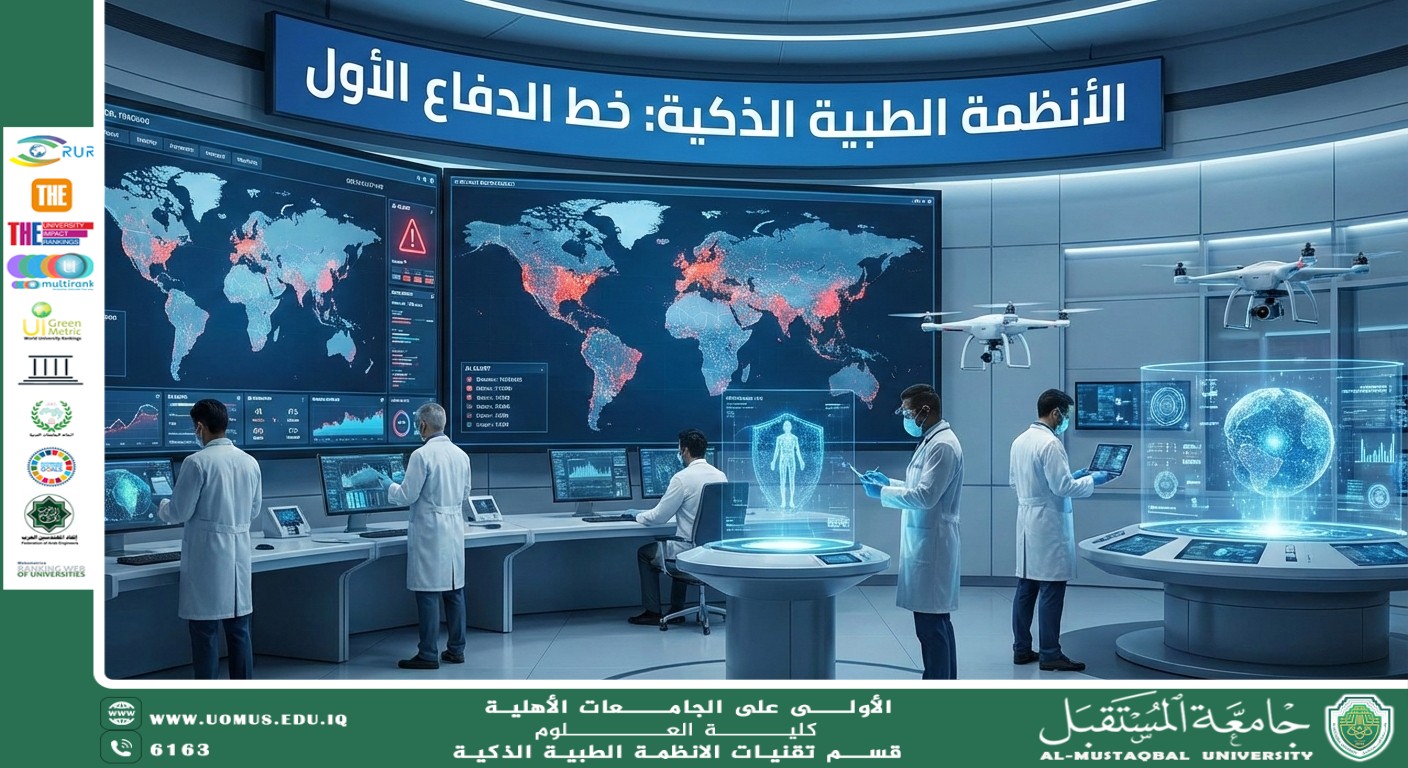
Artificial Intelligence in Family Medicine: Toward More Accurate Diagnosis and Effective Healthcare (Asst. Programmer Aheeb Hashim Karim)
Artificial Intelligence in Family Medicine: Enhancing Diagnosis and Patient Care
Family medicine is the cornerstone of healthcare systems, as family physicians manage a wide range of common diseases and provide continuous and comprehensive care to patients of all ages. With the rapid advancement of artificial intelligence technologies, promising opportunities have emerged to enhance the role of family physicians, improve diagnostic accuracy, and elevate the quality of healthcare services.
Artificial intelligence assists family physicians in improving the diagnosis of common diseases by analyzing electronic health records and patient data quickly and accurately. Intelligent systems can review a patient’s medical history, current symptoms, and laboratory results, then compare them with thousands of similar cases. This process helps suggest accurate diagnostic possibilities and alert the physician to risk indicators that may not be obvious in traditional clinical examinations.
Machine learning techniques are also used to support early diagnosis of chronic diseases such as diabetes, hypertension, and heart conditions by analyzing patterns in vital signs and lifestyle behaviors. This enables family physicians to intervene early and develop personalized treatment and preventive plans for each patient, reducing complications and improving long-term health outcomes.
Moreover, artificial intelligence enhances communication between physicians and patients through smart applications that monitor symptoms and remind patients of medication schedules and medical tests. These applications provide continuous data on the patient’s condition, helping the family physician track disease progression and make more accurate treatment decisions based on real-time, updated information.
Despite these benefits, the role of artificial intelligence remains complementary to medical expertise rather than a replacement. Family medicine relies heavily on direct human interaction, empathy, and an understanding of the patient’s social and psychological context—elements that intelligent systems cannot fully replicate. Ensuring the privacy of patient data and establishing clear ethical frameworks for AI use in primary healthcare are also crucial.
In conclusion, artificial intelligence represents an effective tool for supporting family medicine by improving the diagnosis of common diseases, enhancing prevention, and personalizing treatment. With careful and integrated use of these technologies, family physicians can provide more precise and humane healthcare, combining technological innovation with clinical expertise.
Al-Mustaqbal University, the first university in Iraq.