Scientific Article by Lecturer Dr. Karrar Majid Ubaid Green Chemistry: A Scientific Framework for Achieving Environmental Sustainability and Sustainable Industrial Development
Green chemistry represents a fundamental transformation in contemporary chemical thought. Chemistry is no longer confined to achieving maximum reaction yields or industrial productivity; rather, it has become directly concerned with minimizing environmental impact, protecting human health, and ensuring the sustainability of natural resources. This concept is based on the design of chemical products and processes that reduce or eliminate the use and generation of hazardous substances, making green chemistry one of the essential scientific pillars for achieving sustainable development in the twenty-first century.
Green chemistry is rooted in a deep understanding of chemical reaction mechanisms at the molecular level. Traditional reaction pathways are re-evaluated with the aim of reducing the number of reaction steps, lowering energy consumption, and maximizing atom economy. Atom economy is considered a critically important chemical indicator in assessing reaction sustainability, as it reflects the extent to which reactant atoms are incorporated into the final product rather than being converted into waste. This approach significantly reduces both the environmental and economic burdens associated with waste treatment and disposal.
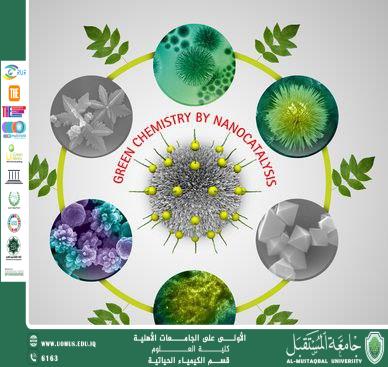
Chemical catalysts play a pivotal role in the application of green chemistry principles, as they enhance reaction rates and selectivity without being consumed, thereby reducing the need for large quantities of hazardous reagents. Advances in heterogeneous catalysts, nanocatalysts, and biocatalysts (enzymes) have led to a qualitative leap in pharmaceutical and petrochemical industries, with a substantial reduction in toxic waste and harmful gas emissions.
Green chemistry also serves as a foundation for the development of sustainable materials, such as biodegradable biopolymers and smart materials with extended service lifetimes. The design of these materials relies on precise studies of their physical and chemical properties to ensure optimal functional performance while allowing safe degradation in the environment at the end of their life cycle. This strategy contributes to reducing plastic pollution and limiting the accumulation of industrial waste in ecosystems.
In the field of energy and sustainability, green chemistry plays a crucial role in the development of clean technologies for energy production and storage, including fuel cells, advanced batteries, and biofuels. Improving these systems depends on a thorough understanding of electrochemical reactions, charge transfer processes, and the stability of active materials, enabling high efficiency and low emissions and supporting the global transition toward a low-carbon economy.
The impact of green chemistry is not limited to technical aspects alone; it also extends to economic and social dimensions. It contributes to reducing environmental remediation costs, improving occupational safety, and promoting sustainable industrial innovation. Furthermore, green chemistry provides a scientific framework for environmental legislation and the establishment of industrial standards, ensuring that technological progress aligns with environmental protection and human health.
In conclusion, green chemistry represents an integrated scientific model that reflects the evolution of chemistry from a traditional production-oriented science into a strategic tool for achieving comprehensive sustainability. By integrating its principles into education, scientific research, and industry, it is possible to build a future based on safe, efficient, and sustainable chemical solutions that meet present needs while safeguarding the rights of future generations.
Al-Mustaqbal University
Ranked First among Private Iraqi Universities