The Green Economy as an Approach to Sustainable Environmental Development artical by Asst. Lect. Ali Jaafar
Introduction
Rapid economic transformations and unregulated industrial expansion have resulted in numerous serious environmental problems, most notably environmental pollution, climate change, excessive depletion of natural resources, and the continuous decline of biodiversity. Recent development experiences have demonstrated the limitations of traditional economic models that rely on intensive exploitation of natural resources, proving their inability to achieve comprehensive and sustainable development. In this context, the concept of the green economy has emerged as an alternative development model that seeks to balance economic growth, environmental protection, and social justice, making it a fundamental approach to achieving sustainable environmental development.
Concept of the Green Economy
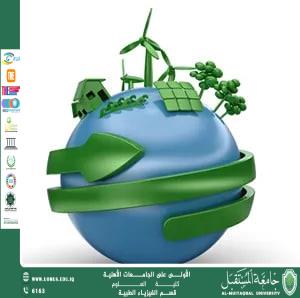
The green economy is defined as an economic system that aims to improve human well-being and reduce social inequalities while minimizing environmental risks and ecological scarcity. This model is based on the efficient and rational use of natural resources, the reduction of pollutant emissions, and the promotion of clean technologies and renewable energy sources. The green economy represents an integrated framework that incorporates environmental considerations into economic policies, emphasizing that environmental protection is not an obstacle to development but rather a key pillar of its sustainability.
Concept of Sustainable Environmental Development
Sustainable environmental development refers to a development pattern that meets the needs of the present generation without compromising the ability of future generations to meet their own needs, while ensuring the preservation of ecosystems and natural resources. This form of development is founded on several core principles, including sustainable resource use, pollution reduction, biodiversity conservation, and achieving a balance between economic activities and the environmental carrying capacity.
Relationship Between the Green Economy and Sustainable Environmental Development
The relationship between the green economy and sustainable environmental development is characterized by complementarity, as the green economy serves as a practical mechanism for achieving environmental sustainability goals. It contributes to integrating environmental considerations into economic planning and decision-making processes, while reducing the negative impacts of human activities on the environment. Furthermore, it directs investments toward environmentally friendly sectors, thereby supporting long-term development and mitigating future environmental risks.
Main Sectors of the Green Economy
The green economy encompasses several vital sectors that play an effective role in achieving sustainable environmental development, most notably:
Renewable Energy Sector
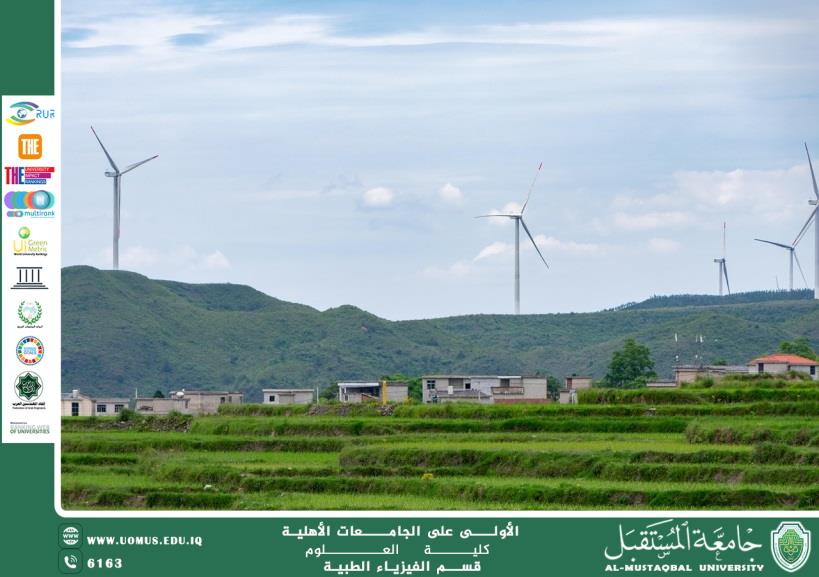
This sector is considered one of the main pillars of the green economy, as it relies on clean and renewable energy sources such as solar, wind, and hydropower. It contributes to reducing dependence on fossil fuels, lowering carbon emissions, and mitigating global warming.
Sustainable Agriculture
Sustainable agriculture focuses on achieving food security while preserving natural resources, through reducing the use of chemical fertilizers and pesticides and adopting modern, environmentally friendly agricultural techniques. This ensures the sustainability of soil, water resources, and biodiversity.
Waste Management and Recycling
Waste management represents a fundamental component of the green economy. Recycling processes help reduce waste volumes, rationalize the consumption of raw materials and energy, and transform waste into economically valuable resources.
Sustainable Transportation
Sustainable transportation aims to reduce emissions resulting from conventional transport systems by promoting public transportation, electric vehicles, and the development of environmentally friendly infrastructure.
Economic and Social Dimensions of the Green Economy
The impact of the green economy is not limited to the environmental dimension alone; it extends to significant economic and social dimensions. Economically, it contributes to promoting sustainable growth and opening new investment opportunities in green sectors. Socially, it supports the creation of new employment opportunities known as “green jobs,” which help reduce unemployment rates, improve income levels, and enhance social justice.
Role of Government Policies in Supporting the Green Economy
Governments play a pivotal role in facilitating the transition toward a green economy by enacting effective environmental legislation, providing financial and tax incentives for environmentally friendly projects, and imposing taxes or fees on polluting activities. National sustainable development strategies also contribute to directing investments, supporting scientific research, and fostering innovation in clean technologies.
Challenges Facing the Implementation of the Green Economy
Despite its numerous advantages, the implementation of the green economy faces several challenges, including the high costs associated with transitioning to clean technologies, low levels of environmental awareness, limited funding sources, and resistance from some traditional economic sectors. In addition, developing countries often face constraints related to insufficient technical and institutional capacities, which limit the pace of adopting this model.
The Green Economy in Developing Countries
The green economy represents a strategic opportunity for developing countries to achieve sustainable environmental development by capitalizing on their renewable natural resources, particularly solar and wind energy. It can also contribute to poverty reduction, strengthening food security, and reducing economic dependency, provided that supportive policies and effective international cooperation are in place.
Conclusion
This study concludes that the green economy constitutes a strategic and effective approach to achieving sustainable environmental development, as it ensures integration between economic, environmental, and social dimensions. In light of escalating global environmental challenges, the transition toward a green economy has become an inevitable necessity to ensure a sustainable future. Achieving this transition requires the concerted efforts of governments, the private sector, and civil society, along with enhancing environmental awareness and supporting scientific research and clean technologies.