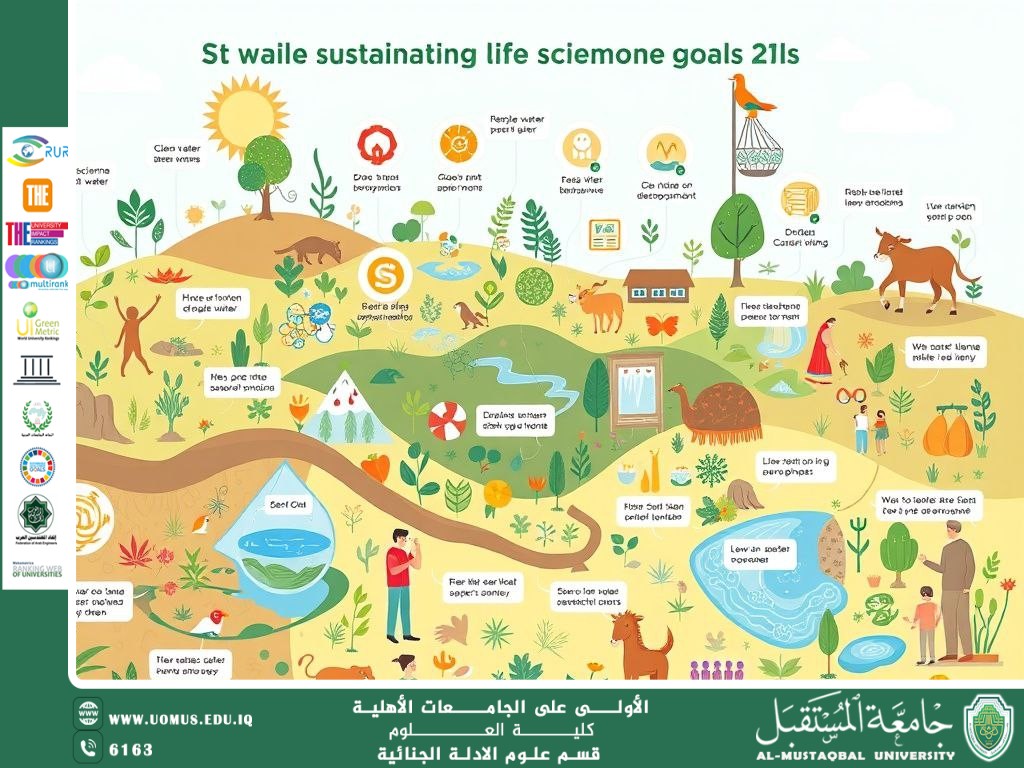
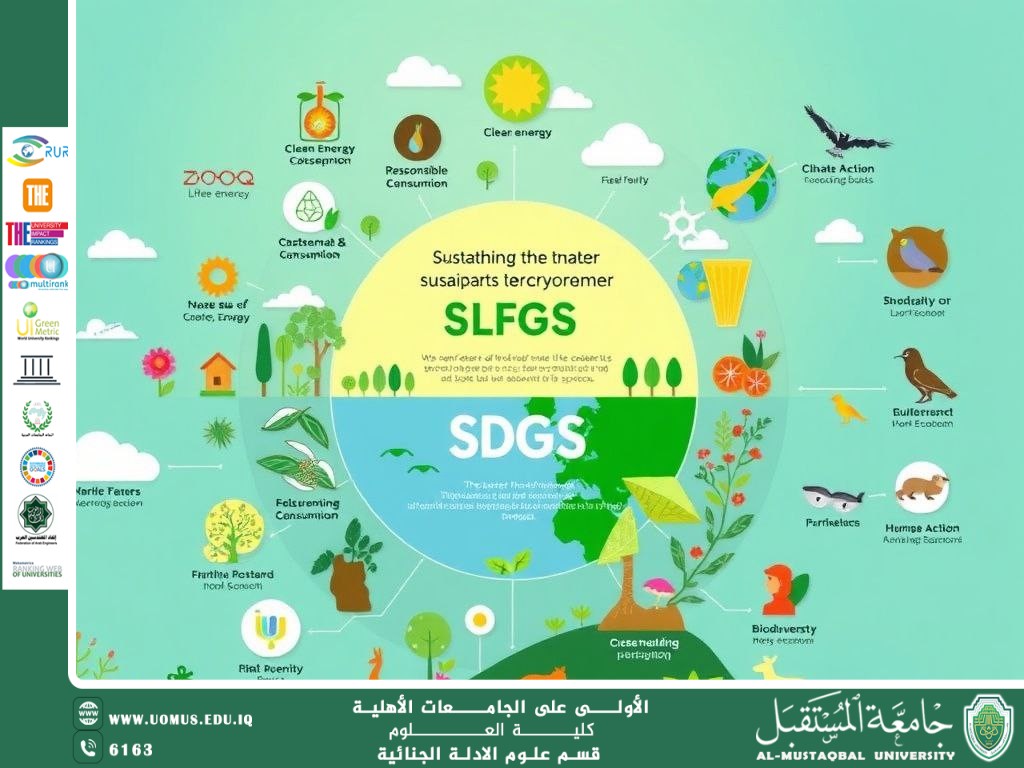
The role of life sciences in achieving the Sustainable Development Goals (M.M. Howayda Nazzal Hussein)
Life sciences are fundamental to achieving the Sustainable Development Goals (SDGs) adopted by the United Nations, as they play a vital role in improving quality of life, enhancing public health, protecting the environment, and ensuring food security. Many of these goals rely on scientific understanding of biological systems and human-environment interactions.
Life sciences contribute to the goal of good health and well-being by advancing medical treatments, improving diagnostic methods, and controlling infectious and non-communicable diseases. Biological research has also been essential in combating epidemics through the study of pathogens, transmission mechanisms, and vaccine development.
In terms of food security, life sciences have improved agricultural productivity by developing disease- and drought-resistant crops and optimizing the use of natural resources. Biotechnological applications have reduced food loss and enhanced nutritional value, supporting the goal of zero hunger.
From an environmental perspective, life sciences help protect ecosystems and biodiversity by assessing the impacts of climate change and pollution and developing strategies for ecosystem restoration. They also contribute to water resource management and land conservation.
Integrating life sciences into sustainable development strategies ensures a balance between economic growth and environmental protection, strengthening societies’ resilience to future challenges.
Al-Mustaqbal University – the first university in Iraq.
SDG4