A scientific article by teaching assistant (Mohammed Abdul Zahra) entitled “A reading in the age of screens: Does the book have a place?”
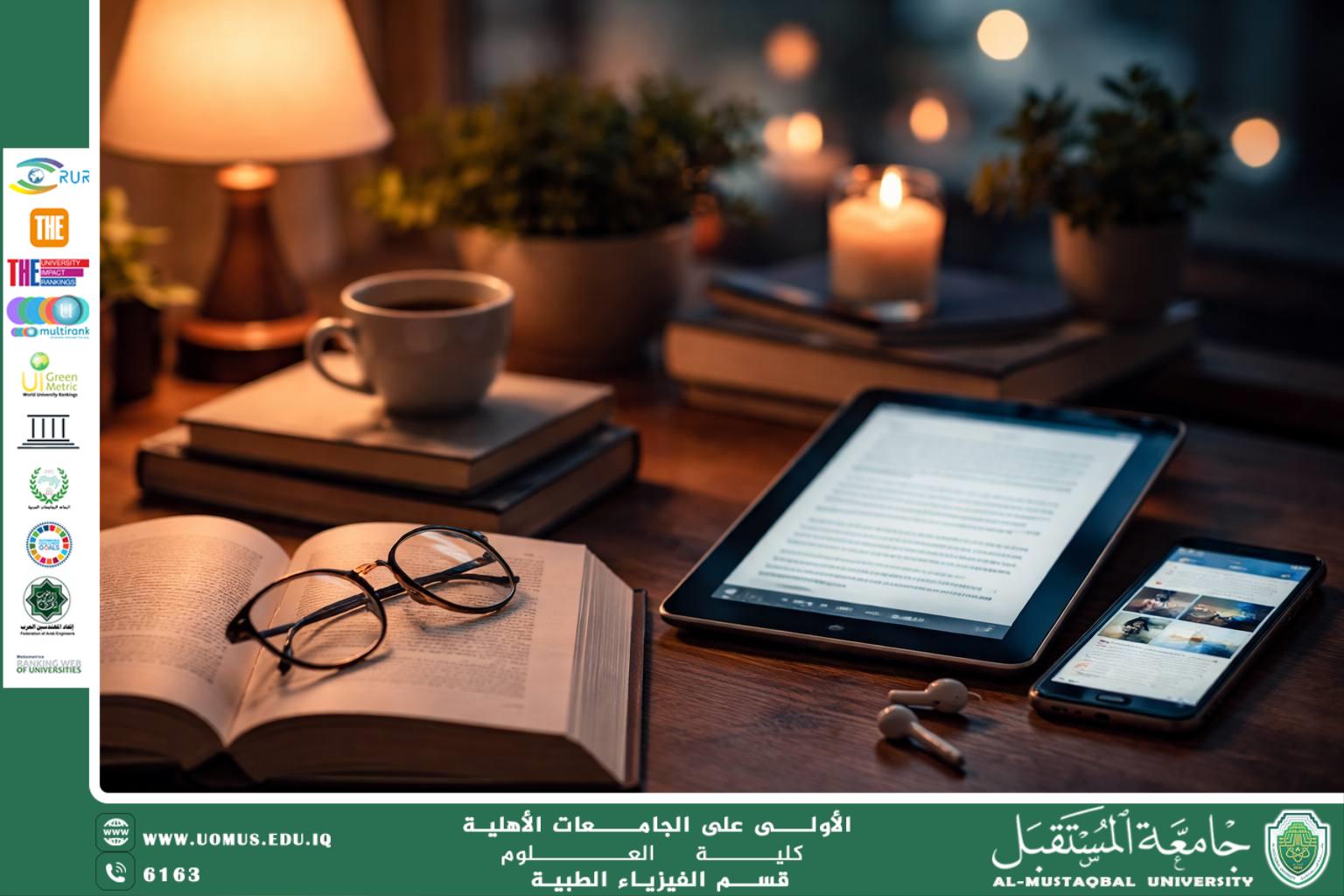
In recent decades, the world has witnessed a profound transformation in the ways knowledge is consumed. Digital screens have become an essential part of daily life, as smartphones, tablets, and social media platforms have reshaped reading habits and imposed a fast-paced flow of information. This shift has raised an important question: does the book still have a place in the age of screens?
The Transformation of Reading Habits
Reading has not disappeared; rather, its form and duration have changed. Instead of spending long hours with printed books, many people now engage with short texts, quick headlines, and brief posts. While this transformation has made information more accessible, it has also reduced the depth of focus and comprehension for some readers.
The Printed Book: A Different Experience
The printed book represents a comprehensive intellectual experience. It encourages patience, reflection, and a calm relationship with the text. Numerous studies indicate that reading on paper enhances deep comprehension and long-term retention, in contrast to screen-based reading, which is often fragmented and prone to distraction.
Screens and Ease of Access
The positive role of screens in spreading knowledge cannot be ignored. E-books and digital articles have provided vast opportunities for reading, especially for those with limited access to physical libraries. They have also reduced costs and enabled access to millions of titles with just a single click.
The Real Challenge: Depth, Not the Medium
The issue lies not in screens themselves, but in how they are used. Superficial reading, regardless of the medium, does not foster true understanding. Conversely, screens can be effective tools for deep reading when used consciously and in an organized manner, away from constant interruptions and distractions.
Does the Book Still Have a Place Today?
Yes, the book still has a place, though it is no longer the sole source of knowledge. Its role has evolved from being the primary medium to becoming a deliberate choice for those seeking thoughtful engagement and intellectual depth. Today, the book is not a competitor to the screen, but a complement to it.
Conclusion
Reading has not vanished; it has simply reinvented itself. In the age of screens, the book remains a symbol of depth and intellectual calm, while digital media represent speed and accessibility. Achieving a balance between the two is the optimal path toward developing a conscious reader capable of benefiting from modern tools without losing the essence of knowledge.
"AL_mustaqbal University is the first university in Iraq"