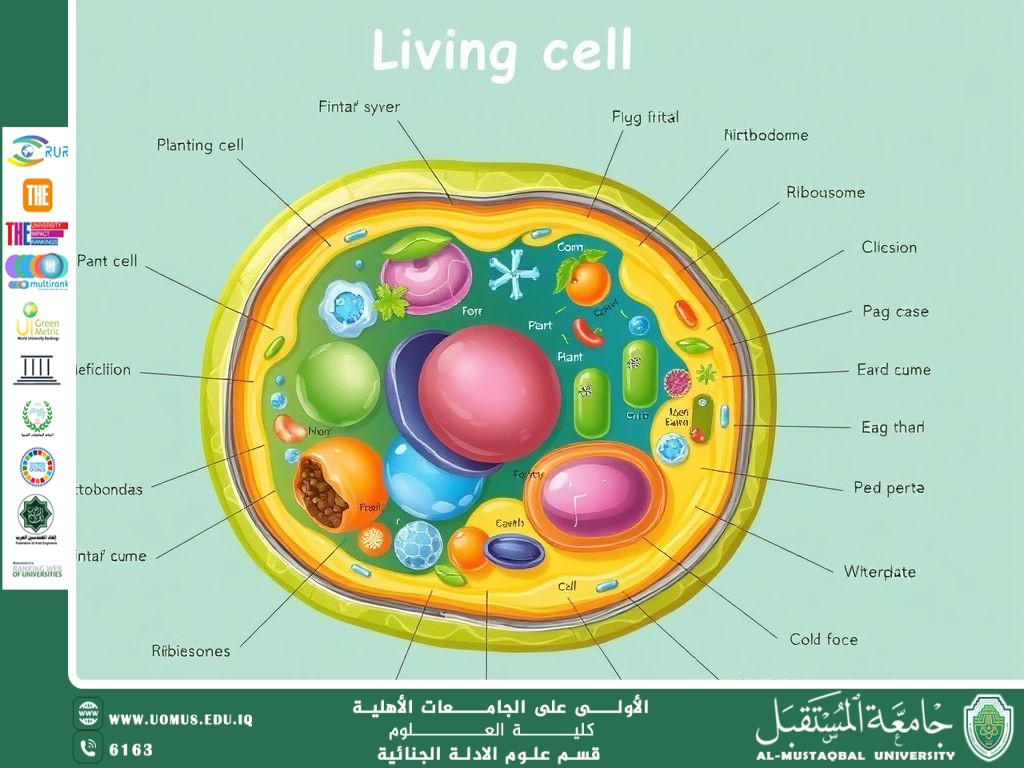

“The Living Cell: The Structural and Functional Basis of Life”(M.M. Howayda Nazzal Hussein)
The cell is the fundamental unit of life, forming the basic structure of all living organisms, from simple bacteria to complex humans. It contains various components performing vital functions, such as the nucleus that stores genetic material, the membrane regulating material exchange with the environment, and mitochondria responsible for energy production.
Studying cells plays a key role in life sciences, enabling scientists to understand vital processes such as growth, reproduction, metabolism, and adaptation to environmental conditions. Cell studies also provide insights into diseases at the molecular level, such as cancer, which arises from cellular mutations.
These insights have wide applications, including the development of targeted therapies that affect specific cells without harming healthy ones, as well as gene therapy research.
Al-Mustaqbal University – the first university in Iraq.
SDG4