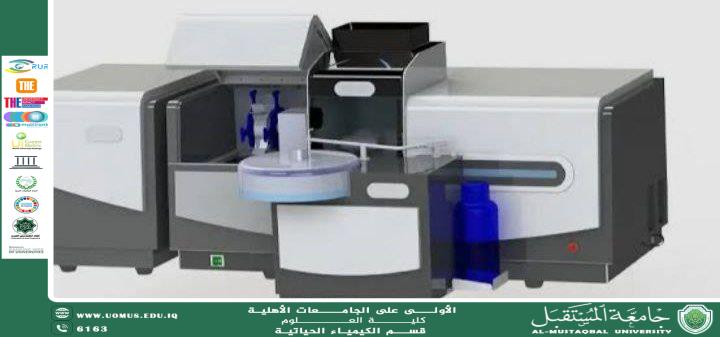
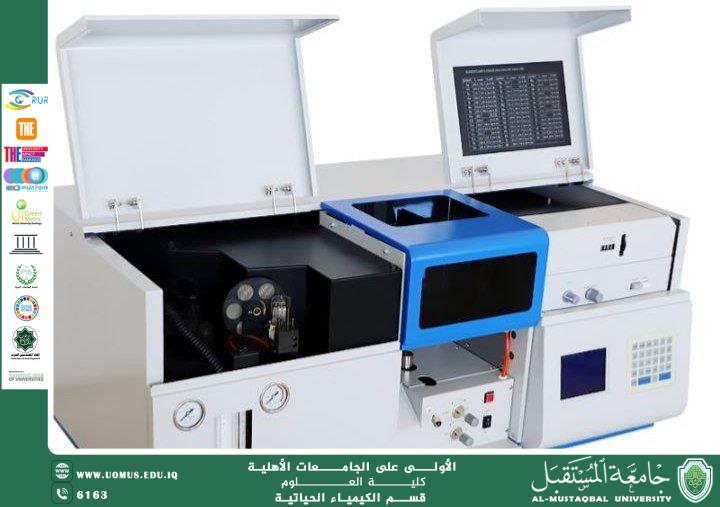
Scientific Article: High Performance Liquid Chromatography (HPLC) and Its Applications in Analytical Chemistry Lecturer M.Sc. Haider Mutlaq Mousa Department of Chemistry – College of Science – Al-Mustaqbal University
Introduction
High Performance Liquid Chromatography (HPLC) is one of the most powerful and widely used analytical techniques in modern laboratories. It is employed for the separation, identification, and quantification of chemical compounds in complex mixtures. Due to its high accuracy, sensitivity, and reproducibility, HPLC is extensively applied in pharmaceutical analysis, environmental monitoring, food analysis, and biochemical research.
Principle of HPLC
HPLC is based on the differential distribution of sample components between two phases:
Mobile phase (liquid solvent)
Stationary phase (solid adsorbent packed inside the column)
When a sample is injected into the system, it is carried by the mobile phase through the column. Each compound interacts differently with the stationary phase, causing separation according to polarity, molecular size, or chemical affinity. The separated components are detected as they elute from the column.
Main Components of the HPLC System
1. Solvent Reservoir
Contains the mobile phase such as water, methanol, acetonitrile, or buffer solutions.
2. Pump
Provides high pressure to push the mobile phase through the column at a constant flow rate.
3. Injector
Introduces a precise volume of the sample into the mobile phase.
4. Column
The heart of the HPLC system, packed with stationary phase (commonly C18 silica). Separation occurs inside the column.
5. Detector
Detects the separated compounds. Common detectors include:
UV–Vis detector
Diode Array Detector (DAD)
Fluorescence detector
6. Data Processing System
Records chromatograms and calculates peak areas, retention times, and concentrations.
Types of HPLC
Normal Phase HPLC
Uses polar stationary phase and non-polar mobile phase.
Reverse Phase HPLC (RP-HPLC)
Uses non-polar stationary phase and polar mobile phase. It is the most commonly used type.
Ion-Exchange HPLC
Separates ions based on charge differences.
Size Exclusion Chromatography (SEC)
Separates compounds based on molecular size.
Applications of HPLC in Analytical Chemistry
Pharmaceutical Analysis
Determination of drug purity
Quantification of active ingredients
Stability studies
Environmental Analysis
Detection of pesticides and pollutants in water and soil
Food Analysis
Determination of additives, preservatives, and contaminants
Biochemical Analysis
Separation of proteins, amino acids, and nucleic acids
Examples of HPLC Analysis
Determination of caffeine in beverages
Analysis of antibiotics in pharmaceutical formulations
Detection of organic pollutants in water samples
Calibration Curve Analysis
A series of standard solutions with known concentrations is prepared and injected into the HPLC system. The peak area is plotted against concentration to generate a calibration curve. This curve is then used to determine the concentration of unknown samples.
Advantages of HPLC
High resolution and accuracy
Excellent sensitivity
Ability to analyze complex mixtures
Applicable to non-volatile and thermally unstable compounds
Disadvantages of HPLC
High operational cost
Requires skilled operators
Large consumption of organic solvents
Conclusion
High Performance Liquid Chromatography (HPLC) is an essential analytical technique in modern chemistry laboratories. Its versatility, precision, and wide range of applications make it indispensable in analytical chemistry, pharmaceutical quality control, and scientific research.