Scientific Article by the Head of the Department Prof. Dr. Nasser Abdul Hassan Nasser The Integration of Medical Biochemistry and Genetics in Diagnosis and Treatment
Modern medicine has witnessed rapid development due to the integration of basic and applied sciences. One of the most prominent examples of this scientific interaction is the integration between medical biochemistry and genetics. This integration has led to a qualitative shift in understanding diseases, as well as in their diagnosis and treatment at the molecular level, thereby enhancing the accuracy and effectiveness of medical practice.
Medical biochemistry focuses on the study of the chemical composition of biological molecules and their interactions within cells, such as nucleic acids, proteins, and enzymes. Genetics, on the other hand, is concerned with the study of genetic material, mechanisms of inheritance, and genetic variations. The interaction between these two disciplines forms the foundation for understanding how genetic defects are linked to biochemical changes that lead to disease development.
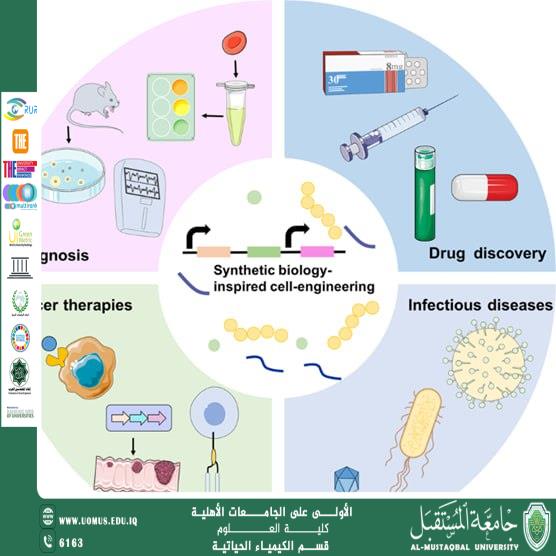
In the field of medical diagnosis, this integration has enabled the development of precise methods for detecting genetic and metabolic disorders. Many modern genetic tests rely on biochemical techniques, such as the analysis of nucleic acid sequences and the detection of genetic mutations. In addition, biochemical analyses are used to evaluate the products of gene expression, such as measuring levels of specific proteins or enzymes associated with certain diseases, providing a comprehensive picture of the patient’s health status.
In terms of treatment, the integration of medical biochemistry and genetics has contributed to the development of targeted therapeutic strategies based on understanding genetic defects and their biochemical effects within the cell. Gene therapy is a prominent example, as this approach is used to correct or replace defective genes. This integration has also supported the emergence of personalized medicine, which aims to design treatments based on the genetic and biochemical characteristics of each individual patient.
Furthermore, medical biochemistry has played an important role in the development of drugs that target specific biological pathways resulting from genetic alterations. This type of therapy depends on studying the chemical interactions between drugs and biological molecules affected by genetic defects, which increases therapeutic efficacy and reduces side effects.
The integration between medical biochemistry and genetics is not limited to clinical applications, but also extends to scientific research and development. It forms the basis for advances in fields such as genetic engineering and biotechnology, and contributes to a better understanding of complex diseases, such as cancer and multifactorial genetic disorders, which require precise analysis at both the genetic and biochemical levels.
In conclusion, the integration of medical biochemistry and genetics represents a fundamental pillar of modern medicine. It provides a comprehensive molecular-level understanding of diseases and contributes to the development of more accurate and effective diagnostic and therapeutic approaches. With ongoing scientific progress, the role of this integratiAl-Mustaqbal University
Ranked First among Private Iraqi Universitieson is expected to expand further, leading to improved healthcare and the development of innovative treatments that benefit humanity.