A case study entitled "The impact of malfunctions and operating conditions on the efficiency of biomedical devices"
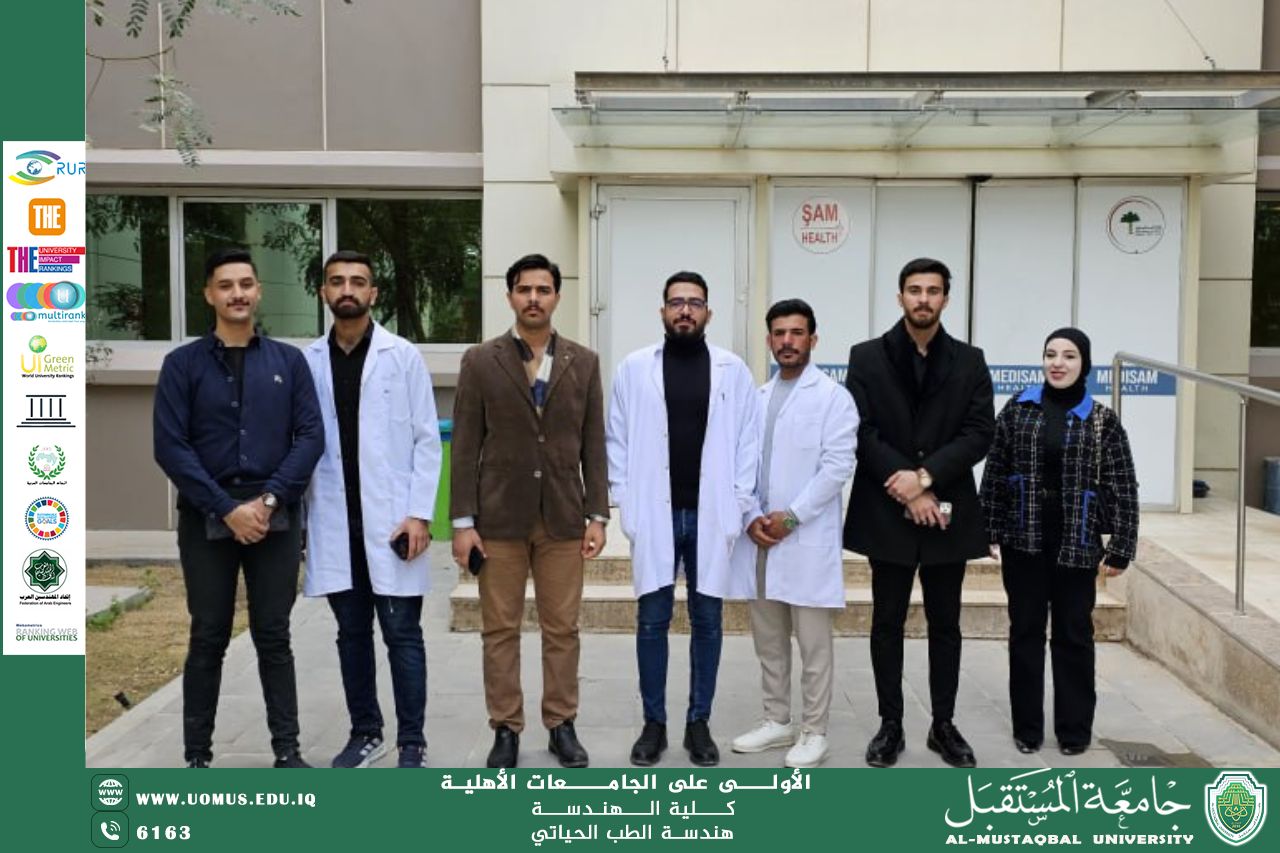
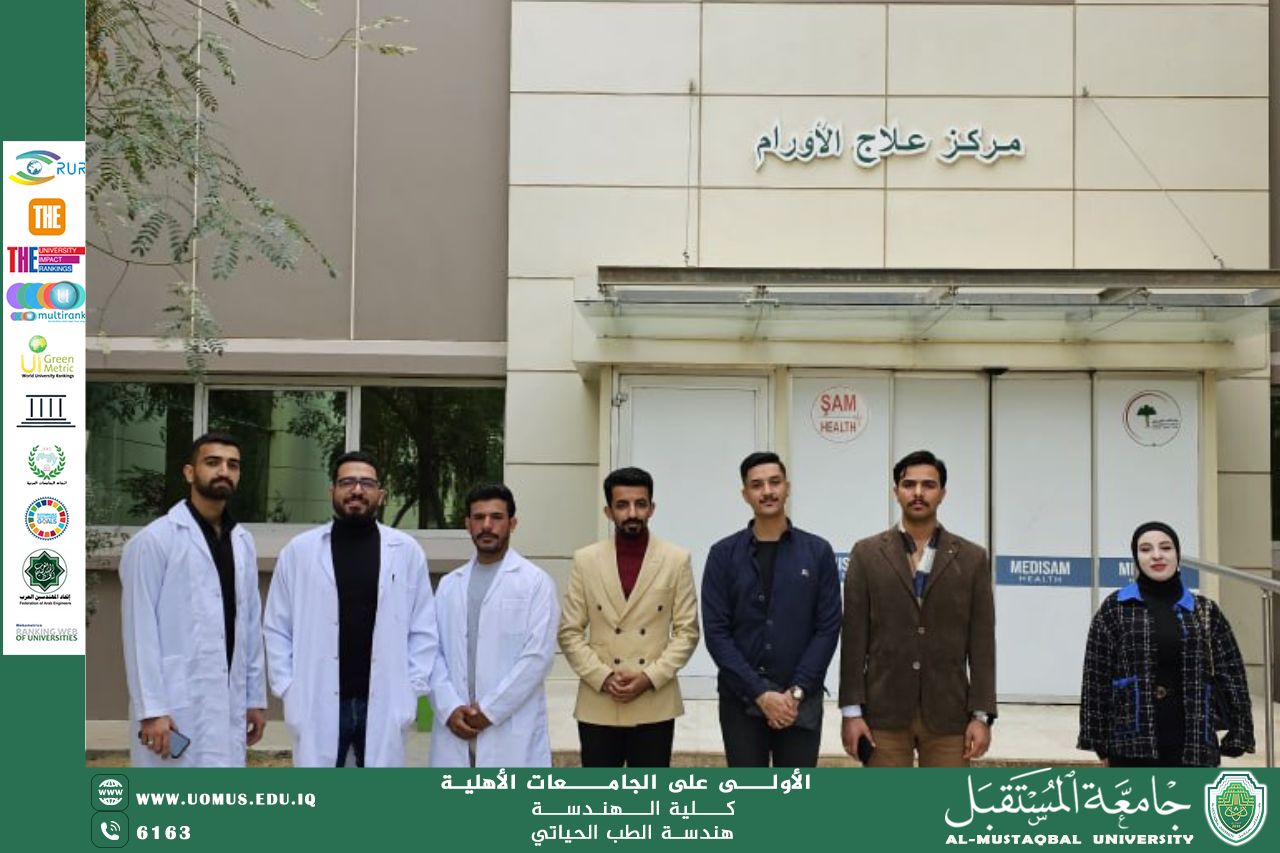
Third-year students in the Biomedical Engineering Department conducted a specialized case study and field analysis titled "The Impact of Technical Malfunctions and Electrical Power Conditions on the Efficiency of Medical Devices in Hospitals," under the supervision of Assistant Lecturer Iman Yasser Hussein.
Within the framework of the Sustainable Development Goals (Goal 3: Good Health and Well-being), the efficiency of medical devices is highlighted as a fundamental factor in ensuring patient safety. The study included an analysis of the damage caused by fluctuating and interrupted electrical current, which poses a serious threat to the continuity of healthcare services. For example, inadequate electrical supply can cause significant damage to the electronic circuitry of a device, leading to damage to its micro-components and disruptions in diagnostic and therapeutic functions.
Key findings of the study (based on field results):
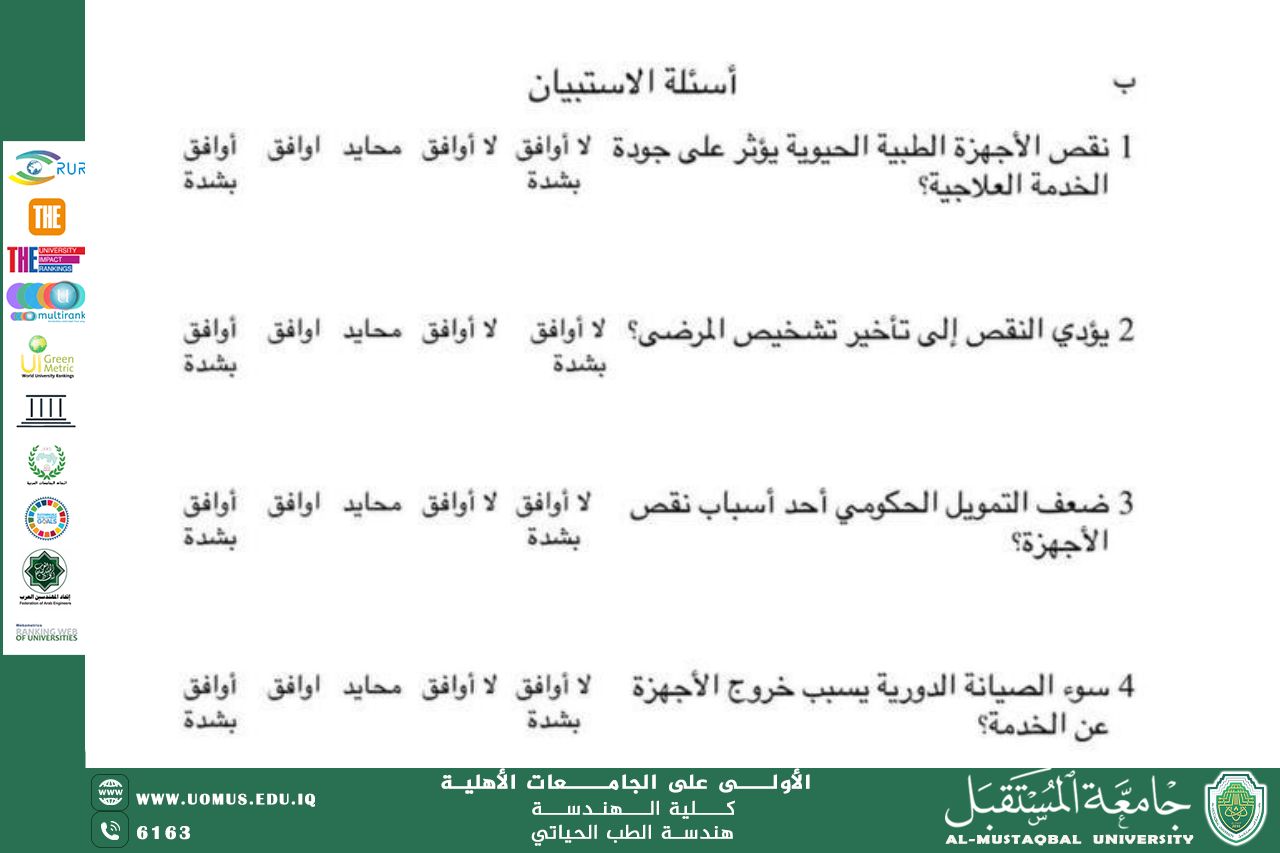
• The impact of equipment shortages: The survey revealed that the shortage of medical devices directly affects the quality of healthcare services and leads to delays in diagnosing medical conditions.
• Logistical challenges: The healthcare sector suffers from insufficient funding and inadequate periodic maintenance, causing equipment to be out of service for extended periods.
• Technical obstacles: The shortage of specialized technical personnel and delays in importing spare parts place significant pressure on the efficiency of hospital operations. This scientific initiative aims to highlight the necessity of providing a stable operating environment for vital equipment, as the risk of sudden equipment failure remains ever-present—a real threat requiring innovative engineering solutions and a high level of technical expertise to ensure the continuity of life in hospital wards.
Future University... Ranked First Among