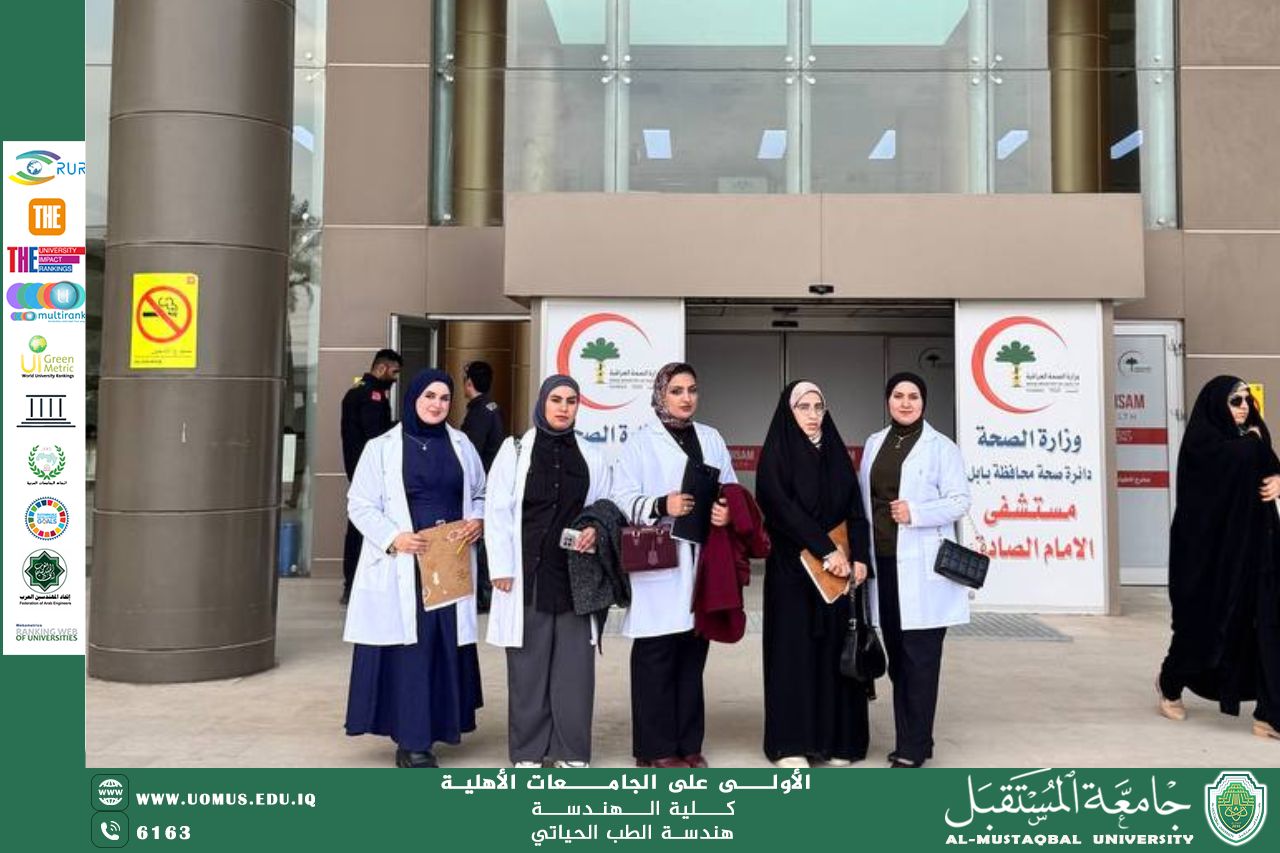
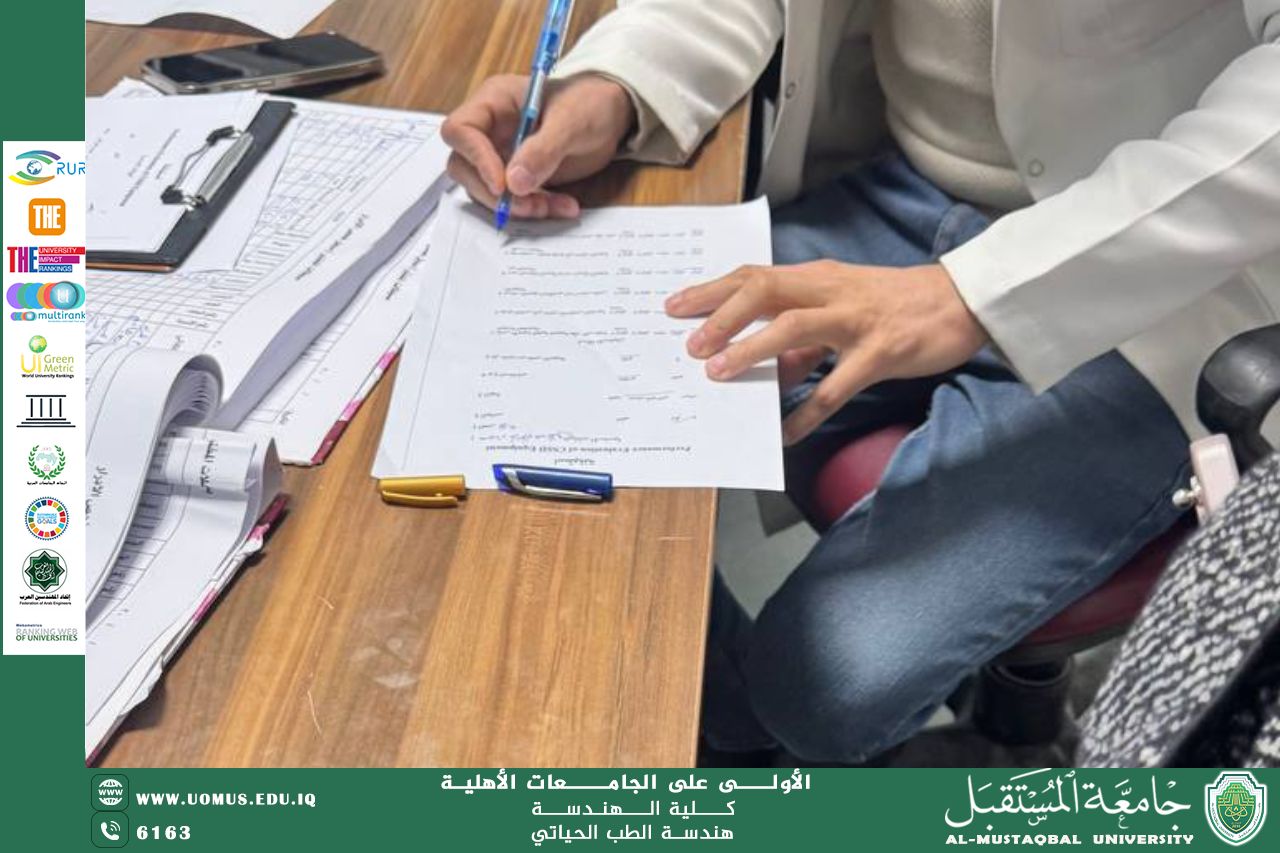
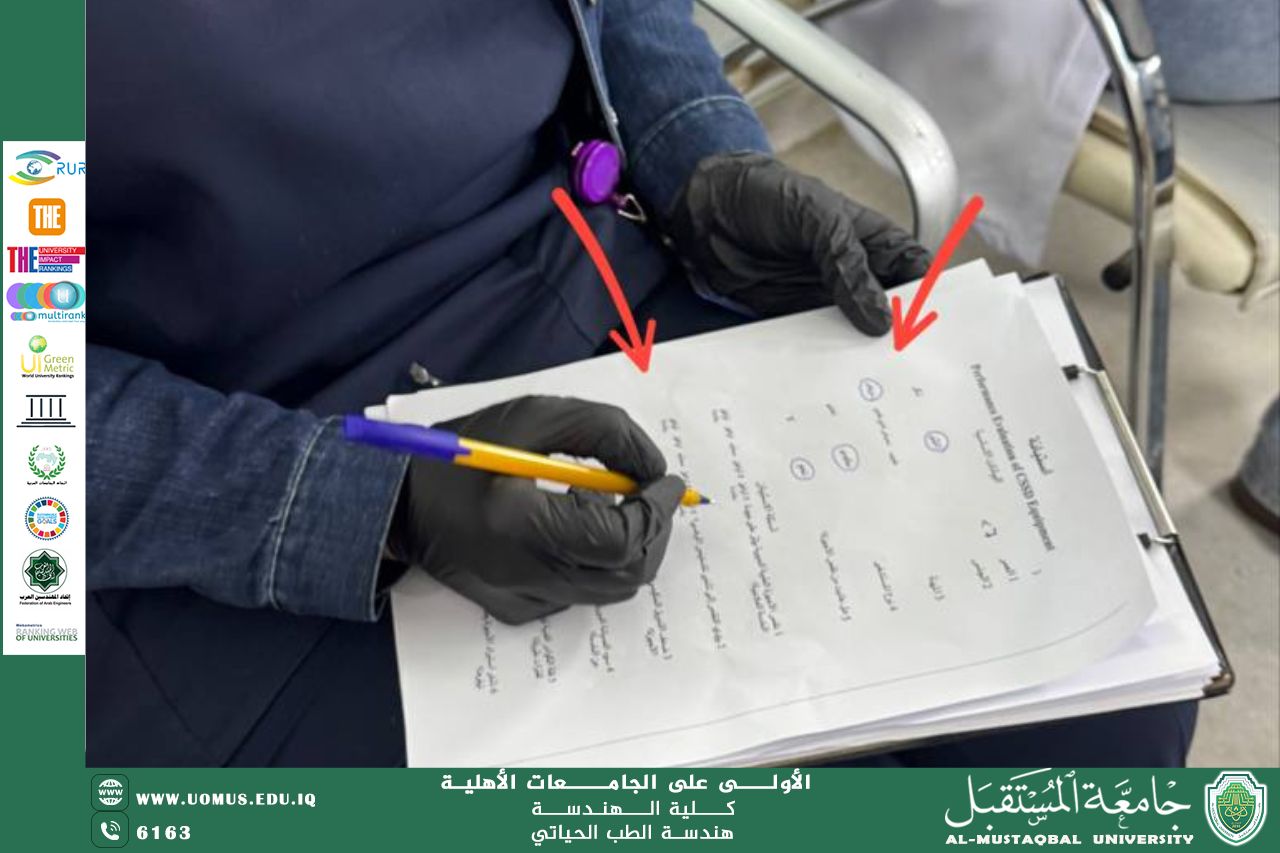
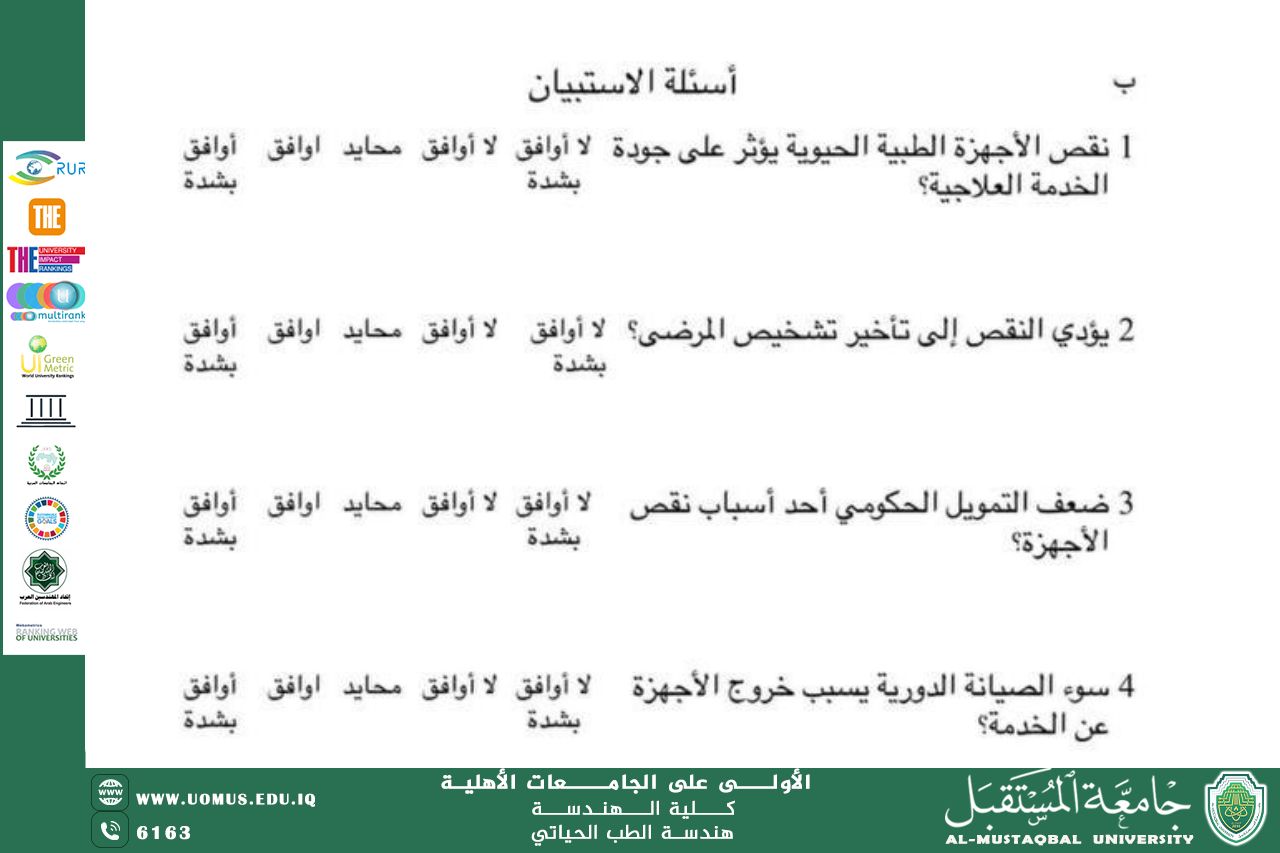
A case study and field analysis entitled “Analyzing the causes of the shortage of vital medical equipment in Iraqi hospitals and its impact on treatment services.”
Third-year students in the Biomedical Engineering Department conducted a case study and field analysis titled “Analyzing the Causes of the Shortage of Biomedical Equipment in Iraqi Hospitals and its Impact on Healthcare Services,” under the supervision of Assistant Lecturer Iman Yasser Hussein.
Within the framework of the Sustainable Development Goals (SDG 3), the technical and physical damage resulting from the shortage of medical equipment and its deteriorating operational condition poses a serious threat to public health. For example, equipment shortages severely disrupt the treatment process, leading to delays in patient diagnosis and disruptions in the quality of medical services provided. The healthcare system also suffers from strain, as inadequate government funding increases the risk of equipment breakdowns and service interruptions. Hospitals, which act as a filter for the medical community, are under significant pressure and may eventually fail to fulfill their functions due to inadequate periodic maintenance and a shortage of specialized technical staff. Medical equipment may become compromised due to delays in importing equipment and spare parts, making the healthcare system more vulnerable to collapse. The technical support for equipment becomes neglected due to the lack of continuous updates, resulting in a decline in the efficiency of clinical outcomes. The risk of sudden failure of vital organs remains ever-present, potentially leading to the sudden death of patients—a real threat demanding awareness and careful engineering.
We must also not forget the looming danger of equipment failure and sudden death resulting from shortages of essential medical supplies.
Future University... ranked first among private universities.