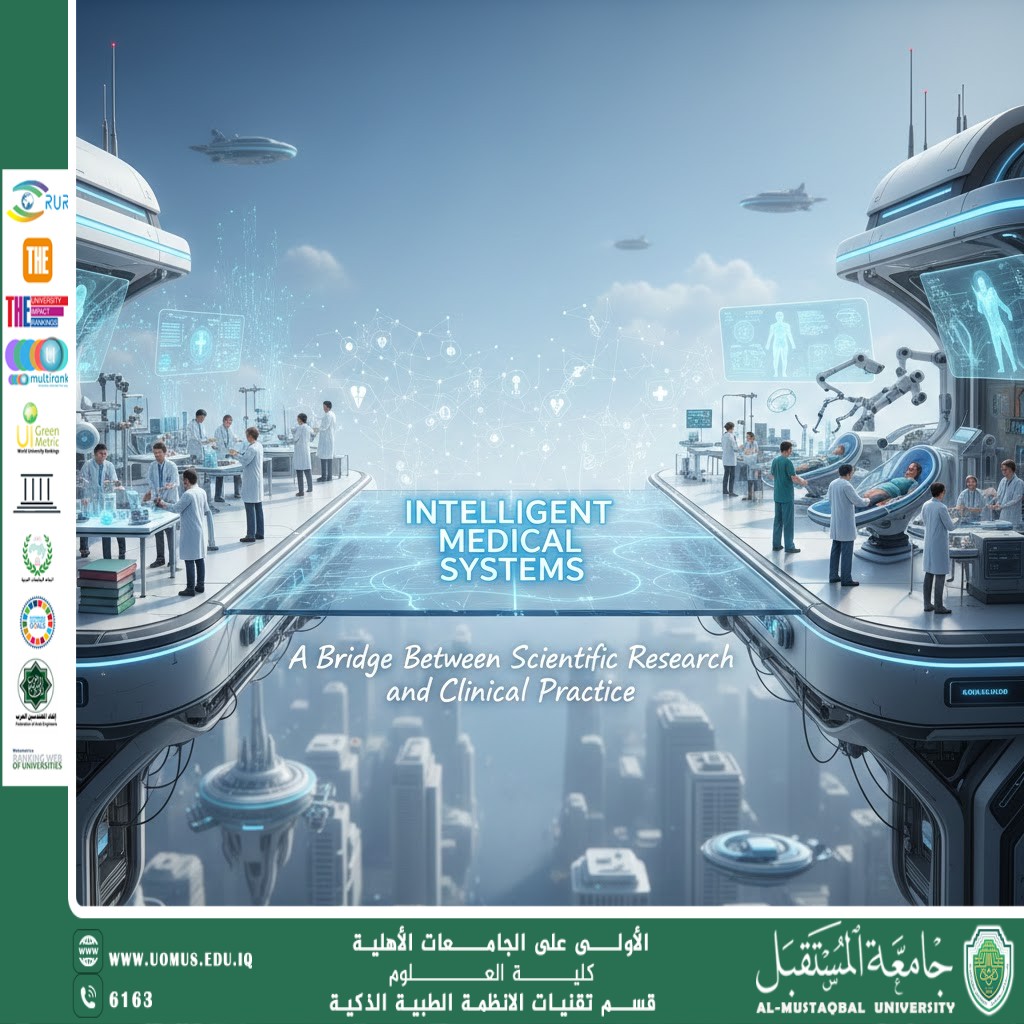

Intelligent Medical Systems as a Bridge Between Scientific Research and Clinical Practice (M. M. Ali Salim Halim)
The healthcare sector is experiencing rapid advancement driven by significant progress in artificial intelligence, data analytics, and intelligent systems. This transformation has positioned intelligent medical systems as a vital link between scientific research and clinical practice. These systems are no longer merely supportive technological tools; rather, they have become integrated platforms that facilitate the translation of academic research outcomes from laboratories and research centers into practical applications within hospitals and healthcare institutions.
From a research perspective, intelligent medical systems provide advanced environments for processing and analyzing large-scale medical data, including electronic health records, medical images, and physiological signals, with high levels of accuracy and efficiency. This capability enables researchers to develop diagnostic and predictive models grounded in scientific evidence, capable of identifying hidden patterns of disease and generating novel insights that contribute to the advancement of medical knowledge. In this sense, intelligent medical systems serve as effective mechanisms for transforming theoretical research findings into clinically applicable solutions.
In clinical practice, intelligent medical systems have significantly contributed to decision support and the improvement of healthcare quality by delivering accurate and timely information to physicians. These systems allow for comprehensive analysis of patient conditions and comparison with extensive databases of similar cases, thereby enhancing diagnostic precision and reducing the likelihood of medical errors. Moreover, they support the standardization of clinical practices based on evidence-based guidelines derived from the latest scientific research.
The bridging role of intelligent medical systems becomes particularly evident when the efforts of researchers converge with the needs of healthcare practitioners. By facilitating the seamless transfer of research-driven innovations into clinical environments, these systems reinforce the principles of evidence-based medicine and support the continuous development of updated treatment protocols that respond to rapid advances in medical knowledge, ultimately benefiting patients and society at large.
Within academic settings, intelligent medical systems also function as advanced educational platforms for students in medical, engineering, and health-related disciplines. They enable learners to engage with data-driven virtual clinical cases, thereby narrowing the gap between theoretical education and practical training. Additionally, they promote a culture of applied research and encourage interdisciplinary innovation across medicine, information technology, and engineering.
Despite their substantial benefits, the effective implementation of intelligent medical systems requires addressing several challenges, most notably data privacy, algorithmic reliability, and the integration of intelligent technologies with human clinical expertise. Here, academic institutions play a crucial role in establishing ethical and regulatory frameworks, as well as in developing responsible research methodologies that ensure the safe and effective use of these systems.
In conclusion, intelligent medical systems represent a strategic bridge connecting scientific research with clinical practice, accelerating the translation of medical knowledge into real-world applications. Through strengthened collaboration between universities and healthcare institutions, intelligent medical systems have the potential to shape a more efficient and precise healthcare future, grounded in scientific innovation and sustainable knowledge integration.
University of Al-Mustaqbal the first university in Iraq.