The Relationship Between Living Organisms and the Environment and the Impact of Human Activities (M.M. Howayda Nazzal Hussein)
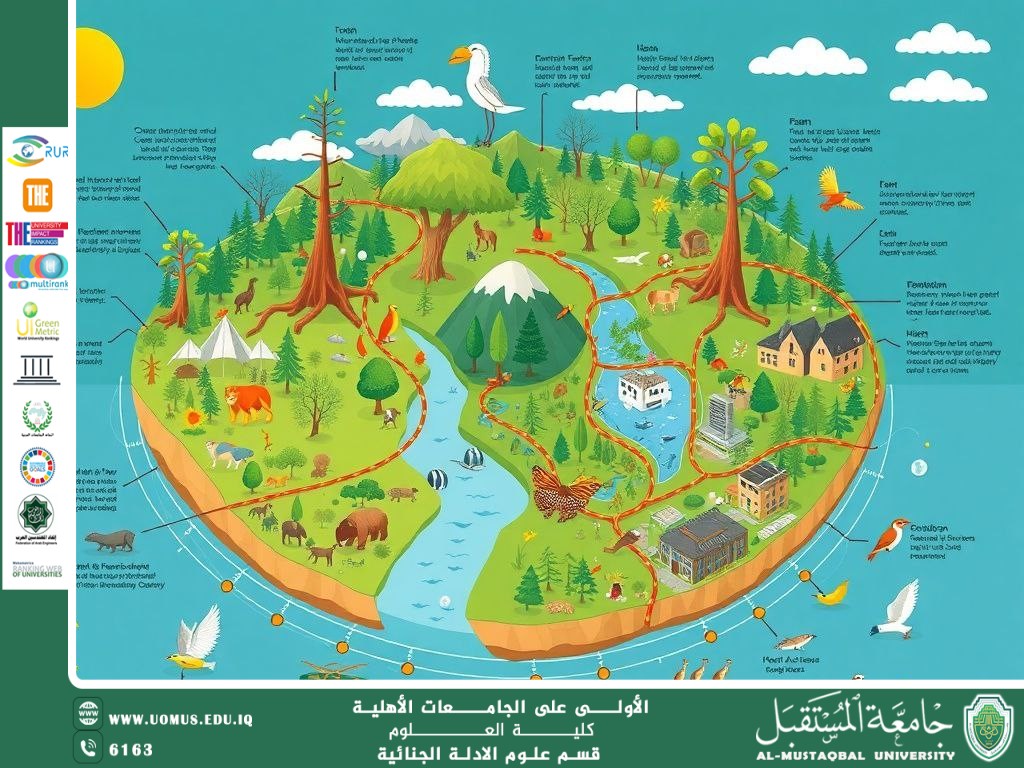
The relationship between living organisms and the environment is a fundamental concept in life sciences, forming the basis for the sustainability of life on Earth. The environment provides essential resources such as food, water, air, and shelter, while living organisms contribute to environmental balance through various biological interactions.
Organisms exist within integrated ecosystems that rely on food chains and food webs, where each organism plays a specific role. Plants act as primary producers through photosynthesis, animals serve as consumers, and microorganisms function as decomposers that recycle nutrients back into the environment.
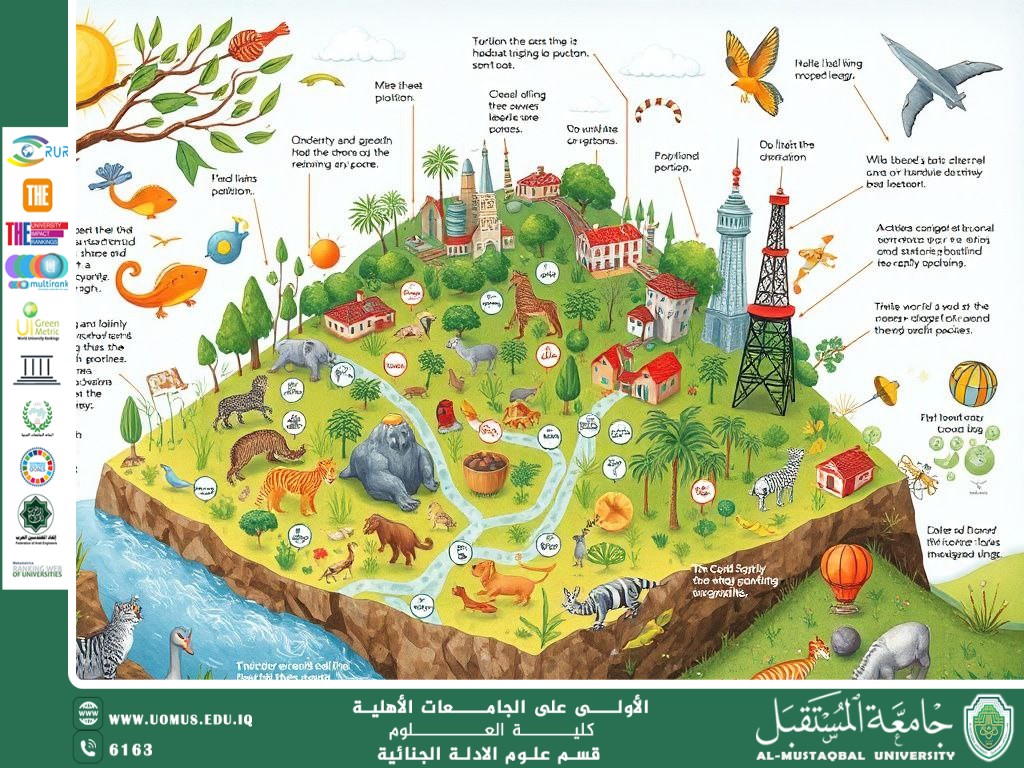
Human activities have significantly disrupted this balanced relationship. Industrial and urban expansion has destroyed natural habitats, while environmental pollution from factories, vehicle emissions, and plastic waste has degraded air, water, and soil quality, adversely affecting both human health and biodiversity.
The excessive and improper use of pesticides and chemical fertilizers has further disturbed ecosystems by harming beneficial insects and microorganisms and causing toxic substances to accumulate in food chains. Climate change, driven by increased greenhouse gas emissions, has altered species distribution and contributed to the extinction of some organisms.
Understanding the relationship between organisms and the environment is essential for developing scientific solutions to reduce human impact. Sustainable development, biodiversity conservation, and environmental awareness are crucial measures to restore ecological balance and ensure the continuity of life for future generations.
Al-Mustaqbal University – the first university in Iraq.
SDG4