A Scientific Article by Dr. Mohammed Haider Hamad Entitled: The AI Revolution: How Machine Learning Will Change the Accuracy of Diagnostics in Medical Laboratories
The AI revolution: How machine learning will change the accuracy of diagnostics in laboratories
(Introduction)
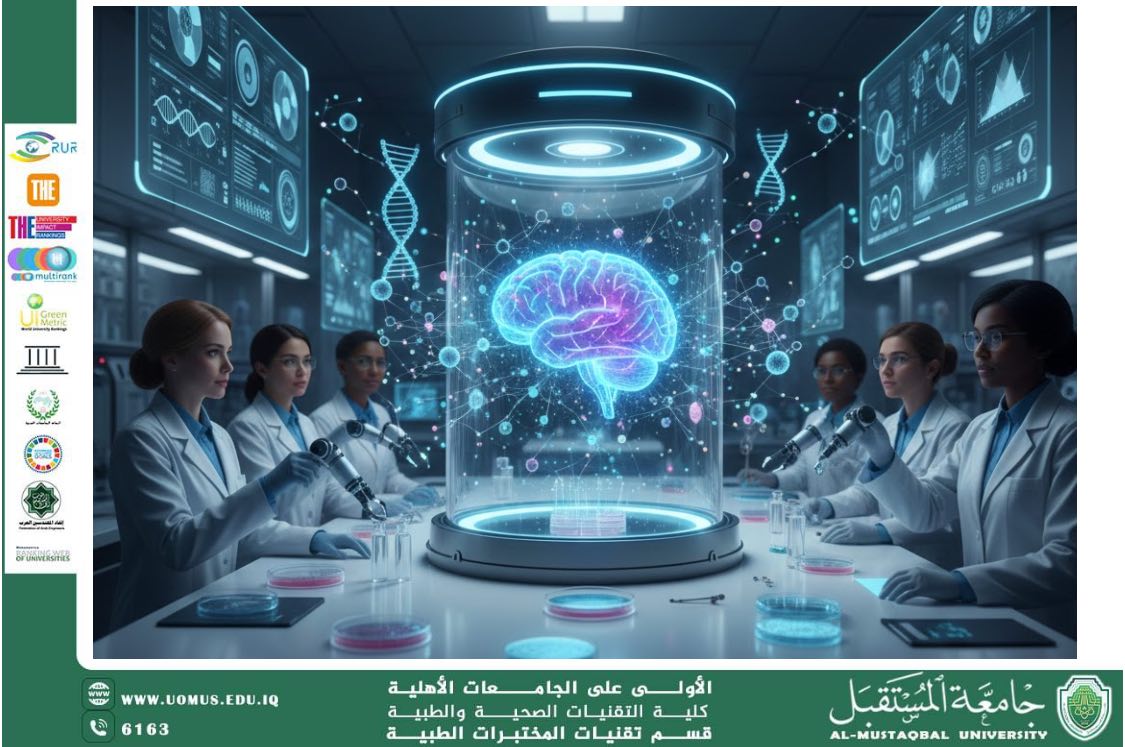
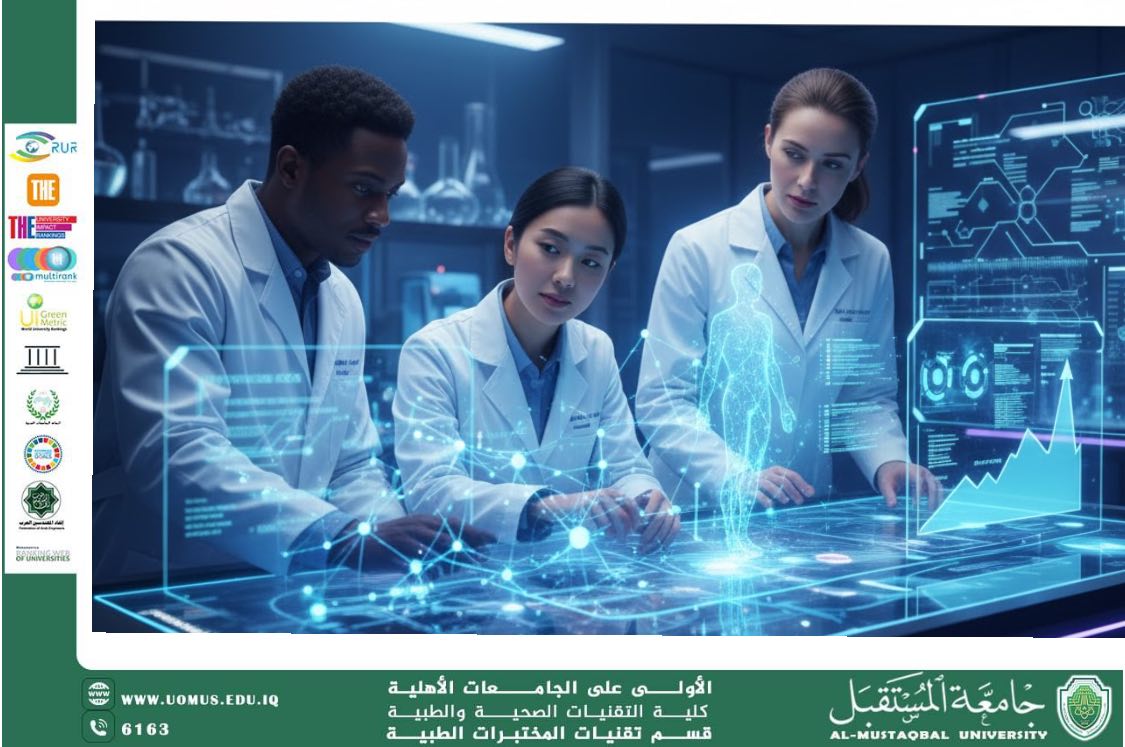
In the rapidly evolving landscape of healthcare, medical laboratories stand as the unsung heroes, providing critical insights that guide clinical decisions. For decades, these laboratories have relied on human expertise, meticulous protocols, and advanced instrumentation to process samples and generate diagnostic results. However, we are now on the cusp of a revolutionary transformation, driven by the prodigious power of Artificial Intelligence (AI) and, more specifically, Machine Learning (ML). The integration of AI into medical laboratories is not merely an incremental improvement; it promises a paradigm shift in diagnostic accuracy, efficiency, and accessibility, heralding an era where precision medicine becomes a widespread reality.
This article delves into the profound impact of AI and ML on medical diagnostics, exploring how these technologies are poised to redefine the accuracy of laboratory results, streamline workflows, and ultimately improve patient outcomes. We will examine the current applications, the challenges that need to be addressed, and the exciting future prospects that AI brings to the diagnostic frontier.
The Foundation of AI in Diagnostics
Artificial Intelligence encompasses a broad spectrum of technologies that enable machines to simulate human intelligence. Machine Learning, a subset of AI, focuses on algorithms that allow systems to learn from data, identify patterns, and make predictions or decisions without explicit programming. In the context of medical laboratories, this translates to algorithms capable of analyzing vast datasets – ranging from microscopic images and genomic sequences to patient demographics and clinical histories – to uncover insights that might elude even the most experienced human eyes. The shift towards AI-driven diagnostics is fueled by the exponential growth of data generated in healthcare and the increasing sophistication of computational power.
Enhanced Image Analysis and Pathology
One of the most immediate and impactful applications of AI in medical laboratories is in image analysis. Traditional histopathology, cytology, and hematology often involve pathologists manually reviewing slides under a microscope, a process that is time-consuming and can be subject to inter-observer variability. AI, particularly deep learning algorithms, can revolutionize this field. Convolutional Neural Networks (CNNs), for instance, can be trained on vast collections of annotated images to detect subtle anomalies, classify cell types, and even predict disease progression with remarkable accuracy.
This capability extends beyond simple detection. AI can quantify features, identify regions of interest for further human review, and integrate information from multiple staining techniques to provide a comprehensive digital pathology report. This not only speeds up the diagnostic process but also significantly improves consistency and reduces the chances of missed diagnoses, especially for rare or early-stage diseases.
Automation and Workflow Optimization
Beyond analytical tasks, AI and ML are poised to optimize the entire laboratory workflow, from sample reception to result delivery. AI-powered robotics can automate repetitive tasks such as sample sorting, aliquoting, and loading onto analyzers, minimizing human error and increasing throughput. Predictive analytics can be used to forecast workload fluctuations, allowing laboratories to optimize staffing and resource allocation more effectively.
Moreover, AI can monitor instrument performance in real-time, detecting anomalies that might indicate calibration issues or impending malfunctions, thus enabling proactive maintenance and preventing costly downtime. This level of automation and intelligent optimization translates into faster turnaround times for results, reduced operational costs, and an overall more efficient laboratory operation.
Precision Medicine and Genomic Insights
The era of precision medicine, where treatments are tailored to an individual's unique genetic makeup and disease characteristics, heavily relies on complex genomic and proteomic data. AI is an indispensable tool in processing and interpreting this vast amount of information. Machine learning algorithms can identify specific genetic mutations or biomarkers associated with particular diseases, predict drug responses, and even forecast disease susceptibility
This capability is transforming diagnostics for cancer, rare genetic disorders, and infectious diseases, allowing for the development of targeted therapies and personalized care plans. AI can correlate genetic profiles with clinical outcomes from millions of patients, offering unprecedented insights into disease pathogenesis and treatment efficacy.
Early Disease Detection and Predictive Analytics
The ability to detect diseases at their earliest, most treatable stages is a cornerstone of effective healthcare. AI-powered diagnostic tools are excelling in this area by identifying subtle patterns and markers that precede overt symptoms. For example, AI can analyze routine blood test parameters, often overlooked in standard interpretations, to flag individuals at higher risk for conditions like diabetes, cardiovascular disease, or certain cancers.
Al-Mustaqbal University is the first university in Iraq
Department of Medical Laboratory Techniques – First in the Iraqi National Ranking.