A Scientific Article by Dr. Ali Turki Al-Husseini Entitled: Red–Green Color Blindness
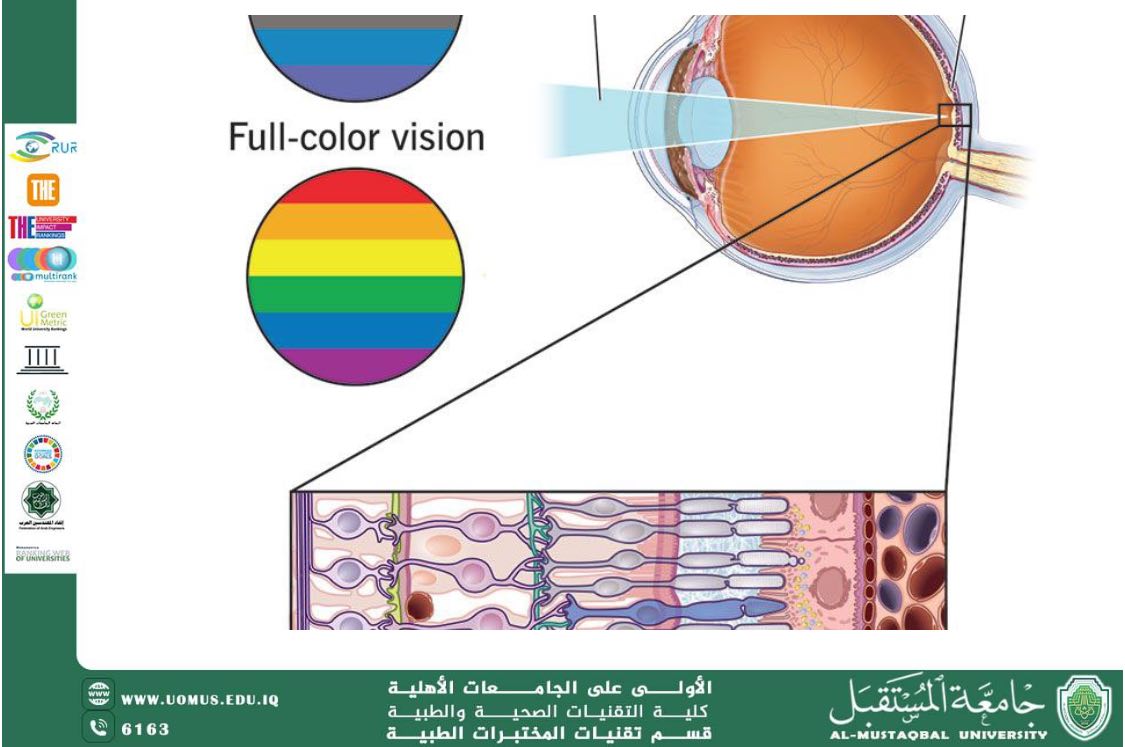
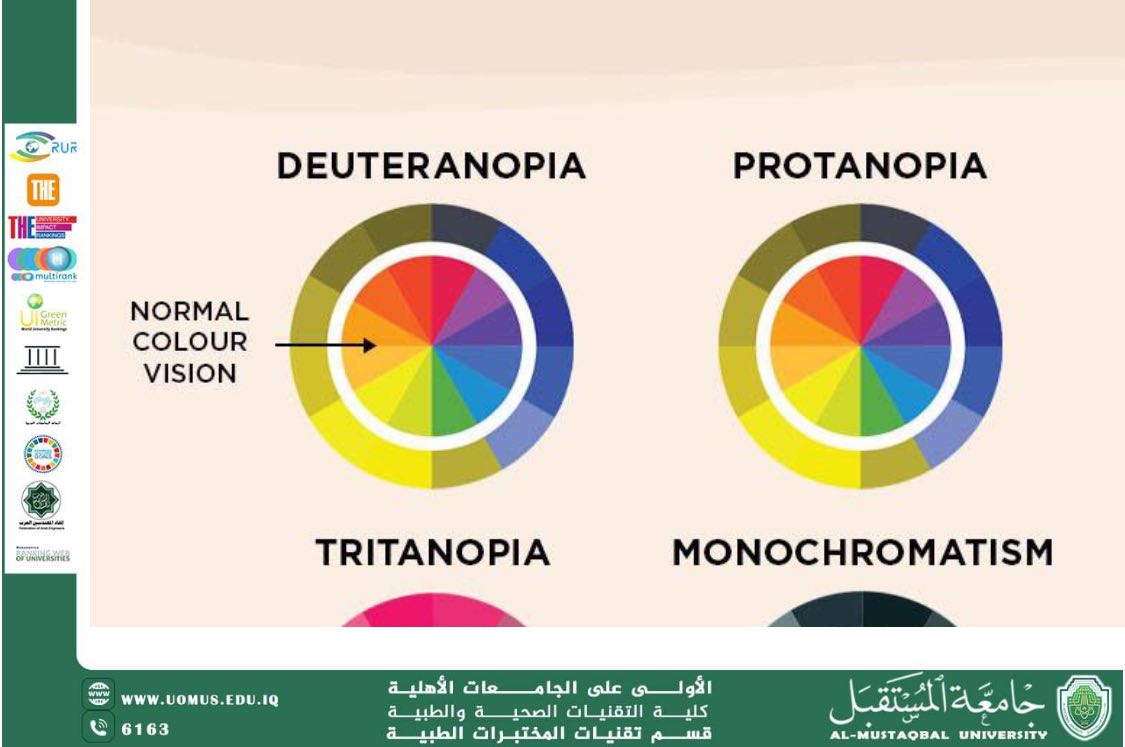
Red–green color blindness syndrome is the most common type of color vision disorder and is usually a hereditary condition that affects an individual’s ability to distinguish between shades of red and green This syndrome does not cause complete vision loss but it may impact daily functional performance and certain professions that rely on precise color discrimination Red–green color blindness is a visual disorder resulting from a defect in the cone cells of the retina which are responsible for color perception particularly those sensitive to the wavelengths of red and green This disorder is classified as a partial color vision deficiency rather than complete color blindness Types of red–green color blindness include Protanopia / Protanomaly which is a defect or absence of the receptors responsible for red perception causing red to appear dark or nearly black and Deuteranopia / Deuteranomaly a defect or absence of the receptors responsible for green perception which is the most common type The syndrome is primarily caused by genetic factors due to mutations in the genes responsible for producing visual pigments OPN1LW and OPN1MW located on the X chromosome Therefore males are more commonly affected while females are usually carriers without showing symptoms Acquired causes are rare and may result from retinal or optic nerve injuries certain neurological disorders drug toxicity such as some antimalarial medications aging or chronic eye diseases Under normal conditions the retina contains three types of cone cells red cones green cones and blue cones In red–green color blindness there is a deficiency or dysfunction of the red or green cones leading to overlapping color signals and difficulty in precise color discrimination The severity of symptoms varies among individuals and may include difficulty distinguishing between red and green brown and green yellow and green seeing some colors as dull confusing similar colors and difficulty reading traffic lights or colored maps Children often do not notice the condition until school testing Note Intelligence and visual acuity are usually normal Diagnosis is made using the Ishihara Color Test advanced color discrimination tests and family genetic screening when necessary There is no definitive cure for hereditary cases but glasses or special lenses can improve color discrimination electronic assistive applications genetic counseling for families and professional and educational adaptation can help The syndrome may affect certain professions such as aviation electrical work medical laboratories and engineering design but most affected individuals live normal lives with proper adaptation Red–green color blindness syndrome is a common hereditary disorder caused by defects in the color receptors of the retina with symptoms appearing in childhood and although there is no definitive treatment early diagnosis awareness and adaptation enable affected individuals to lead normal lives.
Al-Mustaqbal University is the first university in Iraq
Department of Medical Laboratory Techniques – First in the Iraqi National Ranking.