A scientific article by Ms. Reham Safaa Najm entitled "Lazy Eye" Amblyopia
Amblyopia is one of the most common visual disorders in childhood. It occurs as a result of abnormal visual development in one or both eyes during the critical period of visual maturation. Failure to detect and treat amblyopia early may lead to permanent visual impairment that persists throughout life.
Definition of Amblyopia
Amblyopia is defined as a reduction in visual acuity that cannot be fully corrected with spectacles or contact lenses and is not attributable to any obvious structural abnormality of the eye. Instead, it results from disrupted visual development during early childhood.
Causes of Amblyopia
The main causes of amblyopia include:
• Strabismus: Misalignment of the eyes leading to suppression of the deviating eye.
• Uncorrected refractive errors: Such as myopia, hyperopia, or astigmatism, particularly when there is a significant difference between the two eyes.
• Visual deprivation: Caused by conditions such as corneal opacity, congenital cataract, or severe ptosis.
Early Diagnosis
Early diagnosis is essential for successful management and includes:
• Measurement of visual acuity in each eye separately
• Cycloplegic refraction
• Assessment of ocular alignment and detection of strabismus
• Fundus examination to exclude organic pathology
Management and Treatment
The management of amblyopia depends on the underlying cause and severity of the condition. Treatment options include:
• Correction of refractive errors: Using appropriate spectacles or lenses
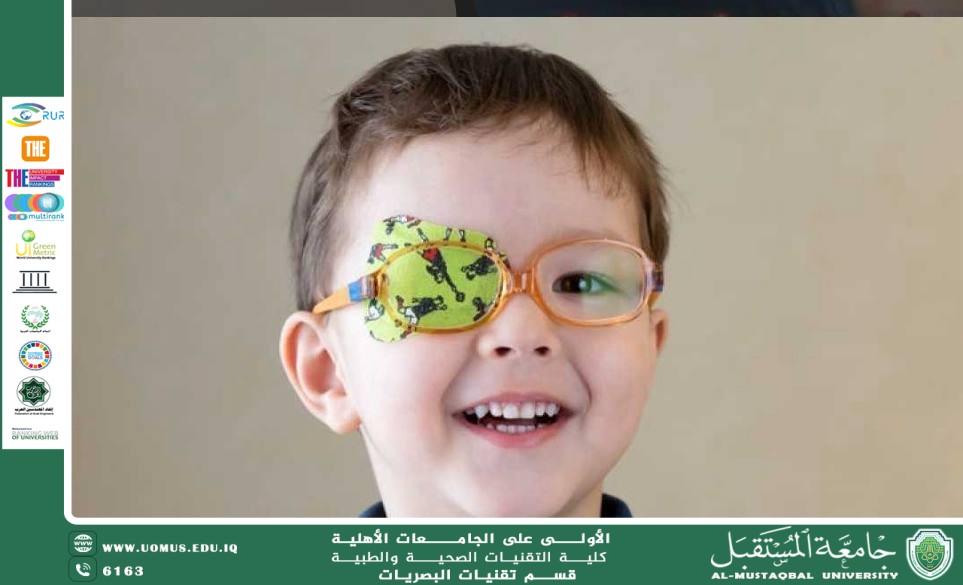
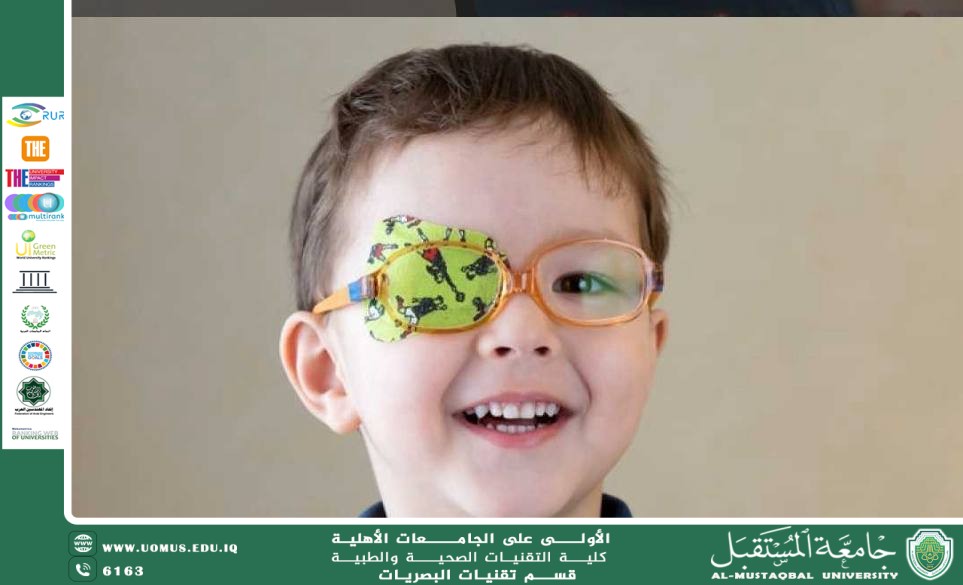
• Occlusion therapy: Patching the sound eye to stimulate the amblyopic eye
• Vision therapy: To improve visual coordination
• Pharmacological treatment: Such as atropine penalization in selected cases
Importance of Early Treatment
The success of amblyopia treatment is significantly higher when initiated at an early age, particularly before 7–8 years, when neural plasticity of the visual system is at its peak.
Conclusion
Amblyopia is a treatable condition when diagnosed and managed early. Delayed detection may result in irreversible visual loss, highlighting the importance of routine eye examinations for children and the critical role of optometrists in early diagnosis and effective management.
University of Al-Mustaqbal – The First and Leading Private University