
Scientific Article by Ms. Zainab Mahmoud titled: Aspergillus niger (Black Aspergillosis)
Aspergillus niger
Introduction
Aspergillus niger is a common filamentous fungus found widely in soil, air, and decaying organic matter. It is known for its black-colored spores and plays an important role in both industry and human health.
Classification
• Kingdom: Fungi
• Phylum: Ascomycota
• Genus: Aspergillus
• Species: Aspergillus niger
Characteristic
Aspergillus niger has distinctive features:
• It is a multicellular (filamentous) fungus
• Produces septate hyphae
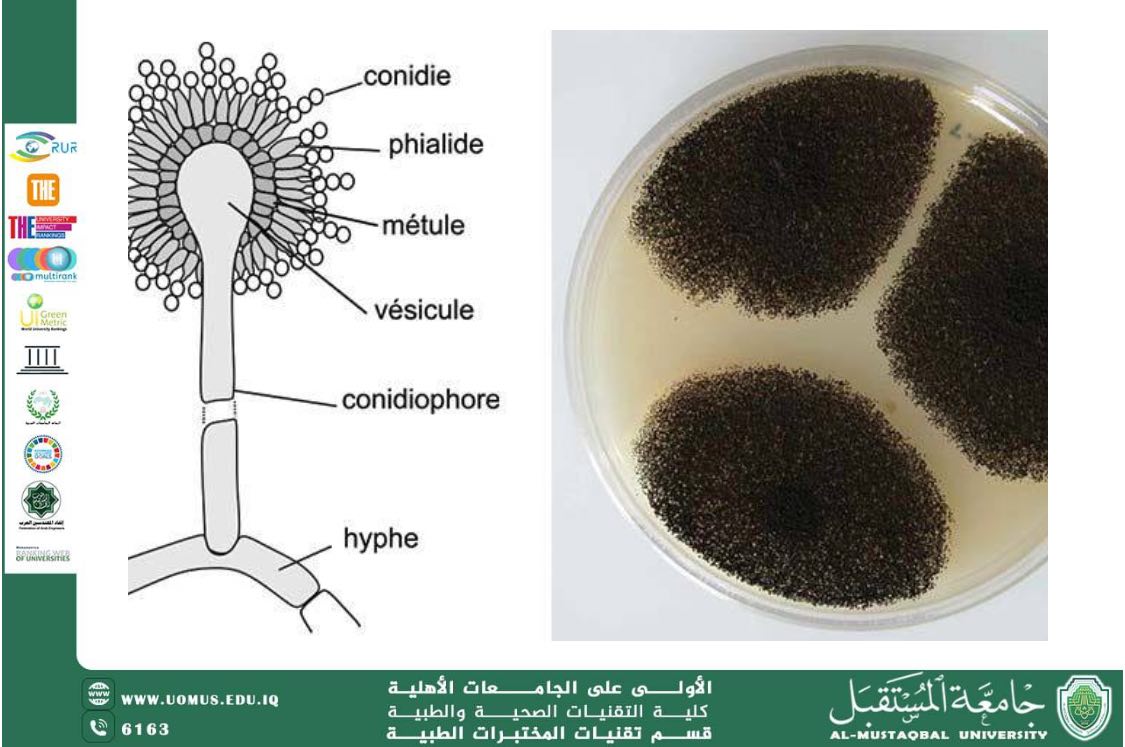
• Forms black conidia on conidiophores
• Grows rapidly on culture media
• Tolerates a wide range of environmental conditions
Habitat
This fungus is commonly found in:
• Soil
• Air
• Decaying fruits and vegetables
• Stored food products
Importance
Industrial Importance
Aspergillus niger is widely used in industry for the production of:
• Citric acid
• Enzymes such as amylase and proteas
Medical Importance
Although usually harmless, Aspergillus niger can act as an opportunistic pathogen, causing:
• Otomycosis (ear infection)
• Pulmonary aspergillosis in immunocompromised individuals
Diagnosis
Diagnosis involves:
• Microscopic examination showing septate hyphae
• Culture on Sabouraud dextrose agar
• Observation of black conidial heads
Treatment
Treatment depends on the type of infection and may include:
• Antifungal drugs such as itraconazole
• Proper cleaning and hygiene
Conclusion
Aspergillus niger is an important fungus with beneficial industrial applications and potential health risks. Understanding its characteristics helps in proper identification and control.
Al-Mustaqbal University is the first university in Iraq
Department of Medical Laboratory Techniques – First in the Iraqi National Ranking.